
Many homeowners face a smelly, cluttered fridge that risks food safety. The guide, Tips Do Clean Your Refrigerator, answers that problem with clear steps.
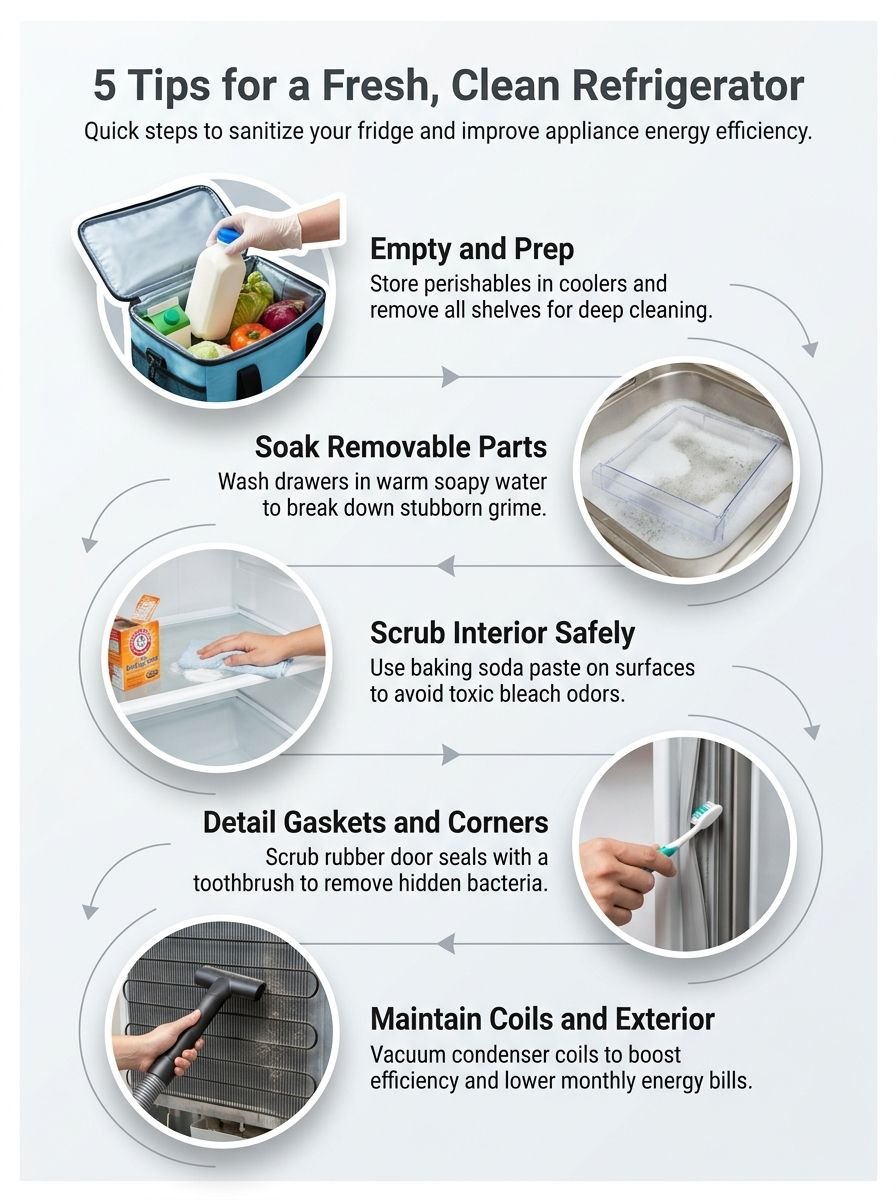
Empty the refrigerator completely before cleaning. This keeps food storage safe and lets one reach every surface. The Department of Energy notes that vacuuming condenser coils helps cut energy consumption.
The post will show how to remove removable shelves, wash with baking soda and dish soap, clean the gasket, and vacuum coils. It will offer quick, practical cleaning tips that parents can use between grocery trips.
Read on.
Key Takeaways
- Empty your fridge before cleaning and store perishable food in a cooler to keep it safe.
- Clean shelves, drawers, and corners with warm water, vinegar, dish soap, or baking soda. Avoid bleach to protect your food and the appliance.
- Use an old toothbrush for tough stains in hard-to-reach spots like door gaskets and cracks.
- Wipe down the refrigerator’s exterior and handles often to remove fingerprints and dirt.
- Vacuum condenser coils behind or under the fridge regularly; according to the Department of Energy, this improves efficiency and lowers energy use.
Empty and Prep the Refrigerator
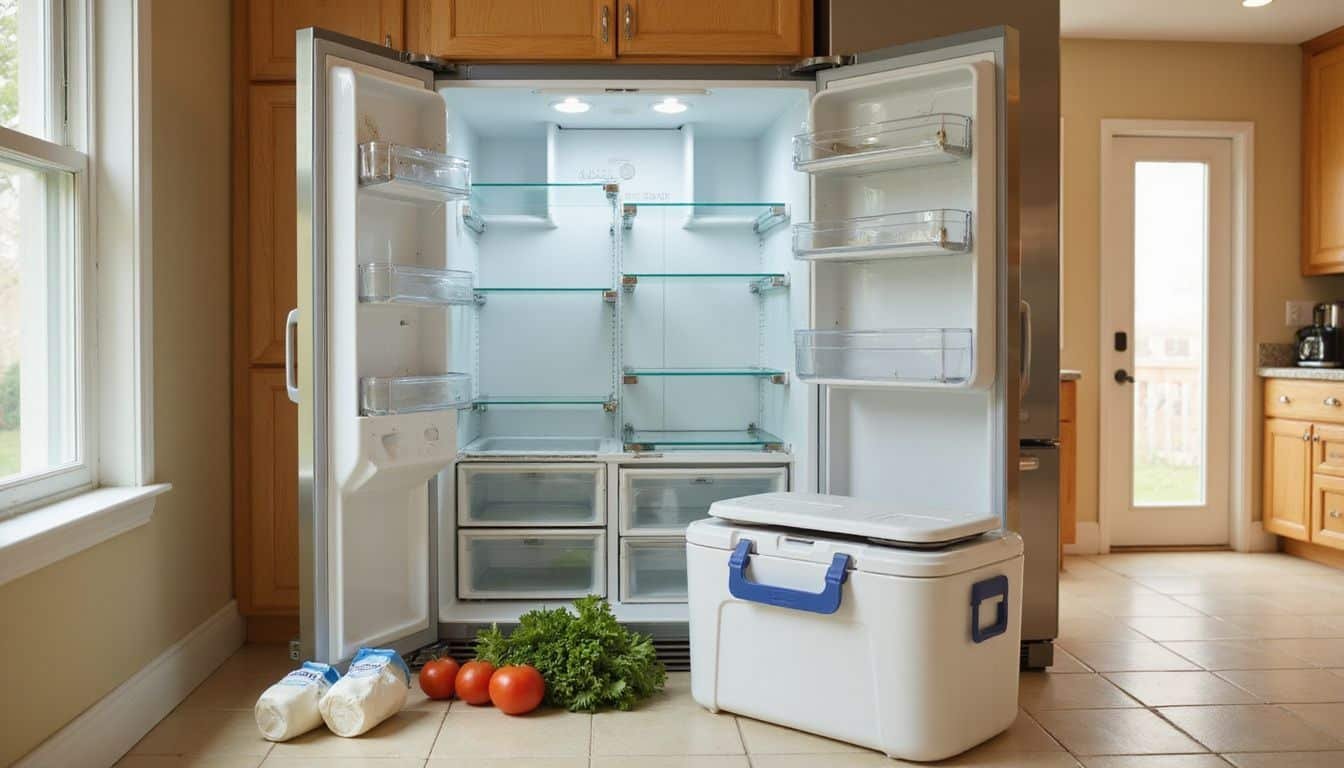
To clean the refrigerator, start by removing all food items. Store them in a cooler to keep them fresh while you work. Next, take out the shelves and drawers for cleaning. This step allows for deeper access and better results.
Remove all food items and store them in a cooler
House owners should completely empty the refrigerator before starting any work. They should move perishable items into a cooler to keep safe temperatures and prevent spoilage. Parents can plan the cleaning session around regular grocery shopping to cut the time food spends out of cold storage.
They should pack cleaning supplies, a cooler, and ice packs before unplugging the appliance. This simple step supports good refrigerator maintenance and basic appliance maintenance.
White vinegar or baking soda can sit in the cooler with food if extra odor control is needed.
Take out shelves and drawers for separate cleaning
They remove all shelves and drawers from the refrigerator for deep cleaning. Parents carry the pieces to the sink. A soft sponge and a basin make the job easier. They avoid dishwashers for cracked or sealed parts.
They soak shelves and drawers in a mixture of warm water, vinegar, and dish soap to break down grime. A cloth wipes sticky spots after soaking. They dry each part completely before putting pieces back to protect seals and keep the clean refrigerator working as an energy saver.
Parents may finish by wiping handles with disinfecting wipes and use a stainless steel cleaner on the exterior of kitchen appliances.
Use Safe Cleaning Solutions
Cleaning your refrigerator safely is crucial. A simple blend of baking soda and warm water works wonders for removing grime without harming surfaces. Choose gentle solutions over harsh chemicals like bleach to protect both your food and your fridge’s interior.
This approach keeps the appliance fresh while ensuring a safe environment for food storage.
Clean the interior with a mixture of baking soda and warm water
House owners should wipe the refrigerator interior with a paste of baking soda and warm water. Parents will like that this mix avoids strong chemical odors and keeps food safe.
The doe in the united states and national laboratories often favor mild cleaners for home use. Use a soft sponge, a cloth, and warm water to rinse and dry shelves. Next, clean corners, cracks, and the door gasket to tackle hard-to-reach areas.
Avoid using bleach or harsh chemicals
Choose safe cleaning solutions for your refrigerator. Baking soda and warm water work well together to clean surfaces without harming food safety. Harsh chemicals can leave harmful residues behind, which is risky for families.
Avoid bleach as it can damage the fridge’s components and cause unpleasant odors.
Regularly clean rubber door gaskets with warm soapy water. This prevents mold growth and keeps the seal in good condition. Using homemade solutions is kinder to both the environment and your health, making them a smart choice for responsible parents managing their kitchens.
Focus on Hard-to-Reach Areas
Cleaning the hard-to-reach areas in a refrigerator makes a big difference. People often forget corners and cracks, but these spots hide dirt and germs. A toothbrush works wonders on stubborn stains around the door gasket.
Keeping every inch clean promotes freshness for all stored food.
Clean corners, cracks, and the door gasket thoroughly
Use an old toothbrush to scrub the corners and cracks of your refrigerator. Grime tends to hide in these areas, making them tough to reach. A thorough cleaning prevents odors and keeps food safe.
The door gasket also needs attention. This rubber seal can trap food debris and mold if not cleaned regularly. Wash it with warm soapy water to keep it fresh.
Stubborn stains may require different treatment. Soak them with a damp towel before scrubbing hard. Taking these steps ensures that every part of the fridge stays clean and hygienic for your family’s safety.
Use a toothbrush for stubborn stains
An old toothbrush works wonders for cleaning hard-to-reach corners and cracks in the refrigerator. The small bristles can scrub away stubborn stains that regular cloths can’t reach.
To make scrubbing easier, soak those tough spots with a damp towel first. This softens the grime and helps lift it away.
Day-to-day tasks like this keep the fridge fresh and hygienic. Now, it’s time to focus on cleaning the exterior and coils for a complete refresh.
Clean the Exterior and Coils
Cleaning the exterior of the refrigerator keeps it looking sharp. Wipe down the surfaces and handles with a gentle cleaner to eliminate fingerprints and grime.
Next, check the coils behind or beneath your fridge. Dust can build up over time, affecting efficiency. Use a vacuum to remove debris and keep your appliance running smoothly.
Wipe down the exterior, including handles
Wipe the exterior surfaces of the refrigerator regularly. This includes cleaning the handles, which often collect grime and fingerprints. A quick wipe with a damp cloth keeps everything looking fresh.
Use a gentle cleaner that won’t harm the finish.
Regular cleaning improves efficiency too. Dust and dirt can affect how well the fridge works, leading to higher energy bills. Keeping it clean ensures it lasts longer and operates at peak performance, helping families save money in the long run.
Vacuum dust from coils behind or beneath the fridge
Dust accumulates on coils behind or beneath the refrigerator. This build-up can harm the appliance’s efficiency and lifespan. To keep things running smoothly, vacuum these coils regularly.
A vacuum cleaner specifically designed for dust removal works best.
Cleaning these areas enhances airflow and helps maintain optimal cooling performance. Spending just a few minutes on this task can lead to improved energy savings and extend the life of the fridge.
Conclusion
Cleaning the refrigerator doesn’t have to be a chore. Following these five quick tips makes the process easy and effective. Start by emptying the fridge, then use safe cleaning solutions for a fresh interior.
Focus on those hard-to-reach spots that often get overlooked; they can hide stubborn grime. Lastly, keep the outside clean and maintain those coils for better efficiency. Regular maintenance leads to a fresher kitchen and healthier food storage.
FAQs
1. What are the first steps to clean a fridge fast?
Remove old food and toss expired items. Take out shelves and drawers. Wash with mild soap and warm water. Dry parts and put them back. You can save a short pdf checklist or read a Wirecutter guide for tool tips.
2. How often should I clean and defrost the fridge?
Wipe spills each week. Deep clean every one to three months. Defrost if ice builds up. This keeps the unit efficient and supports energy innovation goals.
3. How do I stop bad smells and food germs?
Clean spills right away. Use baking soda in an open box to absorb odors. Store strong foods in sealed containers. This protects food safety, not national security.
4. Can cleaning help save energy and support big systems?
Yes. A clean fridge runs less often and uses less power. That aids energy infrastructure and can link to wider goals like nuclear energy work and nuclear security. Experts such as Justin Evatt and Rachel Wharton note ties to science and innovation.
5. Where can I find trusted info and who speaks on energy links?
Use official pdf guides from energy offices and product tests from Wirecutter. Read posts from the Hydrocarbons and Geothermal Energy Office on efficiency. See notes on the Strategic Petroleum Reserve, energy exports, and policy from commentators who mention President Trump, and reviewers like Chris Wright and James Danly. These sources help you match home steps to larger energy ideas.