
Homeowners and parents often find a messy fridge. Spills, odors, and expired food can cause food spoilage and worry about food safety. A dirty refrigerator can raise energy consumption and hurt appliance maintenance.
They need quick, clear cleaning tips they can trust.
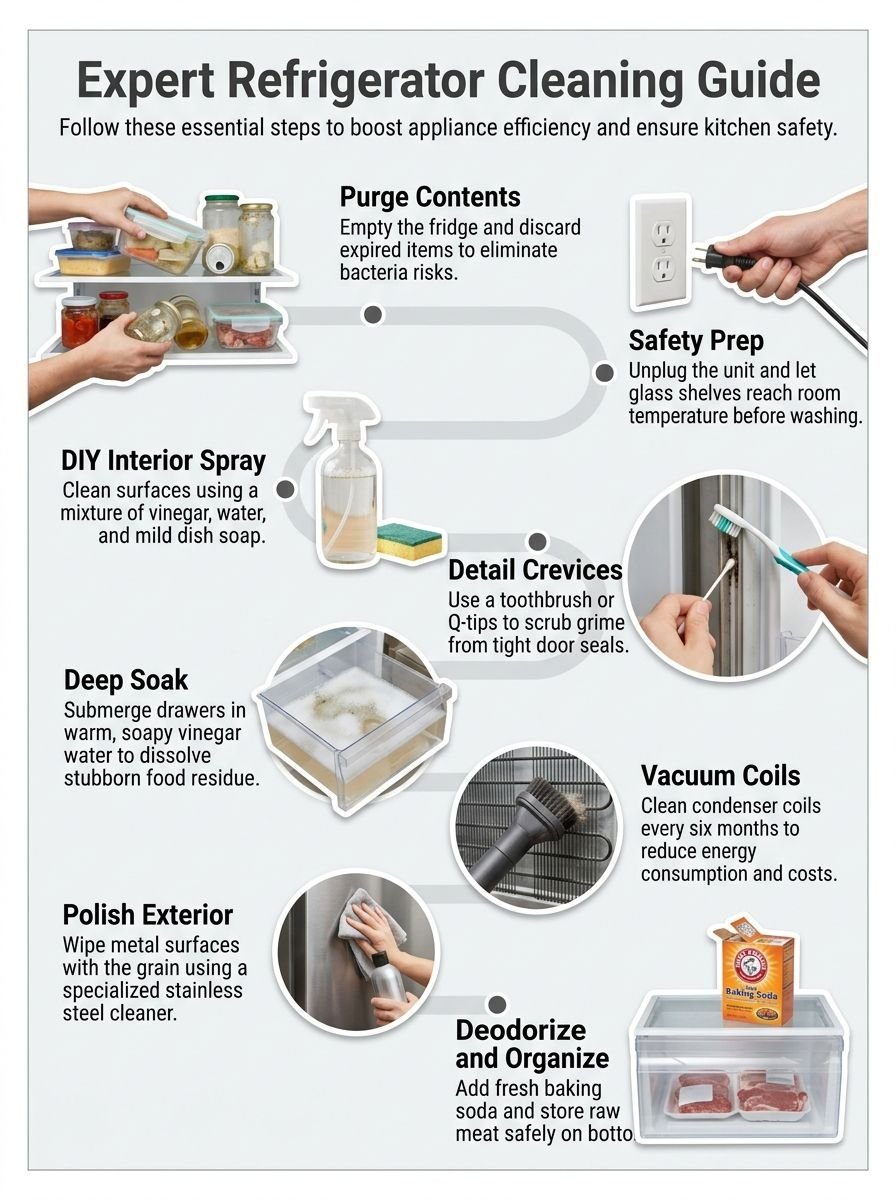
One fact helps right away. The Department of Energy, DOE, notes that cleaning condenser coils every 6 to 12 months can cut energy use and help lower the energy bill. These Tips To Clean Refrigeration cover emptying the unit, unplugging it, taking photos of the shelf layout, and soaking refrigerator shelves and drawers in warm water with dish soap and vinegar.
The guide also shows how to sanitize meat spills with bleach, deodorize with baking soda, vacuum refrigerator coils, and use a stainless steel cleaner on the exterior. It gives fridge organization steps to keep food freshness and reduce food spoilage, and it lists basic cleaning supplies like a vacuum cleaner, soft cloths, dish soap, and baking soda.
Read on.
Key Takeaways
- Clean condenser coils every 6 to 12 months. The Department of Energy says this can lower your energy bill and help the fridge last longer.
- Always unplug the refrigerator before cleaning for safety and better maintenance. Let glass shelves reach room temperature to prevent cracking when washing them.
- Soak shelves and drawers in warm water, dish soap, and two cups of vinegar for 20–30 minutes. This mix removes stains and breaks down grime.
- Use baking soda on a sponge to scrub odors away. Replace an open box of baking soda inside the fridge often to keep it smelling fresh.
- Store raw meat in sealed containers on the bottom shelf, not above other items, to avoid cross-contamination. Keep dairy out of the door for best results.
Empty and Prepare the Refrigerator
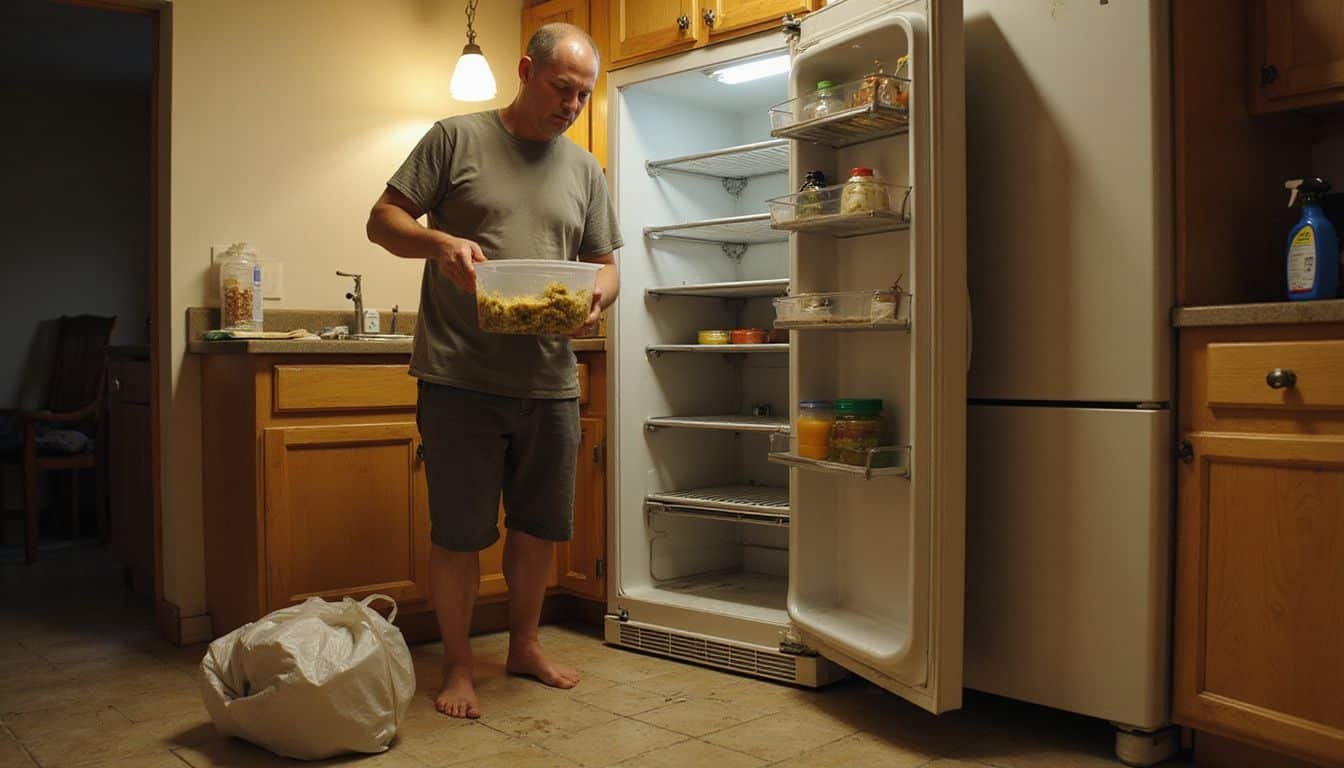
Start by removing all food items from the refrigerator. Toss out anything expired or spoiled to create a clean slate for your cleaning process. Unplug the unit and allow glass shelves to reach room temperature before you start scrubbing.
Taking these steps prepares the space for deep cleaning and ensures a fresh environment for food storage.
Remove all food and expired items
Homeowners and parents empty the refrigerator completely to check expiration dates on all items for food safety. They remove all expired items and dispose of any food that has been open too long or is past its expiration date.
This step reduces health risks and prepares the appliance for a clean refrigerator deep cleaning.
They sort perishable items by expiration date and place older items at the front to ensure older items get used first. Homeowners keep track of perishable items and check for spoiled or moldy food regularly, removing it immediately to support kitchen hygiene, better food storage, and smarter refrigerator organization.
Before washing shelves and refrigerator drawers, they set baking soda aside to refresh odors after cleaning.
Unplug the unit and let glass shelves reach room temperature
Unplug the refrigerator before cleaning to save energy and protect the compressor. The U.S. Department of Energy notes that cutting power during maintenance reduces waste and limits risk to sealed systems that contain refrigerant.
Let glass shelves reach room temperature before washing to prevent cracking. Cold glass can shatter if placed into warm, soapy water, so use warm water and mild soap and avoid the dishwasher for older or tempered glass; a how-to pdf or an Energy Saver guide often lists this step.
Clean Interior Surfaces
To clean the interior surfaces, homeowners should grab a non-abrasive cleaner or a DIY spray. They can scrub surfaces with cloths and tackle tight spots using old toothbrushes or cotton swabs for thorough cleaning.
Use a DIY cleaning spray or non-abrasive cleaner
Households can mix one cup water, one cup vinegar, and one teaspoon dish soap in a spray bottle for an effective DIY cleaner. They should use a soft cloth or non-scratch sponge and avoid abrasive pads on shelves and liners.
A toothbrush or Q-tips clean tight crevices and door seals. Sprinkle baking soda on a damp sponge to deodorize and scour stuck stains.
Parents should use a specialized stainless steel cleaner for metal doors and wipe with the grain to avoid streaks. They must not use bleach on non-stainless surfaces or near food and the garbage disposal.
National laboratories and Southern Living style guides in the United States, U.S.A., often endorse mild solutions for safe home care.
Tackle crevices with a toothbrush or Q-tips
Crevices collect grime and spills in the refrigerator. A toothbrush or Q-tips works wonders for those tight spots. These non-abrasive tools clean without scratching plastic surfaces.
They help reach hidden areas where dirt hides, making a difference in hygiene. Regularly addressing these hard-to-reach areas reduces bacteria growth, improving food safety.
Once the interior shines from tackling crevices, attention shifts to deep cleaning shelves and drawers next.
Deep Clean Shelves and Drawers
To deep clean shelves and drawers, soak them in warm, soapy water mixed with vinegar. This method cuts through grime and helps remove stubborn stains easily.
Soak in warm, soapy water with vinegar
Soak shelves and drawers in a solution of warm water, dish soap, and two cups of white vinegar. Let them soak for 20 to 30 minutes. This method effectively loosens grime and helps remove tough stains.
Vinegar’s acidity breaks down stubborn residue while the warm water enhances the cleaning action of the mixture.
After soaking, scrub surfaces with a soft cloth or sponge for a spotless finish. This approach creates a fresher kitchen environment that promotes safe food storage. Parents can enjoy peace of mind knowing their refrigerator is clean and odor-free; they contribute to better food safety by maintaining cleanliness in this essential appliance.
Clean Exterior and Coils
Clean the fridge’s exterior and coils regularly. Dust collects on surfaces, making it harder for the unit to work efficiently. Use a soft cloth and gentle cleaner on the outside. For the coils, grab your vacuum or a brush to remove dirt and debris.
This simple task can extend the life of your refrigerator. Discover more tips for keeping your kitchen fresh and safe!
Wipe the exterior and vacuum condenser coils
Wipe the exterior of the refrigerator with a stainless steel cleaner. Always follow the grain direction for best results. This simple step helps keep fingerprints and smudges at bay, making your kitchen look fresh.
Vacuum the condenser coils every six to twelve months. Dust and hair build up on these coils over time, reducing efficiency. A clean system runs better and uses less energy, which is important as families balance household costs with their summer energy needs.
Regular maintenance ensures optimal performance and safety in your kitchen environment.
Deodorize and Organize
To keep the refrigerator smelling fresh, homeowners should replace the baking soda inside it regularly. Organizing food items helps maintain order and ensures that everything stays within reach while preventing unwanted odors.
Replace baking soda and store items properly
Regularly replace the open box of baking soda in the refrigerator. This simple act helps maintain odor absorption, keeping the fridge smelling fresh. Store raw meat in a container on the bottom shelf to prevent cross-contamination with other foods.
Dairy products should not go in the door; they need consistent temperatures to stay fresh.
Wipe the bottoms of jars and containers before placing them back in the fridge. Clean surfaces reduce bacteria risks and keep food fresher longer. Following these steps ensures a safer kitchen environment while utilizing proper storage techniques for all items.
Conclusion
Cleaning the refrigerator brings fresh air into any kitchen. These simple tips ensure food safety and a tidy space. Regular maintenance helps preserve energy efficiency and prolongs appliance life.
Following this guide makes cleaning straightforward for every homeowner. A cleaner fridge leads to a safer, healthier home for families everywhere.
FAQs
1. What basic steps keep my refrigerator fresh and safe?
Clean spills right away. Empty old food each week. Pull out drawers and wash with warm, soapy water. Wipe shelves and door seals. Follow cleaning and housekeeping rules from the maker. Check temperature and toss expired items.
2. How often should I deep clean and check coils?
Deep clean every three months. Clean condenser coils twice a year. A clean fridge uses less power and eases energy infrastructure strain. It does not link to the strategic petroleum reserve. Good maintenance saves money and food.
3. Are there myths about fridge cleaning I should know?
Cold does not stop all germs. Regular cleaning beats luck. Chemicals must match the surface. Nuclear security and nuclear energy have no role in home fridge care. Trust food safety facts, not myths.
4. Who sets rules that affect food safety and supply chains?
Local health departments set many rules. Industry leaders and officials can shape big policy. Names like chris wright and james danly appear in energy and regulatory talks. Groups such as the defense production act consortium and countries like canada may affect supply chains. Still, follow maker guides and local codes for safe cleaning and housekeeping.