
How To Cleaning Cabinets often feels like a chore for homeowners and parents. Grease builds up on kitchen cabinets and cabinet doors fast. Dirt hides near cabinet hardware. They want clean kitchen cabinets without damage.
They want simple steps and safe cleaning products.
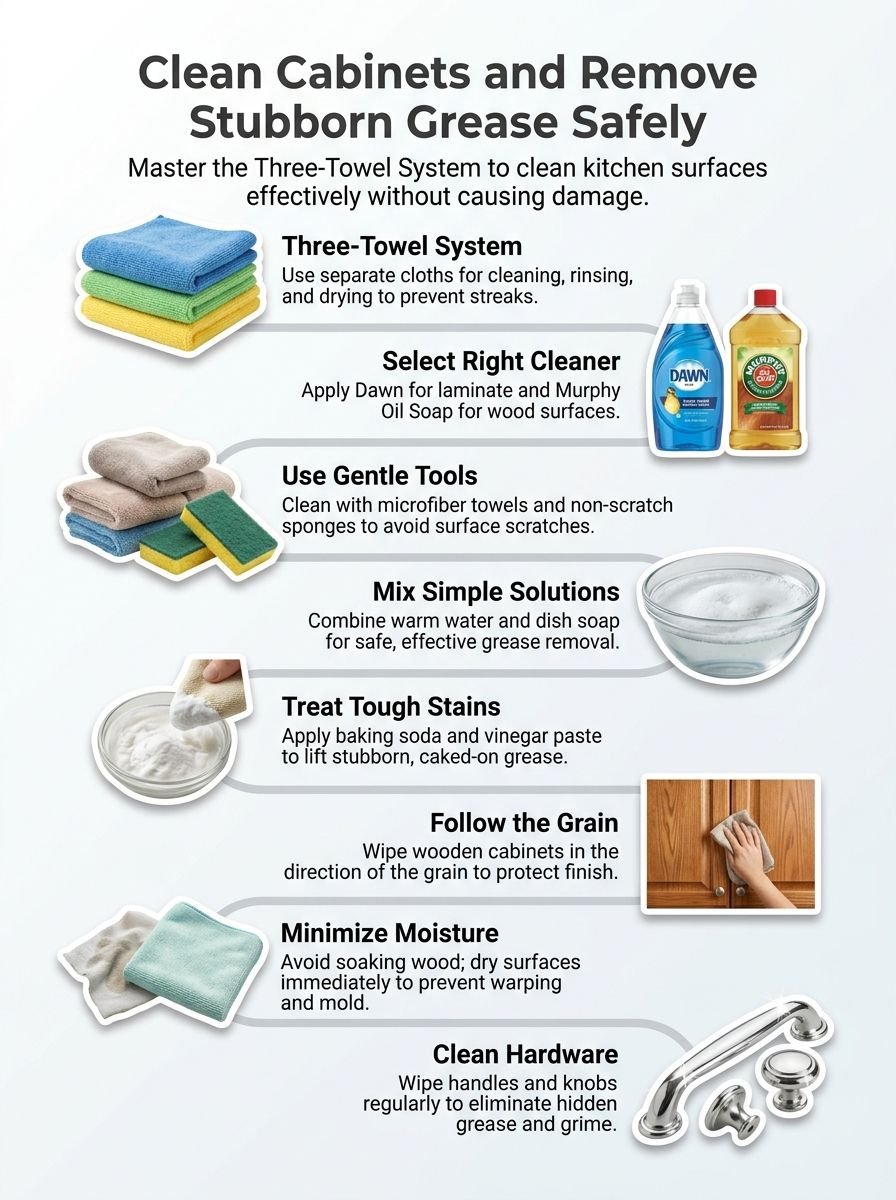
One clear fact helps: use the Three-Towel System, a damp cloth with cleaner, a rinsing cloth, and a dry cloth to buff. Dawn dish soap in warm water works best for painted and laminate surfaces, while Murphy Oil Soap suits wood cabinets.
This guide lists tools like a microfiber cloth, spray bottle, nonabrasive sponge, and a scrub pad. It shows step-by-step methods, from warm water and dish soap to baking soda for tough stains, and explains how to work with the grain on wood.
It also warns against abrasive cleaners, bleach, and excess moisture. Read on.
Key Takeaways
- Use the Three-Towel System (cleaning, rinsing, drying) to avoid streaks and water damage on kitchen cabinets.
- For painted or laminate surfaces, mix Dawn dish soap with warm water for safe grease removal; use Murphy Oil Soap for real wood cabinets, always wiping with the grain.
- Remove stubborn stains using baking soda paste or a vinegar-water mix; test these solutions in a hidden spot first to protect finishes like SW 7008 Alabaster White.
- Avoid harsh chemicals (like bleach or ammonia) and abrasive tools; they can scratch surfaces or strip protective coatings as noted by experts from Wirecutter and Urban Homecraft.
- Regular cleaning habits—wiping hardware, emptying and drying inside cabinets—help prevent heavy grease buildup and keep cabinets looking new year-round.
Essential Tools and Supplies for Cleaning Cabinets
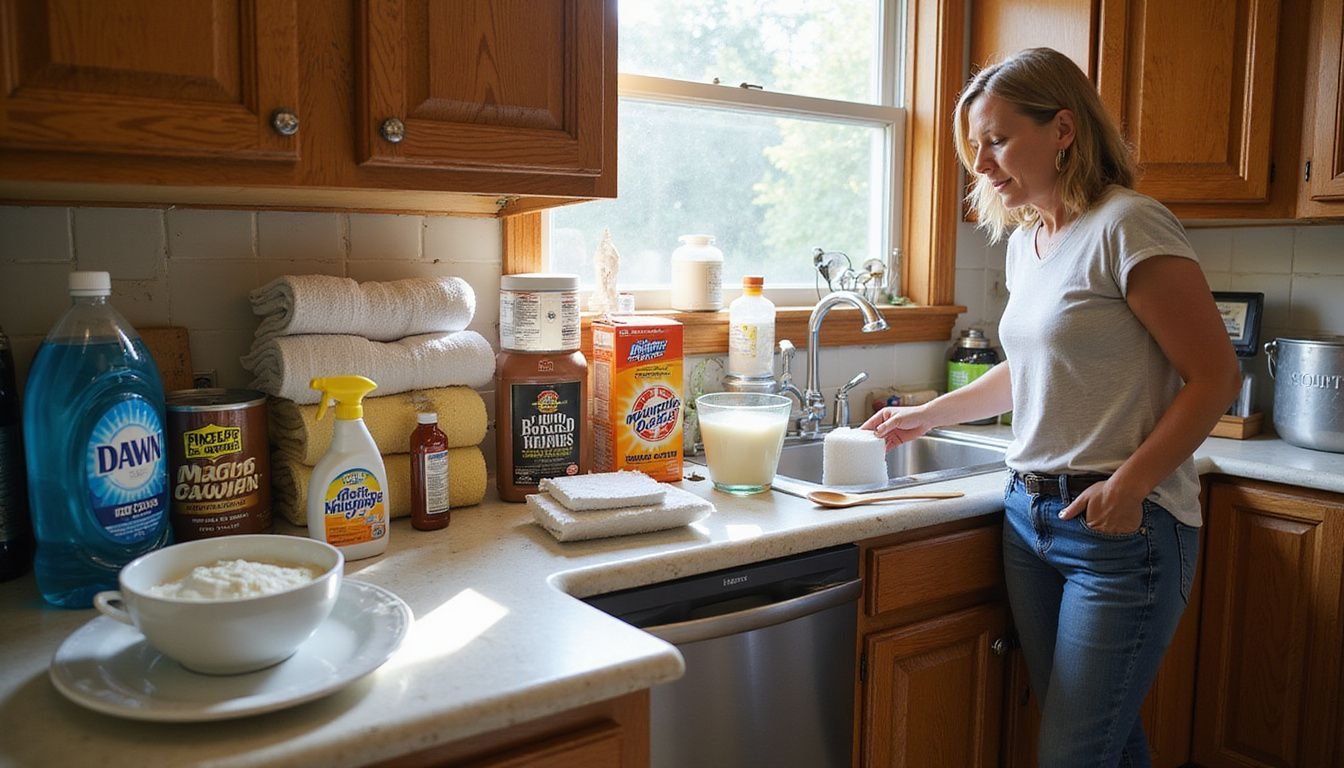
The introduction covered why grease forms and common headaches. The list that follows gives tools and supplies for cleaning cabinets.
- Microfiber towels for the three-towel system, one for applying cleaner, one for rinsing, and one for drying to prevent streaks and water damage.
- Dawn Ultra original dish detergent liquid for diluted cleaning solutions on painted or laminated kitchen cupboards that cuts grease without excess moisture.
- Murphy Oil Soap original wood cleaner for wood kitchen cabinets, used sparingly and wiped with the grain to protect finish and avoid swells.
- Non-scratch scrub sponge such as Scrub Daddy for stubborn grease buildup, chosen to scrub without scratching painted or laminated surfaces.
- Mr. Clean Magic Eraser for spot removal on laminate and painted surfaces, used gently to avoid scuff-sanded marks on finishes.
- White vinegar, Heinz all natural distilled white vinegar, mixed with water as a multi-surface cleaner for laminate and painted doors to lift grease naturally.
- Baking soda paste for tough stains, applied lightly then wiped off to avoid abrasion on wood finishes and painted trim.
- Pledge Multi Surface Cleaner Spray or Pine-Sol multi-surface cleaner for quick touch-ups on non-porous surfaces, tested first on a hidden spot.
- Scotch-Brite pad and sandpaper for light scuff-sanded repairs before repainting with Sherwin-Williams Emerald urethane trim enamel paint, used carefully to avoid gouges.
- Wood filler and Howard Orange Oil wood polish for small dent repairs and conditioning of wood kitchen cabinets after deep cleaning.
- Zinsser Cover Stain and concentrated formulas like Krud Kutter for heavy stains and prep work prior to repainting or refinishing.
- Bottle sprayer, bucket, and measuring spoons for mixing Dr. Bronner’s pure castile liquid soap or concentrated cleaning solution; always remove items from cabinets and dry thoroughly before returning contents.
https://www.youtube.com/watch?v=IEwmXfohjXE
Step-by-Step Guide to Remove Stubborn Grease
Stubborn grease can make cabinets look old and dirty. Follow a simple process to clean them effectively without causing damage. Start by mixing warm water with liquid dish soap for an easy solution.
For tougher stains, vinegar or baking soda works wonders. Always scrub in the direction of the wood grain on greasy wood cabinets to keep their finish intact.
Use warm water and dish soap
Warm water mixed with Dawn liquid dish soap cleans painted and laminated cabinets well. The cleaner lifts grease without harsh chemicals. A non-scratch scrub sponge removes stubborn grease from cabinet faces.
Use a three-towel system for cleaning, rinsing, and drying to avoid streaks. Avoid abrasive cleaners, bleach, or ammonia while using dish soap to protect finishes and cleaning supplies.
Wooden cabinets need a gentler choice. Use Murphy Oil Soap for greasy wood cabinets to prevent damage, and always work with the grain when wiping wooden surfaces. Owners should keep a Scotch Bright pad off wood and reserve it for laminate only.
This method fits family kitchens and helps with regular cleaning kitchen cabinets routines.
Apply vinegar or baking soda for tough stains
Homeowners mix white vinegar and baking soda into a paste for caked-on grease. They apply the paste to stained areas and let it sit five to ten minutes, then scrub with a microfiber cloth or soft brush.
Parents test the solution on a hidden spot first to protect finishes like SW 7008 Alabaster White and wood treated with Murphy Oil Soap. Experts such as Michael Sullivan and Scott Duncan favor gentle tools.
Wirecutter and George Evageliou cite soft cloths. Meleyna Nomura and Duncan’s Creative Kitchens recommend spot tests. Urban Homecraft sells trusted brushes. Pledge Everyday Cleaner, Castile Soap, Sprayway Glass Cleaner, Better Life Glass Cleaner, and Cabinet Magic serve for routine or heavier cleaning.
Work with the grain for wooden cabinets
Cleaning wooden cabinets requires a careful touch. Always clean in the direction of the wood grain to avoid damaging the surface. This simple step helps maintain the cabinet’s finish and prevents scratches.
Using an oil-based soap specifically designed for wood is essential. A non-scratch scrub sponge, like Scrub Daddy, works well for stubborn grease. Avoid soaking wooden cabinets; instead, use a damp cloth to minimize moisture exposure while cleaning effectively.
Best Cleaning Products for Cabinet Materials
For wooden cabinets, Murphy Oil Soap shines as a go-to cleaner. This product nourishes the wood while lifting dirt and grease off surfaces. For laminate cabinets, vinegar solutions work wonders by breaking down grime without leaving damage behind.
Whether using soap or vinegar, these products help achieve that clean shine. Explore more about different cleaning methods to keep every corner of your home sparkling!
Murphy Oil Soap for wood
Murphy Oil Soap cleans wood cabinets effectively and safely. This product features a gentle formula that preserves the beauty of wooden surfaces. The three-towel method enhances its use: one towel applies the soap, another rinses, and a third dries the surface.
Always clean in the direction of the grain to avoid scratches and maintain a smooth finish. For stubborn grease, use a non-scratch scrub sponge along with Murphy Oil Soap. Avoid abrasive cleaners or harsh chemicals like bleach or ammonia; these can damage wood finishes over time.
Following these cleaning methods ensures that cabinets remain beautiful without any harm.
Vinegar solutions for laminate
Vinegar works well for cleaning laminate cabinets. Mix equal parts of white vinegar and water in a spray bottle. Spray the solution onto the surface, then wipe with a soft cloth. This method helps remove grease without damaging the finish.
Avoid using excessive moisture on painted laminate surfaces to prevent peeling. Use a non-scratch scrub sponge, like Scrub Daddy, for tough spots if needed. Always clean gently along the grain to maintain appearance and durability.
Common Mistakes to Avoid During Cabinet Cleaning
Cleaning cabinets requires care and attention. Making mistakes can lead to damage or ineffective cleaning. Here are common errors to avoid:
- Using abrasive cleaners can scratch surfaces. Many products contain harsh chemicals that harm finishes.
- Soaking wooden cabinets leads to warping. Excess moisture can ruin the wood structure over time.
- Skipping the drying step after cleaning creates problems. Wet surfaces encourage mold growth and attract dust.
- Ignoring cabinet materials results in damage. Different surfaces require specific cleaning methods and products.
- Applying too much pressure while scrubbing may scratch finishes. Gentle motions protect delicate surfaces from wear and tear.
- Forgetting to clean hardware keeps grease buildup in place. Regularly wipe down handles and knobs for a complete clean.
- Overlooking hidden areas, such as behind appliances, leaves grime untouched. A thorough cleaning involves checking all corners and gaps.
- Using bleach or ammonia can strip away protective coatings from cabinets, leading to further issues down the line.
- Failing to test cleaning solutions on a small area first risks visible damage or discoloration on surfaces.
- Neglecting routine maintenance allows grease accumulations to return quickly, making future cleaning more difficult than necessary.
Tips for Maintaining Clean and Grease-Free Cabinets
Keeping cabinets clean and free from grease helps maintain the beauty of any kitchen. A few easy habits can make a big difference.
- Use a three-towel system for cleaning. One towel should hold the cleaner, another for rinsing, and the last one for drying. This method prevents cross-contamination and keeps surfaces pristine.
- For painted or laminated cabinets, mix Dawn dish soap with warm water. This gentle solution effectively cleans without damaging finishes.
- Clean wood cabinets with Murphy Oil Soap. It protects the wood while removing dirt and grease safely.
- Apply vinegar solutions to laminate cabinets as an effective natural cleaner. Vinegar cuts through grime without scratching surfaces.
- Avoid using abrasive cleaners, bleach, or ammonia on any cabinet material. These harsh substances can ruin finishes and lead to costly repairs.
- Wipe inside cabinets with soapy water after emptying them out. Make sure to dry thoroughly before putting items back in place; this step keeps them fresh and ready for use.
- Work with the grain when cleaning wooden cabinets to prevent scratches. This technique maintains their appearance over time.
- Lastly, keep non-scratch scrub sponges on hand for stubborn grease spots. They remove tough stains without damaging cabinet surfaces.
These simple tips will help homeowners enjoy clean, grease-free cabinets all year round while making cleaning easier in the long run.
Conclusion
Cleaning cabinets can be a straightforward task with the right approach. Homeowners should rely on gentle cleaners like Dawn dish soap or Murphy Oil Soap for wood surfaces. Sticking to the three-towel system enhances effectiveness and prevents damage.
Regular maintenance keeps cabinets looking fresh and grease-free. Implement these tips, and enjoy clean, shiny cabinets without worry!
FAQs
1. What is the safest way to clean cabinets and remove stubborn grease without damage?
Start by testing a small hidden spot. Dust and dry wipe first. Mix a mild cleaner with warm water. Use a soft cloth to wipe gently. Use a plastic scraper for stuck bits. Rinse with clean water and dry to protect the finish.
2. Can harsh cleaners or heavy scrubbing hurt my cabinets?
Yes. Strong chemicals and rough pads can strip the finish or scratch the surface. Use a gentle cleaner and soft tools instead. Test any method in a hidden area before you clean the whole cabinet.
3. How do I remove heavy grease from painted or laminate cabinets without damage?
Apply a safe degreasing solution and let it sit a few minutes. Wipe with a soft cloth in the grain or along the pattern. For stubborn spots, use a gentle abrasive paste and rub lightly. Rinse and dry each area right away.
4. How do I keep cabinets clean longer after I remove stubborn grease?
Rinse and dry well to stop residue build up. Use a mild, pH-neutral cleaner on a regular schedule. Wipe spills quickly. Apply a thin layer of a protective product made for your finish when needed.