
Many homeowners wake up to dusty blinds and sneezes. This common problem hurts indoor air quality and spreads pollen, pet dander, mold spores, and dust around the room.
How To Cleaning Your Blind matters. Regular cleaning, weekly, keeps blinds looking new and cuts dust that harms indoor air quality. This guide shows easy steps for metal blinds, plastic blinds, wood blinds, faux wood blinds, mini blinds, vertical blinds, and cellular blinds.
It will name tools like a microfiber cloth, microfiber mini blind duster, vacuum cleaner with upholstery brush, and options like ultrasonic cleaning or a trip to Home Depot for supplies.
Read on.
Key Takeaways
- Regular weekly dusting with a microfiber cloth or vacuum keeps blinds looking clean and helps reduce airborne dust, pollen, pet dander, and mold spores in your home.
- Dry methods work best for wood and faux wood blinds to prevent warping and scratches; use only a dry microfiber cloth on these types.
- For plastic, metal, or vinyl blinds, wipe with mild dish soap mixed with warm water or a 50/50 mix of water and white vinegar to remove smudges; always dry slats right away to protect the finish.
- Deep soaking is safe for PVC, vinyl, or aluminum blinds but not wooden ones; soak for 5–10 minutes then rinse well before drying flat on towels.
- Professional services like Merry Maids or following Hunter Douglas manufacturer care guides are good options if blinds are heavily soiled or if you need deep cleaning.
Methods for Cleaning Blinds
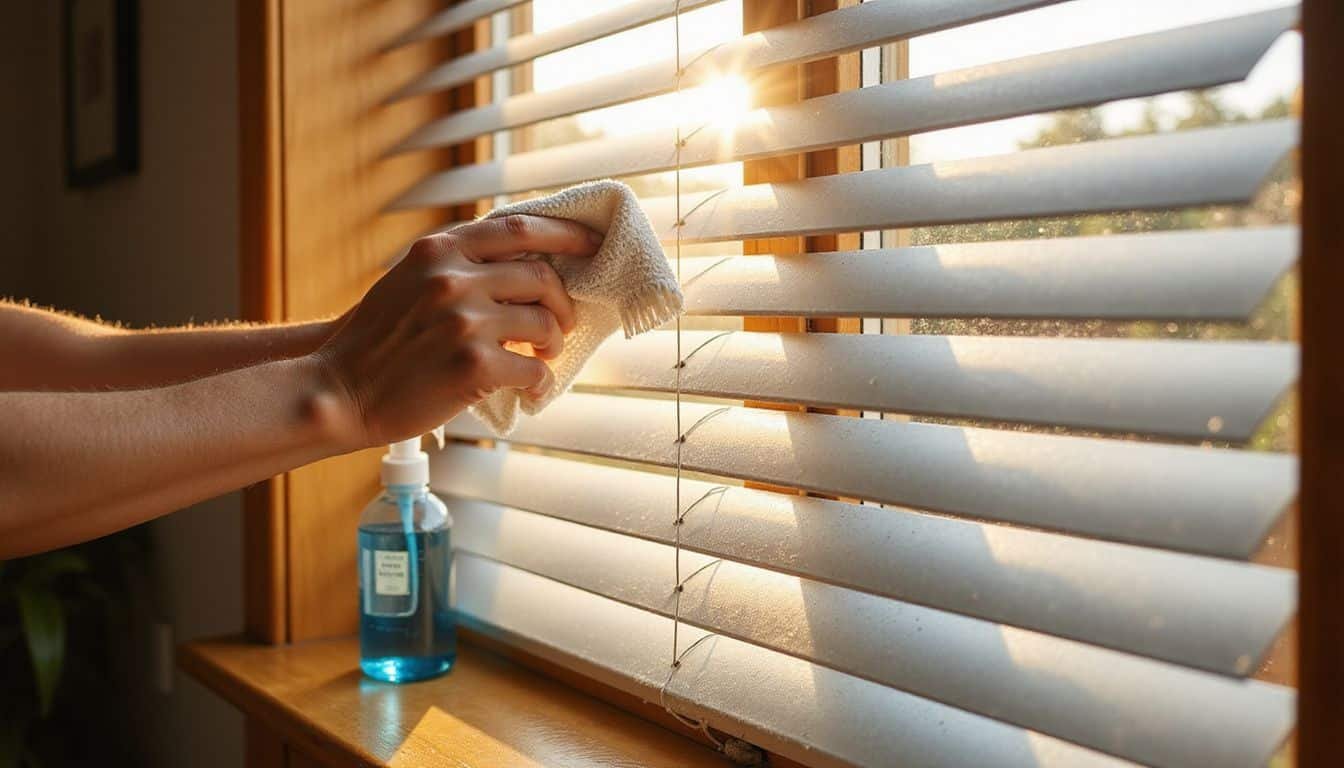
Cleaning blinds can seem challenging, but it doesn’t have to be. Simple methods like dry dusting and wet wiping make it easy to keep window treatments fresh and clean.
Dry Dusting for Regular Maintenance
Weekly dusting keeps blinds fresh. Parents and homeowners protect air quality and home appearance.
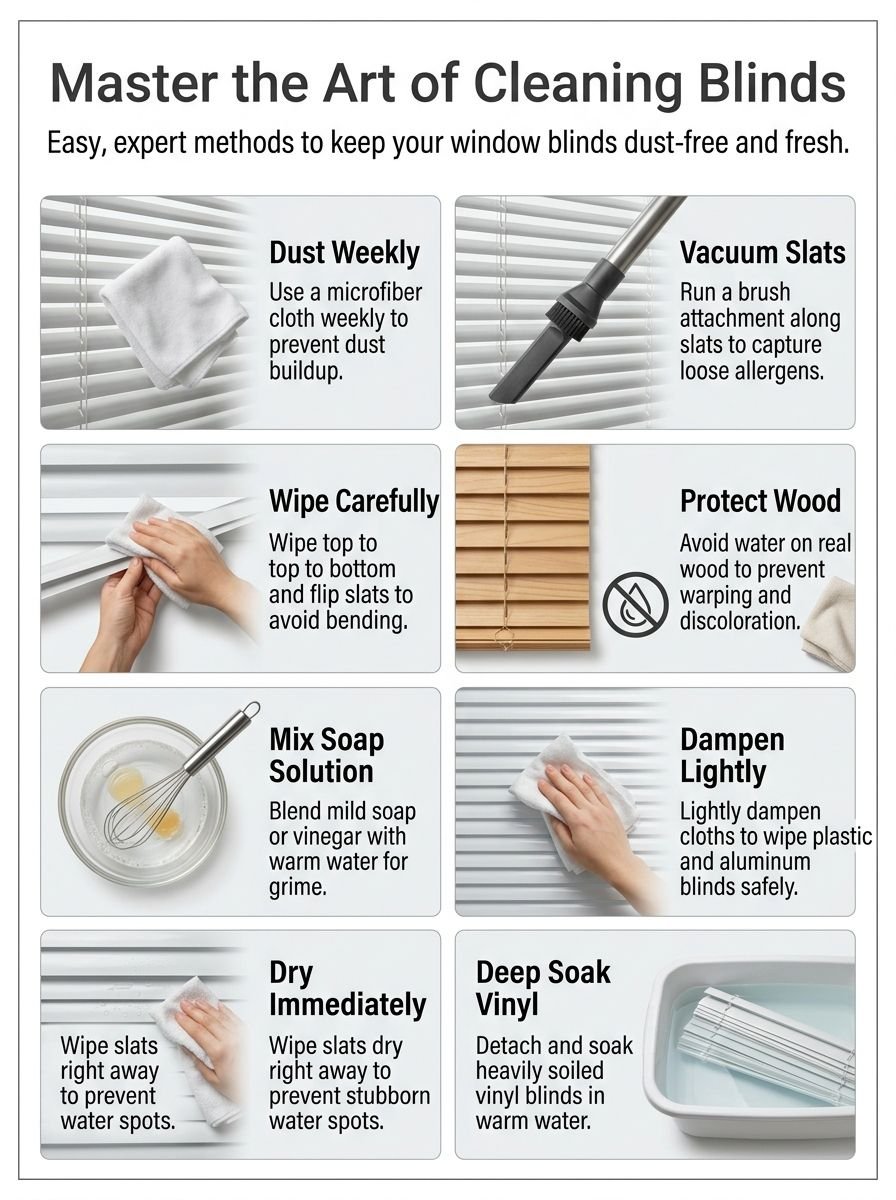
- Use a microfiber cloth or a duster once a week to clean blinds, since regular cleaning of window blinds prevents dust accumulation and keeps window treatments looking new.
- Run a vacuum with a brush attachment along slats to lift dust and reduce bacteria and virus particles that can circulate through the heating and cooling system.
- Wipe each slat from top to bottom while keeping the blind in place to avoid bending; flip the slat to clean the opposite side.
- Treat mini-blinds and modern precious metals finishes with gentle, dry dusting to avoid scratches and maintain finish.
- Skip water on real wood blinds and alternative wood blinds to prevent warping and discoloration, and use a dry microfiber only.
- Use a slightly damp cloth on fabric blinds and fabric window treatments when smudges appear, testing an unseen corner first to protect the material.
- Add air filtration upgrades like Filtrete™ Healthy Living Filters to the HVAC to lower airborne dust between cleanings and support cleaner blinds.
- Consider professional service from Merry Maids or a deep cleaning service for heavily soiled blinds, or follow manufacturer guidance for Hunter Douglas products such as Easyrise™, PowerTilt™, UltraGlide®, Vertiglide™, SimpleLift™, LiteRise® and PowerView™.
Wet Wiping for Smudges and Grime
Wet wiping clears smudges fast. It fits most busy homes.
- Wet wipe plastic, aluminum, and faux-wood blinds with a soft microfiber rag or a clean sock to lift grime and fingerprints.
- Mix a mild dish soap with warm water, or use a 50/50 mix of water and white vinegar as the cleaning solution for safe, effective results.
- Lightly dampen the rag or sock so it cleans without soaking the slats and causing warping.
- Wipe each slat one at a time to remove buildup and sticky spots on blinds and cellular honeycomb shades edges.
- Rinse each slat with a separate cloth moistened with clean water to remove any soapy residue from designer screen patio shades or window blinds.
- Dry the slats with a clean cloth right away to prevent water spots and to protect finishes on faux-wood and metal.
- Use wet wiping as regular home cleaning and home tips maintenance to manage smudges between deeper cleanings.
- Treat wet wiping as a DIY projects task that improves appearance, and extends the lifespan of blinds, supporting home improvement goals.
- Keep a soft rag, clean water bucket, mild soap, and an extra cloth in a cleaning caddy to speed future sessions and protect family spaces.
Next, deep soaking handles heavily soiled blinds.
Deep Soaking for Heavily Soiled Blinds
Deep soaking suits PVC, vinyl, and aluminum blinds with heavy grime. Wooden blinds can warp or discolor and should not soak.
- Homeowners should check manufacturer instructions before soaking, since some models need special care.
- Parents should detach blinds and lay them flat in a tub or basin filled with warm, soapy water.
- The blinds must soak for 5 to 10 minutes to loosen oil, dust, and sticky residue.
- Someone should gently agitate the water while sliding a foam sponge across the slats to remove grime.
- After washing, rinse the blinds thoroughly with a showerhead to remove all soap and suds.
- The blinds should drip-dry while propped upright, then lie flat on absorbent towels to finish drying.
- Wooden blinds must never go in the soak because water will warp and discolor the wood.
- Homeowners must follow any specific care notes from the maker, since some blinds differ in materials and coatings.
The next section covers wet wiping for smudges and grime.
Conclusion
Cleaning blinds keeps homes fresh. Regular dusting prevents buildup and discoloration. For stubborn stains, use gentle solutions. It is crucial to avoid soaking wooden blinds; instead, treat them carefully with polish.
Following these tips will help maintain beautiful and functional window coverings for years.
FAQs
1. How often should I clean your blind to keep a fresh, dust-free home?
Dust builds fast. Dust your blinds once a week with a soft cloth or a vacuum brush. Do a deep clean every three months or sooner if they look dirty.
2. What is the safest way to dust blinds without damage?
Close the slats. Use a vacuum with a soft brush or wipe each slat with a soft cloth. Move top to bottom in gentle strokes to prevent bending.
3. Can I wash my blinds in a tub or sink?
You can for plastic or metal blinds. Fill a tub with warm water and mild soap, soak, rinse, and air dry. For fabric blinds, spot clean to avoid shrinkage or warping.
4. How do I remove tough grime and keep blinds fresh?
Mix mild soap with warm water. Use a soft cloth or soft brush to scrub stains on the slats. Rinse with clean water and dry each slat to keep a dust-free home.