
Many homeowners spot cloudy spots on glass surfaces and white residue on faucets, sinks, and tiles. They search for quick Tips To Hard Water Stain Remove that work on every surface in the house.
Hard water stains form when minerals in hard water dry and leave deposits. 1 The guide names practical fixes, from white vinegar and baking soda to Bar Keepers Friend, Dawn dish soap mixes, Magic Eraser, a squeegee, microfiber cloths, and water softeners like Aquasana. 2 It shows step by step cleaning techniques and prevention tips for showers, toilets, grout, and fixtures. Read on for simple, proven steps.
Key Takeaways
- Hard water stains come from minerals like calcium and magnesium left behind after water dries. These stains often form on glass, faucets, tiles, sinks, toilets, and fixtures.
- You can remove most hard water stains with simple methods. Use a solution of equal parts white vinegar and Dawn dish soap or spray vinegar mixed with water on surfaces. Baking soda mixed with hydrogen peroxide also works for tough buildup.
- For severe spots that household products cannot clean, use commercial stain removers like CLR Calcium Lime Rust Remover or Bar Keepers Friend. Always test these cleaners in a hidden area first to prevent damage.
- Prevent future hard water stains by using a squeegee after every shower and installing a certified water softener system like Aquasana SimplySoft. Water softeners lower mineral levels and protect your home’s plumbing and appliances.
- Cleaning pros recommend using microfiber cloths, magic erasers, steel wool (grade 0000), WD-40 for metal fixtures, lemon juice for sinks, and avoiding strong acids near natural stone surfaces to keep everything spotless without causing harm.
What Are Hard Water Stains?
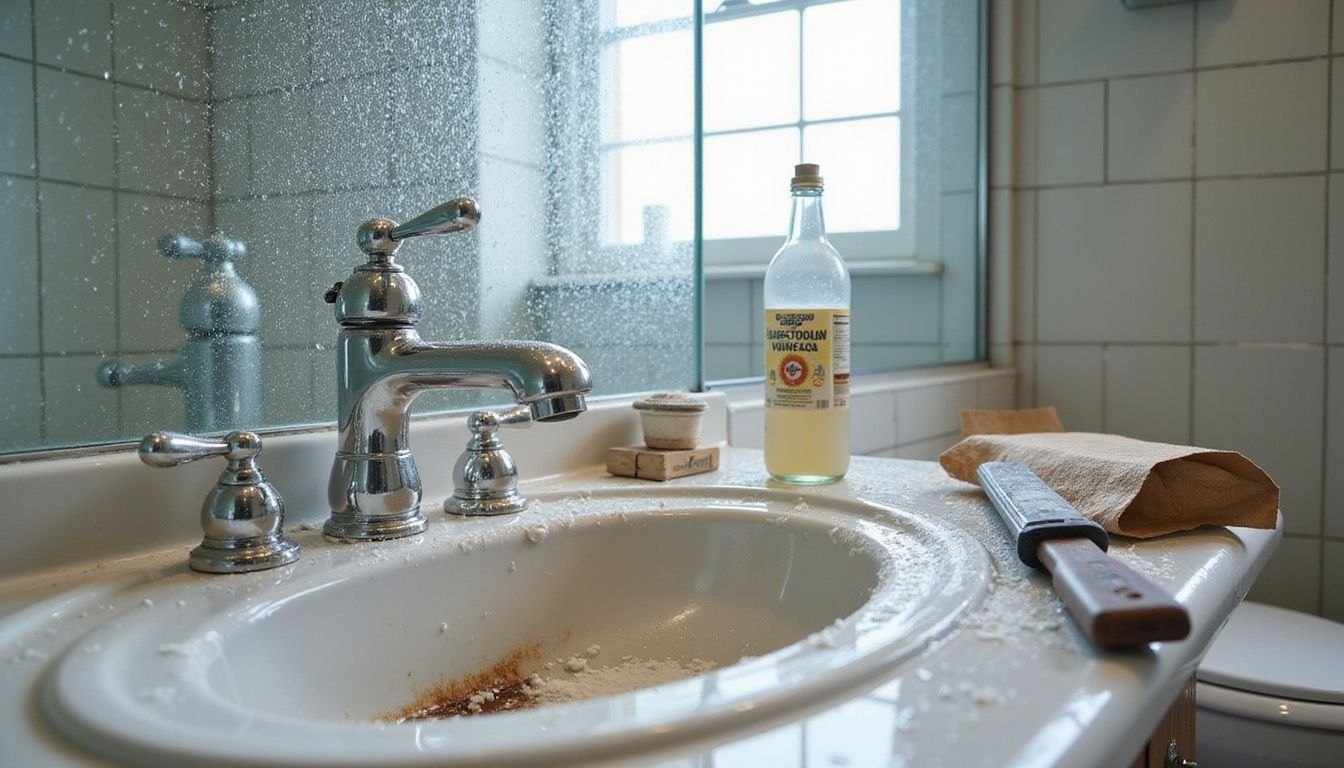
Hard water stains form when dissolved calcium and magnesium remain after water evaporates. 1 The minerals create white spots, film, or chalky residue on dishes, faucets, bathroom fixtures, shower doors, and showerheads.
High levels of calcium and magnesium make stains more frequent and more stubborn.
Common places include sinks, tubs, and toilets. Those mineral deposits often resist scrubbing and need targeted residue removal and specific cleaning products. They do not pose health risks, but limescale and mineral buildup look unsightly and can harm fixtures.
Homeowners can use household ingredients like vinegar, baking soda, and hydrogen peroxide, plus tools such as a squeegee, toilet brush, or a water softener system, for cleaning tips and prevention.
General Tips for Removing Hard Water Stains
Removing hard water stains requires the right approach. Vinegar mixed with water works wonders on many surfaces. Baking soda combined with hydrogen peroxide offers another effective solution.
For those who prefer ready-made options, commercial stain removers can do the trick too.
Use vinegar and water solutions
Vinegar and water make a simple fix for hard water stains. Homeowners can apply the mix to glass, chrome, tile, and fixtures.
- Mix one cup white vinegar with one cup Dawn dish soap in a bowl, apply with a sponge, and let sit to break down heavy mineral buildup on sinks and tubs.
- Combine equal parts white vinegar and water in a spray bottle for glass and shower doors, spray the surface, and let sit for 30 minutes for tough deposits.
- Spray straight white vinegar on water spots on glass, wait 5 to 10 minutes, then scrub with a nonabrasive pad to lift stains without scratching.
- Soak a soft cloth in white vinegar, wrap it around faucets and chrome fixtures, and leave it for 15 to 30 minutes to dissolve limescale and restore shine.
- Pour one cup of white vinegar into the toilet bowl and let it sit for 30 minutes before scrubbing to remove ring stains and mineral rings.
- Use vinegar straight or diluted as a safe, natural cleaning solution for routine maintenance on tile and bathroom fixtures, instead of harsher cleaners like Lime Away.
- Keep tools on hand such as a spray bottle, sponge, soft cloth, and squeegee from Lowe’s or amazon.com, and pair vinegar treatments with products like baking soda, lemon juice, or borax for stubborn spots.
- Homeowners can consult cleaning pros like The Cleaning Authority or follow Good Housekeeping tips for technique, and can buy specialty items from Chemical Guys or try a water softener brand like simplysoft® to reduce future stains.
- Avoid mixing vinegar with isopropyl alcohol or commercial acid cleaners; use plain vinegar methods first and reserve stronger products only when vinegar does not remove scale.
Baking soda and hydrogen peroxide methods
This section covers baking soda and hydrogen peroxide methods. It lists safe, practical cleaning solutions for home use.
- Mix baking soda with hydrogen peroxide into a paste and press it onto light stains, because the paste’s mild abrasiveness scrubs mineral buildup without scratching most surfaces.
- Leave the paste on stubborn spots for 10 to 15 minutes, then scrub with a soft brush; the peroxide acts as a gentle bleaching agent and helps dissolve deposits.
- Spray plain vinegar on porcelain showers and bathtubs, wait five minutes, then scrub with baking soda to lift hard water films from the glaze.
- Add baking soda to vinegar inside a toilet bowl and let the fizz loosen rings, then scrub and flush for a cleaner surface.
- Make a baking soda and vinegar paste for sinks that will clean stains without harsh scrubbing and that will neutralize odors while it works.
- Use hydrogen peroxide or a vinegar mix on tile and grout, but avoid long contact on natural stone tiles to prevent surface damage.
- Apply the paste to faucets and fixtures, let it sit briefly, then rinse and buff to remove mineral spots without harming finishes.
Next, apply these methods to glass, shower doors, faucets, toilets, and sinks.
Commercial hard water stain removers
Commercial hard water stain removers break down mineral deposits effectively. 5 Products like CLR Calcium Lime Rust Remover and Bar Keepers Friend stand out for tackling tough stains.
Some users have reported dissatisfaction with CLR’s ability to remove certain stains, which shows that effectiveness can vary. These cleaners often contain stronger acids or specialized agents not present in household products.
Testing commercial solutions on a small, hidden area is crucial to avoid damage. Many homeowners find these products highly effective where household methods fail, particularly for severe calcified buildup.
High-quality stainless steel razor blades and 0000 grade steel wool tools also help in removing stubborn stains from hard surfaces. Magic sponges or Mr. Clean Magic Erasers work wonders on surfaces affected by hard water buildup, making cleaning easier than ever before.
Next, specific tips for removing hard water stains from glass and shower doors will provide even more practical guidance.
Removing Hard Water Stains from Specific Surfaces
Hard water stains can make surfaces look dingy and unkempt. Each surface requires a unique method for removal. For glass, a mix of vinegar and water works wonders. Spray it on, wipe with a soft cloth, and watch the sparkle return.
Metal fixtures shine when treated with baking soda paste. Apply it gently, scrub lightly, and rinse well to avoid scratches.
Toilets benefit from commercial stain removers specifically designed for tough mineral deposits. A good product will break down those stubborn remnants with ease. Sinks often need just a little elbow grease combined with lemon juice for effective cleaning.
These targeted methods help restore beauty to different surfaces in any home. Homeowners looking to tackle hard water stains should explore these specific cleaning techniques further!
Glass and shower doors
Glass surfaces require special attention to remove hard water stains effectively. 6 Regular maintenance keeps them sparkling clean and prevents build-up.
- Spray equal parts vinegar and water on glass shower doors. Let the solution sit for 30 minutes before rinsing it away with warm water.
- For tough glass stains, mix baking soda and water to form a paste. Apply the paste directly to the stains, then gently buff away the residue using a soft cloth.
- After cleaning, dry glass surfaces thoroughly or use a squeegee after each shower to minimize future stains.
- Consider using Rain-X or similar windshield repellent on clean glass surfaces. This product helps maintain cleanliness longer by providing a protective barrier against grime.
- For persistent stains, use a store-bought limescale cleaner that is safe for glass. Such products can tackle serious deposits without causing damage.
- A magic eraser offers an effective solution for extremely stubborn stains on glass surfaces. Its abrasive texture can help lift embedded marks without scratching.
- Avoid using vinegar or harsh acids on natural stone tiles near glass surfaces as they can cause damage to those materials.
Maintaining clear glass surfaces adds beauty to any home while preventing buildup is essential for longevity.
Faucets and fixtures
Hard water stains can create unsightly marks on faucets and fixtures. 7 Homeowners need effective methods to keep these surfaces clean.
- Use white vinegar to tackle mineral buildup.Soak a cloth in vinegar, wrap it around the stained area, and let it sit for 15–30 minutes.
- After soaking, scrub gently with a soft sponge or toothbrush. Rinse the area with warm water and dry it using a microfiber cloth for best results.
- For tough stains, mix vinegar and baking soda to create a paste. Apply this paste directly to the stains; rinse off after scrubbing.
- WD-40 can provide excellent results on metal fixtures. Spray it on the affected area, wait a few minutes, then wipe it clean with a cloth.
- A high-quality stainless steel razor blade helps remove severe buildup. Spray vinegar first; then carefully scrape away the stains.
- Bar Keepers Friend works well for stubborn spots too. Apply this paste, scrub gently while wearing gloves, and rinse thoroughly afterward.
- For hard surfaces, use 0000 grade steel wool without risking scratches or damage as you scrub away stains.
- Dryer sheets can also aid in cleaning hard water marks. 8 Soak them in water before scrubbing; follow up with Windex for sparkling results.
These tips will help homeowners maintain their faucets and fixtures free from hard water stains while enhancing their home’s appearance and cleanliness.
Toilets and sinks
Toilets and sinks often bear the brunt of hard water stains. 9 Cleaning them requires effective methods for deep cleaning.
- Pour white vinegar or hydrogen peroxide into the toilet bowl. Allow it to sit for about 30 minutes before scrubbing.
- After soaking, add baking soda along with extra vinegar. This combination creates a fizzing reaction that loosens tough stains.
- Use a toilet brush or a gentle abrasive tool to scrub away the stains. Flushing afterward will help rinse away debris.
- For stubborn stains, consider using stronger cleaning solutions or commercial products designed for this purpose.
- For sinks, soak a cloth or paper towels in white vinegar and place them over the stained areas for 15 to 30 minutes.
- Scrub the stains gently with a soft sponge after soaking and then rinse thoroughly.
- Create a paste using baking soda and vinegar if sink stains persist. This paste provides an effective, non-scratching cleaning method for tougher spots.
How to Prevent Hard Water Stains
Households can keep hard water stains at bay with simple habits. Regularly using a squeegee after showers helps remove moisture and reduces buildup on glass surfaces. Installing a water softener system provides long-term protection by altering the mineral content in the water.
These two steps make it easier to maintain clean surfaces and minimize scrubbing later on.
Use a squeegee after showers
Using a squeegee after every shower prevents hard water stains on glass surfaces. 10 This simple action keeps the bathroom looking clean and fresh.
- A squeegee efficiently removes water droplets from glass shower doors and walls. It helps avoid spots and streaks that hard water leaves behind.
- Beau Woods shared an effective 16-stroke technique for squeegeeing. Two strokes on each side wall and three on the middle wall ensure thorough coverage.
- Users should wipe the squeegee blade clean after each pass. 6 This practice keeps glass streak-free and shiny.
- Consistent squeegeeing enhances efficiency in removing all water drops quickly. It creates a habit that leads to sparkling, stain-free surfaces.
- The crouching motion and specific pattern help achieve complete removal of moisture. These techniques lead to more effective cleaning results.
- Community members often share tips on perfecting their squeegeeing routines. Engaging with others can improve skills and promote better practices.
Incorporating these habits fosters a cleaner home environment for families while maintaining beautiful glass surfaces.
Install a water softener system
Homeowners can improve their water quality by installing a water softener system. These systems remove calcium and magnesium ions from hard water, replacing them with sodium or potassium ions through ion exchange. 11 Testing the hardness of your water helps determine if a softener is necessary.
Aquasana offers options like their SimplySoft Grain Softeners, which are IAPMO certified for reducing hardness. The SimplySoft 40,000 Grain Softener now costs $849, down from $1,698; the 60,000 Grain Softener is available for $1,149 instead of $2,298.
These systems use 50% less salt and 28% less water than traditional models. Installing one at the entry point of the home enhances appliance lifespan and improves cleaning effectiveness across surfaces in the house. 12
Conclusion
Removing hard water stains can seem challenging, but simple solutions exist. Homeowners can use vinegar and water or baking soda for effective cleaning. A squeegee helps prevent future buildup after showers.
For persistent stains, consider a commercial cleaner like Bar Keepers Friend. These tips will help maintain clean surfaces in any home.
FAQs
1. How do I remove hard water stains from glass shower doors and mirrors?
Use vinegar or an acidic cleaner. Soak a cloth and lay it on the stain. Wait about 10 minutes. Scrub with a microfiber cloth or a non-scratch pad. Rinse and dry the glass. Repeat if the stain stays.
2. What removes hard water scale on faucets and fixtures?
Use a commercial descaler for metal parts. For small fixtures, soak them in an acidic cleaner overnight. Scrub with an old toothbrush. Rinse and wipe dry to stop new limescale.
3. How do I clean hard water stains from tile and grout?
Make a paste with a mild abrasive and vinegar. Spread the paste on grout lines. Let it sit five to ten minutes. Scrub with a stiff brush. Rinse well and seal the grout to slow future stains.
4. How can I prevent hard water stains across my home?
Install a water softener or whole-house filter to cut mineral buildup. Wipe wet glass and fixtures dry after each use. Do a quick monthly clean with an acidic cleaner. Keep a steady cleaning routine to avoid tough stains.
References
- ^ https://www.culligan.com/blog/how-to-remove-hard-water-stains (2026-07-31)
- ^ https://www.aquasana.com/info/how-to-remove-hard-water-stains-pd.html?srsltid=AfmBOopKjRDyaLhTycwpe-fLMvxOyNSqx9XyguceCrAqyLMIOva-_vkN
- ^ https://www.facebook.com/groups/homemakingtips/posts/1063720004324495/
- ^ https://www.aquasana.com/info/how-to-remove-hard-water-stains-pd.html?srsltid=AfmBOoouoZQnzA2Dp941GXu_suq7NLpFINztcMVeK0aKSsUFSkR6XBK9
- ^ https://www.aquasana.com/info/how-to-remove-hard-water-stains-pd.html?srsltid=AfmBOooAx79m4TIxC3lxRvX31gAFMJhIcxXq-TPIPws8j5e8YtK-H6mc
- ^ https://www.instagram.com/reel/DKSvUvRuw-D/?hl=en
- ^ https://www.aquasana.com/info/how-to-remove-hard-water-stains-pd.html?srsltid=AfmBOopDXa7fRx4Txt8FHjKUn-iF3aX-GtuhU39OC1DvyK5rKH4XHKv8
- ^ https://www.facebook.com/groups/387981432375737/posts/1777888906718309/
- ^ https://www.facebook.com/tasteofhome/posts/hard-water-is-one-of-the-toughest-stains-to-remove-in-the-bathroom-but-its-not-i/1133574325473289/
- ^ https://www.facebook.com/groups/dullmensclub/posts/1613735709282964/
- ^ https://www.consumerreports.org/home-garden/water-dispensing-and-filtering/what-to-know-about-hard-water-and-water-softeners-a5041799957/ (2025-05-25)
- ^ https://www.facebook.com/groups/1585685601731220/posts/3783856325247459/