
How To Cleaning Kitchen Cabinets is a common search for busy homeowners and parents. Grease buildup and grime make cabinets look old fast. They want quick, safe ways to clean wood cabinets, painted cabinets, and laminate cabinets without damage.
One fact helps right away, a mix of warm water and a few drops of Dawn dish soap works well for daily cleaning. The guide will show tools like microfiber cloths, a spray bottle with vinegar and water, and a baking soda paste for tough stains.
It will explain the three-towel method, working top to bottom, and why to dry cabinets immediately. Read on.
Key Takeaways
- Use mild cleaners like dish soap and a 50/50 vinegar-water solution to remove grease without harming cabinet finishes. Avoid harsh chemicals such as bleach or ammonia (Wirecutter).
- Always use soft microfiber cloths for dusting and cleaning. These prevent scratches on wood, painted, or laminate surfaces.
- Dry cabinets right away after cleaning. This prevents water damage which can happen if moisture soaks into wood or seeps behind paint.
- Make a baking soda paste for tough stains. It works well on greasy spots but remains gentle on most kitchen cabinet finishes.
- Clean from top to bottom and avoid soaking hardware or hinges. Remove items before cleaning interiors to protect dishes and small appliances.
Sources: Wirecutter, Duncan’s Creative Kitchens, Pine-Sol multi-surface cleaner usage tips (2022), Howard Orange Oil Wood Polish manufacturer instructions, Heinz All Natural Distilled White Vinegar label directions.
Tools and Materials Needed
House owners need a short list of safe supplies. Parents will like simple, kid-safe choices.
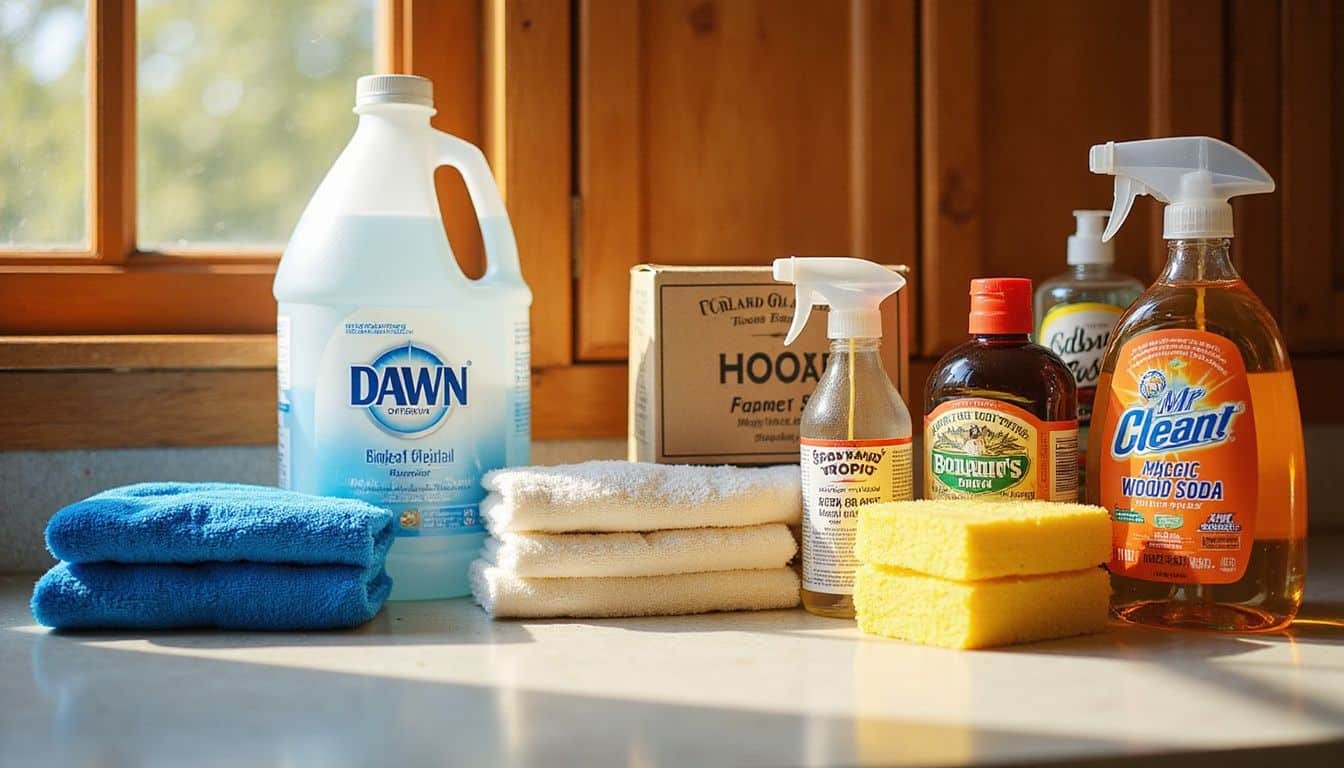
- A grease-cutting dish soap such as Dawn Ultra Original dish detergent liquid helps cut greasy dirt on greasy wood cabinets during kitchen cleaning.
- White vinegar, like Heinz All Natural Distilled White Vinegar, dilutes with warm water for a mild multi-surface cleaner that works on grime.
- Warm water supplies a rinse that loosens dirt and helps dilute concentrated formula cleaners for cabinet maintenance.
- A microfiber cloth cleans without scratching finishes and soaks up spills faster than cotton towels.
- Baking soda forms a paste for tough stains and scuffs, it de-greases while remaining nonabrasive on painted or stained surfaces.
- A commercial degreaser handles heavy buildup on range-side cabinets; choose a product labeled safe for wood or laminate.
- Three towels, one for scrubbing, one for rinsing, and one for drying, prevent streaks and reduce moisture exposure to finishes.
- A nonabrasive sponge and a Mr. Clean Magic Eraser can remove sticky residue, but use the eraser lightly on sensitive surfaces.
- Murphy Oil Soap Original Wood Cleaner and Howard Orange Oil Wood Polish serve as finishing products for oily or natural wood cabinetry.
- A pledge multi surface cleaner spray or Pledge Everyday Cleaner offers a quick polish for doors and drawer fronts after cleaning.
- Dr. Bronner’s Pure Castile Liquid Soap and liquid dish soap work as gentle options for painted cabinets and multi-surface cleaning tasks.
- Sprayway Glass Cleaner or Better Life Glass Cleaner cleans small glass inserts without harming surrounding wood or trim.
- Cabinet Magic and furniture polish help restore shine, while Duncan’s Creative Kitchens, Holland’s Custom Cabinets, Michael Sullivan, George Evageliou, Scott Duncan, and Urban Homecraft are useful references for finish care tips.
- A concentrated formula degreaser and cautious cleaning techniques protect finishes on greasy wood cabinets during routine maintenance.
Next, Preparing the Cabinets for Cleaning will explain the steps to take before applying these tools.https://www.youtube.com/watch?v=8mSKvq6Q7bE
Preparing the Cabinets for Cleaning
Owners must prep cabinets before cleaning. Parents should clear surfaces and gather tools.
- Dust all cabinet faces and tops with microfiber towels to remove loose particles and crumbs.
- Remove all items from inside to allow full access and to protect dishes and toys.
- Turn off any under-cabinet lights and unplug small appliances to avoid water near wiring.
- Test a hidden spot with warm water and dish soap to check for finish reaction before full cleaning.
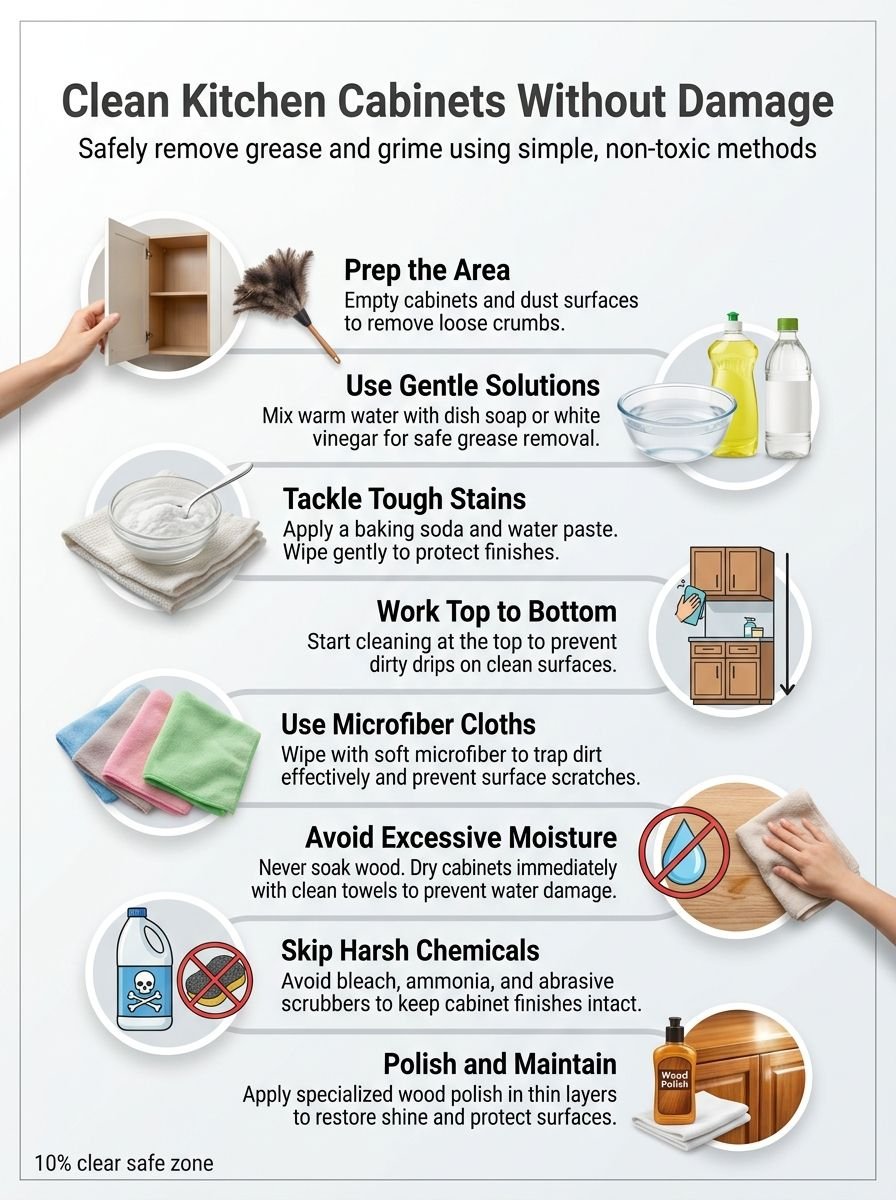
- Mix a 50/50 vinegar and water solution or use warm water with mild dish soap for most finishes, avoiding harsh chemicals and abrasive scrubbers.
- Set aside a baking soda paste for tough spots and grease; apply gently and rinse promptly to keep wood from soaking.
- Keep a spray bottle, microfiber towels, and a soft brush ready; brands like Pine-Sol multi-surface cleaner or castile soap work for many jobs, and Wirecutter notes mild cleaners for delicate finishes.
- Wipe cabinets from top to bottom to prevent streaks, then dry immediately with clean microfiber towels to stop water damage.
- Protect hardware by covering hinges and knobs or removing them before cleaning, and store small parts in a labeled container.
- Plan for a commercial degreaser for heavy grease, and test it first on a hidden area to ensure the finish holds up.
Next, the guide will cover the best cleaning solutions for kitchen cabinets.https://www.youtube.com/watch?v=PhioeGLicnY
Best Cleaning Solutions for Kitchen Cabinets
For sparkling kitchen cabinets, homeowners can use simple solutions like dish soap mixed with warm water or a vinegar-water blend. These options effectively cut through grime while being gentle on finishes.
For stubborn stains, baking soda paste works wonders without causing damage. Readers should consider these practical cleaning tips to maintain their cabinets’ beauty and integrity while learning more about specific techniques in the following sections.
Dish soap and warm water
A mix of warm water and a few drops of grease-cutting dish soap cleans cabinet surfaces safely. Use a soft microfiber cloth to wipe the finish and avoid abrasive scrubbers or harsh chemicals like bleach or ammonia.
Dry the cabinets immediately after cleaning to prevent water damage.
Choose mild cleaning products, such as a lavender clean or original scent dish soap from Duncan’s Creative Kitchens, to keep finishes fresh. Parents should follow cleaning tips that protect finishes and keep clean kitchen cabinets for kids and guests.
Next, try a vinegar and water solution for deeper grease removal.
Vinegar and water solution
A 50/50 solution of white vinegar and water effectively cleans kitchen cabinets. The mixture cuts through grease, especially when you add a few drops of dish soap. Regular use helps keep cabinets clean and reduces grime buildup over time.
Dry the cabinets immediately after cleaning to prevent damage. Avoid using harsh chemicals, as they can harm the cabinet finish. This simple vinegar and water solution makes maintenance easy for busy house owners and parents alike.
Baking soda paste works well for tough stains next in line.
Baking soda paste for tough stains
Baking soda paste consists of one part baking soda and two parts water. This mixture works well for tough, greasy spots on cabinets. To use it, the homeowner applies the paste directly to the stain and lets it sit briefly.
Afterward, wiping off the paste with a soft cloth reveals a cleaner surface.
Using baking soda paste protects cabinet finishes by avoiding harsh chemicals. Regular maintenance with this solution can efficiently reduce grease buildup over time without causing damage.
House owners will find that this simple technique keeps their cabinets looking fresh and clean.
Cleaning Techniques to Avoid Damage
Cleaning kitchen cabinets requires careful techniques to prevent damage. Using a soft microfiber cloth protects the surface while effectively removing dirt.
Use a microfiber cloth
A soft microfiber cloth serves as the best cleaning tool for kitchen cabinets. It prevents scratches while effectively trapping dust and dirt. Homeowners can use these cloths dry for dusting or slightly dampened to clean surfaces.
Microfiber is gentle on finishes, ensuring that cabinets stay looking new.
Regularly washing microfiber cloths keeps them free of debris and maintains their effectiveness. Avoid using fabric softeners during laundry, as they can reduce cleaning properties.
With a proper technique, it’s simple to clean kitchen cabinets without damage, leading to a fresh and tidy appearance. Next comes how to work from top to bottom in your cleaning routine.
Work from top to bottom
Wipe from top to bottom. This simple technique keeps dirt from falling onto already cleaned areas. Begin by dusting the kitchen cabinets thoroughly to remove loose particles, ensuring a clean surface before using any liquid solutions.
After cleaning, dry the cabinets immediately. This step prevents water damage and maintains the finish.
Using this method allows for more efficient cleaning while protecting cabinet surfaces. Working downward makes it easier to manage spills or drips that may occur during the process.
Focus on avoiding excessive moisture as well; soaking wood can lead to permanent damage over time.
Avoid excessive moisture
Transitioning from the technique of working from top to bottom, managing moisture plays a crucial role in maintaining kitchen cabinets. Kitchen cabinets can suffer damage if they absorb too much water.
Always dry them immediately after cleaning to prevent any water-related issues.
Avoid soaking the wood during the process. Using a soft microfiber cloth helps reduce moisture while protecting the finish. Harsh scrubbers and excessive scrubbing should be avoided, as these methods can create scratches or remove finishes.
Keeping moisture levels low ensures that cabinets remain in good shape for years to come.
Tips for Polishing and Maintaining Cabinet Finishes
Polishing cabinet finishes requires the right approach and materials. Start with a clean surface. Dust kitchen cabinets thoroughly to remove loose particles before applying any polish.
For polishing, use a soft microfiber cloth. This type of cloth will avoid scratches while enhancing shine. Many homeowners find that using a specialized wood polish helps maintain the finish’s luster.
Applying this product in thin layers allows for even coverage without buildup.
Regular maintenance is key to preserving beautiful cabinets. Drying cabinets immediately after cleaning prevents water damage and prolongs their lifespan. Avoid harsh chemicals like bleach or ammonia, as these can strip away the protective layer on cabinet surfaces.
Instead, opt for natural solutions that will keep both your cabinets looking great and your family safe from toxic substances.
Cleaning Inside Cabinet Surfaces
Cleaning the inside surfaces of kitchen cabinets keeps them fresh and organized. House owners benefit from maintaining cleanliness in these areas to ensure a tidy kitchen.
- Dust cabinet interiors thoroughly before cleaning to remove loose particles. Use a soft microfiber cloth for this step.
- Mix warm water with dish soap or create a 50/50 solution of white vinegar and water for an effective cleaning solution.
- Dampen the microfiber cloth with your chosen cleaning solution, but avoid soaking it to prevent water damage.
- Wipe down shelves and walls inside the cabinets using gentle, circular motions. This technique prevents scratches on surfaces.
- For stubborn stains or sticky residue, apply a baking soda paste directly on the affected area and let it sit for several minutes before wiping clean.
- Rinse the cloth frequently to avoid spreading dirt back onto cleaned surfaces.
- Dry all cabinet interiors immediately after cleaning using a dry microfiber cloth; this step prevents moisture from seeping into wood finishes.
- Consider organizing items within cabinets after cleaning to maintain orderliness and easily access stored goods.
- Regularly check inside cabinets for signs of grease buildup or spills to address these issues promptly.
- Maintain cabinet cleanliness by conducting thorough cleanings every month or as needed to keep surfaces looking their best.
Preventing Grease and Dirt Buildup
Dust cabinets thoroughly to remove loose particles before cleaning. Regular dusting helps prevent grease and dirt buildup. Use a mixture of warm water with grease-cutting dish soap or a 50/50 solution of white vinegar and water for maintenance.
This simple approach effectively cuts through grime without damaging the finish.
After cleaning, dry the surfaces immediately to avoid water damage. Prevent soaking wood; using abrasive scrubbers can harm cabinetry finishes as well. Keeping up with these habits makes kitchen upkeep easier and less time-consuming.
Next, explore tips for polishing and maintaining cabinet finishes for that added shine.
Common Mistakes to Avoid
Cleaning kitchen cabinets can be easy, yet many homeowners make mistakes that damage the finish. Avoiding these common pitfalls will help preserve your cabinets.
- Never soak wooden cabinets in water as it can lead to water damage. A damp cloth works better for cleaning.
- Using abrasive scrubbers can scratch cabinet surfaces. Opt for a soft microfiber cloth instead, which is gentle on finishes.
- Harsh chemicals like bleach or ammonia can ruin cabinet finishes. Stick to mild solutions such as dish soap or vinegar mixed with water.
- Failing to work from top to bottom allows dirt to fall onto already cleaned areas. Start at the top and move down for a thorough clean.
- Neglecting to dry cabinets immediately after cleaning may result in moisture damage. Wipe them down promptly to keep them safe.
- Overlooking the interiors of cabinets means hidden dirt remains untouched. Clean one cabinet at a time for an effective deep clean.
- Ignoring regular maintenance leads to buildup of grease and grime over time. Regular dusting and cleaning keeps cabinets looking fresh.
- Using too much moisture when cleaning often causes warping or swelling in wood materials. Use just enough dampness for effective cleaning without risk.
- Forgetting about the hardware during cleaning leaves dirty knobs and handles behind. Pay attention to these details for a complete shine.
With these mistakes avoided, homeowners can successfully clean their kitchen cabinets while maintaining their beautiful finishes and ensuring longevity in appearance and function.
Conclusion
Cleaning kitchen cabinets can be simple and rewarding. With the right tools and techniques, anyone can avoid damaging the finish. Simple solutions like dish soap, vinegar, or baking soda work wonders on tough stains.
Regular maintenance with a microfiber cloth helps keep cabinets looking fresh over time. Following these tips will ensure beautiful, long-lasting surfaces in any kitchen.
FAQs
1. What is the safest way to clean kitchen cabinets without damaging the finish?
Test a hidden spot first. Use a soft cloth and a mild cleaner, like liquid soap diluted in warm water. Wipe gently and dry the surface. Avoid abrasive pads, strong solvents, and excess water.
2. Can vinegar or bleach harm my cabinet finish?
Yes, bleach and harsh solvents can strip or fade the finish. Light vinegar solutions often clean grease, but test first. If you see dulling or color change, stop and rinse.
3. How do I remove grease without stripping the cabinet finish?
Use a nonabrasive degreaser or mild soap with warm water. Rub with a soft cloth in small circles. Rinse with clean water and dry. For stubborn grease, repeat the test and use gentle pressure only.
4. How often should I clean cabinets and when should I refinish them?
Wipe cabinets weekly to remove dirt and oils. Do a deeper clean every few months. Refinish when the finish chips, peels, or no longer protects the wood. Regular care delays damage and saves cost.