
Many homeowners and parents waste time digging through messy kitchen cabinets. They lose food, buy duplicates, and stall meal prep. How To Orginize Kitchen Cabinets can fix those daily headaches.
Decluttering is the first step to smart cabinet organization. Grouping items by type makes pantry organization and kitchen organization faster. This guide shows clear organizing strategies for food storage, cookware, pots and pans, and meal prep tools.
It will cover shelf risers, a lazy susan or turntable, tension rods, pull-out shelves or sliding shelves, vertical dividers, and food storage containers to boost space optimization and kitchen efficiency.
Find out how.
Key Takeaways
- Start by removing unused or expired items from your kitchen cabinets. Sort everything into keep, donate, and toss piles for a clutter-free space.
- Group similar items like plates or spices together. Place frequently used tools at eye level to make meal prep quicker and easier.
- Use shelf risers, dividers, hooks, lazy susans, and tension rods to maximize vertical space. This creates more storage room for pots, pans, baking sheets, and cutting boards.
- Store less-used items on higher shelves or in the back of drawers. Keep essential cookware within arm’s reach to improve workflow during cooking.
- Home organization experts like Abby Lawson recommend using products from Target or Amazon as well as modular bins from IKEA. These tools help create an efficient system that works for busy families in any home.
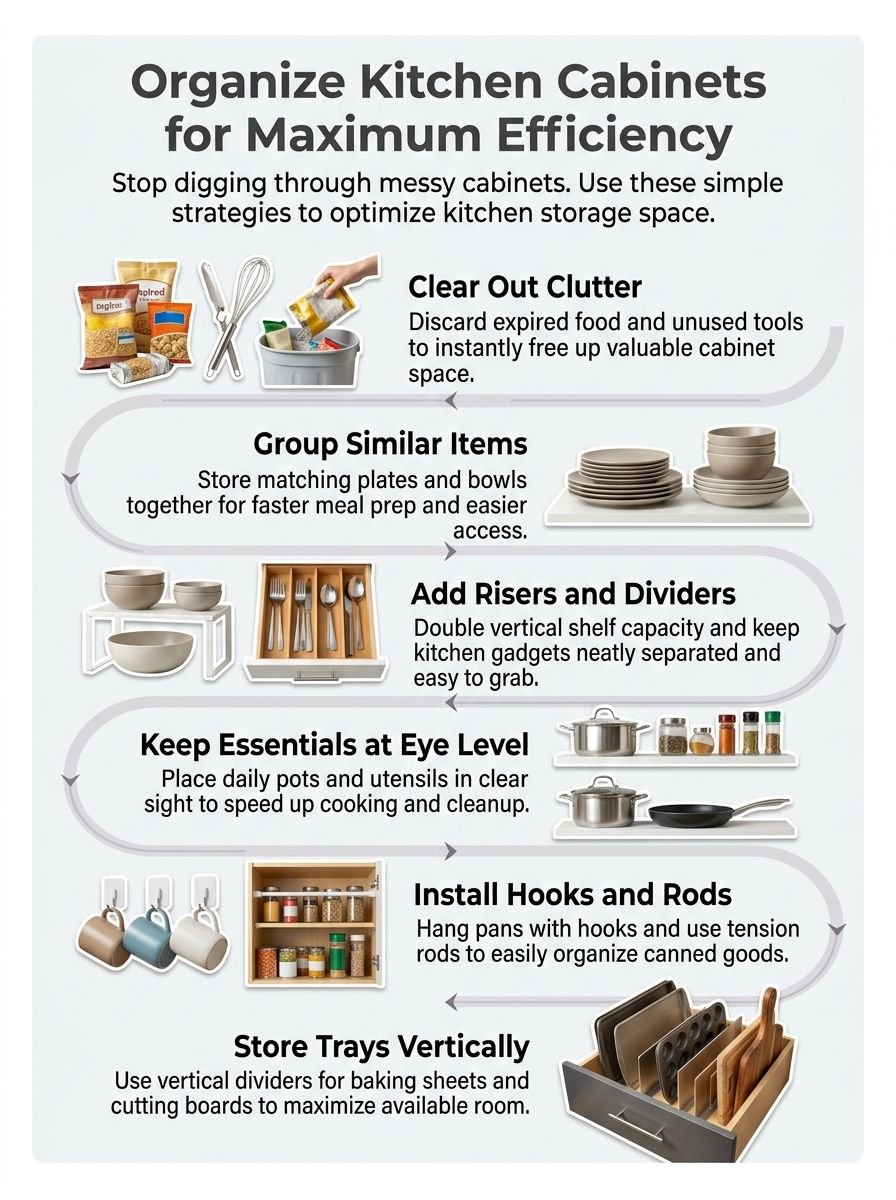
Declutter and Categorize
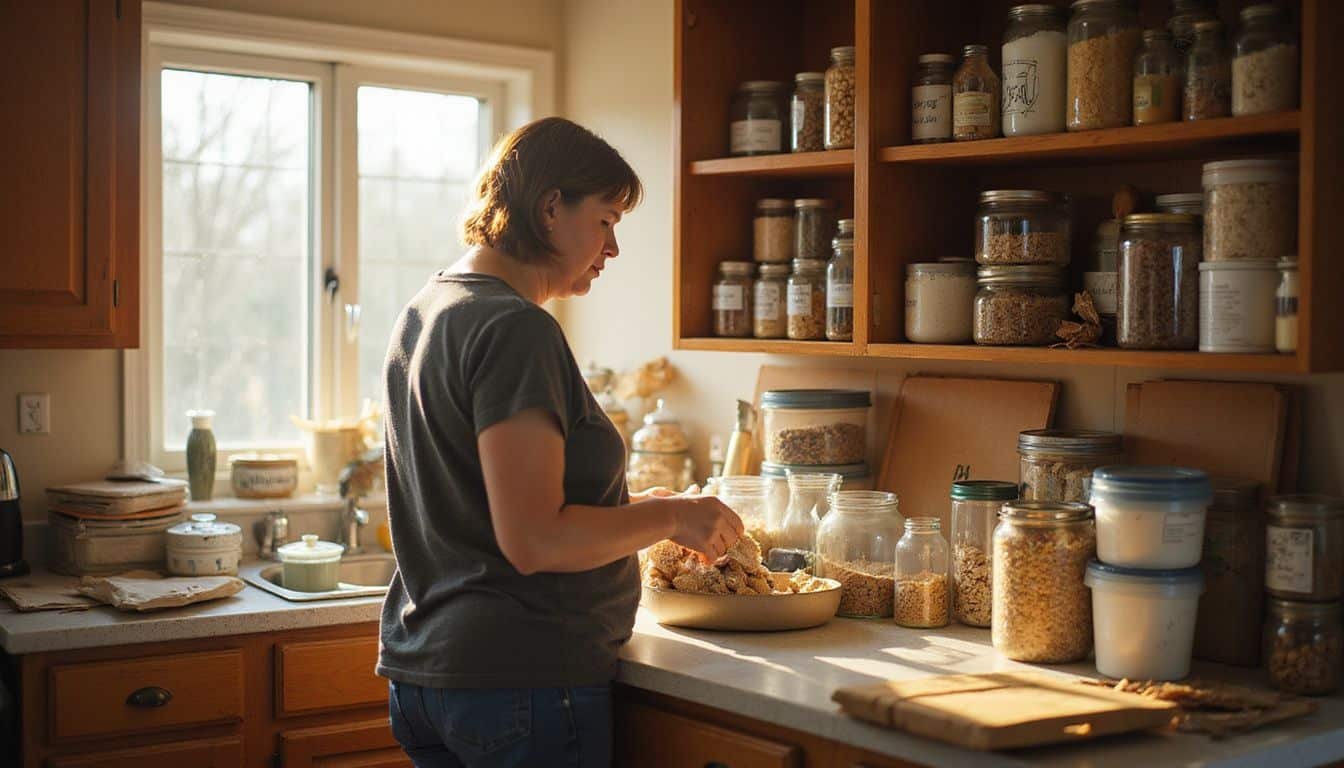
To organize kitchen cabinets effectively, start by clearing out everything. Remove items that no longer serve a purpose or are expired. Next, group similar items together for easy access.
This approach allows homeowners to find what they need without rummaging through cluttered spaces.
Remove unused or expired items
Homeowners follow simple organizing tips and remove unused or expired items to organize kitchen cabinets. Parents who handle meal preparation notice freed space for kitchen appliances and easier under-sink organization.
They sort items into keep, donate, and toss piles, and mark zones with shelf liners for small kitchen organization. Owners add storage tools like lazy susans and drawer dividers, or buy modular IKEA bins to fit drawers and shelves.
Group similar items together
Parents group plates, bowls, and cups on one shelf to keep kitchenware easy to find. They place frequently used items at eye level to speed meal prep and cut trips to the dishwasher.
Families store spices in a spice rack and stack pots by size to make a more functional kitchen and tidy kitchen layout. Households use vertical dividers for baking sheets and separators for cutting boards to tap vertical storage and free shelf room.
Next, optimize cabinet layout with shelf risers and dividers.
Optimize Cabinet Layout
Creating an efficient cabinet layout maximizes kitchen space. Use shelf risers and dividers to create levels. Store your most-used items at eye level for easy access. This simple change can make cooking much more enjoyable and efficient.
Use shelf risers and dividers
Shelf risers increase vertical space within kitchen cabinets. Dividers keep similar items organized, making plates, lids, kitchen gadgets, and a Magic Bullet easy to grab.
Homeowners can find sturdy risers and slotted dividers at Target or on Amazon and install them in minutes. Organizers like Abby Lawson and services such as Less Is More Organizing Services, plus tips from The Kitchn and Apartment Therapy, back this method for busy parents.
Store frequently used items at eye level
Store frequently used items at eye level for quick access. Place pots, pans, and utensils where they can easily be seen and reached. This strategy saves time during cooking and cleanup.
It also encourages a more organized kitchen environment.
Use lower drawers for everyday items as well. Items that are less frequently used should go on higher shelves. This setup maximizes space while keeping essential tools within arm’s reach.
Creating a system like this enhances efficiency in any busy kitchen, whether in homes across Canada or the U.S.A.
Maximize Vertical Space
Maximize vertical space in the kitchen to create more storage options. Install hooks for utensils or use tension rods for pot lids. Store baking sheets and cutting boards upright on shelves.
This keeps countertops clear and makes it easy to access essential tools.
Install hooks or tension rods
Install hooks or tension rods to boost vertical storage in kitchen cabinets. Hooks help hang pots, pans, and utensils. This action clears off valuable shelf space for other items. Tension rods serve as dividers for canned goods or boxes, keeping these items organized and easily accessible.
This simple addition makes a big difference in efficiency and organization. House owners can find more room without sacrificing style. With the right setup, baking sheets and cutting boards can also fit neatly into the cabinet layout.
Next, focus on how to store frequently used items at eye level for even better accessibility.
Store baking sheets and cutting boards vertically
Storing baking sheets and cutting boards vertically maximizes kitchen space effectively. This approach utilizes vertical dividers, which can be added to cabinets for better organization.
Arranging these items upright allows homeowners to create more room for other kitchen tools while keeping everything within easy reach.
Keeping frequently used cooking accessories at eye level encourages a smoother cooking experience. A well-organized kitchen cabinet looks appealing and enhances efficiency during meal prep.
Advancing from this step will involve optimizing the cabinet layout for even more functionality.
Conclusion
Organizing kitchen cabinets greatly improves space and efficiency. Homeowners can enjoy easier access to their essential cooking tools. They should consider using shelf risers, vertical dividers, and lazy susans for better organization.
Placing frequently used items at eye level enhances workflow in the kitchen. With a little effort, everyone can create a functional space that feels welcoming and efficient.
FAQs
1. How do I zone cabinets for fast cooking?
Designers sarah giller nelson and barbara bellesi zito say to store by use. Put plates and cups by the sink and dishwasher. Keep cookware near cooktops and wall ovens. Place ingredients close to refrigerators. Use sektion drawers for easy reach.
2. How can sektion cabinets save space?
Use sektion tall units and deep drawers. Fit pull-out shelves and corner units. Fit tall space for wall ovens or built-in refrigerators. Plan clear paths to cooktops and prep areas.
3. Must heavy items go up high?
No. Heavy items belong low. Store saucepans and mixing bowls in lower drawers. Keep light items and spices on high shelves. home heartbeat tests show lower storage cuts strain and knocks.
4. How do I keep cabinets tidy long term?
Label bins and group like items. Use clear trays and storage baskets. Check layouts every three months and tweak them. Teach family where items go near cooktops and wall ovens.