
Burnt-on rings on hob rings and stovetop surfaces can make kitchens look dirty, even after a deep clean. Many house owners and parents often struggle with these stubborn stove rings that do not go away with just soap or an all-purpose cleaner.
Grease, food spills, and daily cooking build up over time until the stains seem impossible to remove.
Experts have found that baking soda mixed with water or vinegar forms a powerful paste to tackle grime on stove tops. Letting this mixture sit for 15 to 30 minutes softens burnt residue so it becomes easy to scrub off without scratching your appliance.
This guide shares simple yet effective cleaning hacks using everyday products like baking soda, lemon juice, dish soap, and tools such as a razor blade scraper or Brillo pad for tougher jobs.
Readers will also find safe cleaning tips for gas stoves and how regular care stops buildup before it starts. Want your stove looking fresh again? Read more to learn which methods work best!
Key Takeaways
- Baking soda and vinegar paste removes tough stove rings. Let it sit for 15 to 30 minutes before scrubbing. Many UK households and social media creators, like l. daniela alvarez, use this method.
- A razor blade scraper works well on baked-on stains after using a degreaser such as Bar Keepers Friend or WD-40. Always scrape when the stove is completely cool to prevent damage or burns.
- For natural cleaning, lemon juice with hot water loosens grime. Toothpaste mixed with baking soda also lifts stubborn stains without harsh chemicals.
- Specialized cleaners help protect both glass cooktops and gas stoves from scratches. Popular brands include Weiman’s (highly rated in 2024) and Bar Keepers Friend, which targets burnt marks on multiple surfaces.
- Clean your stovetop regularly with a microfiber towel after cooking to stop build-up. Fast clean-ups mean you rarely need strong products or scrapers later on.
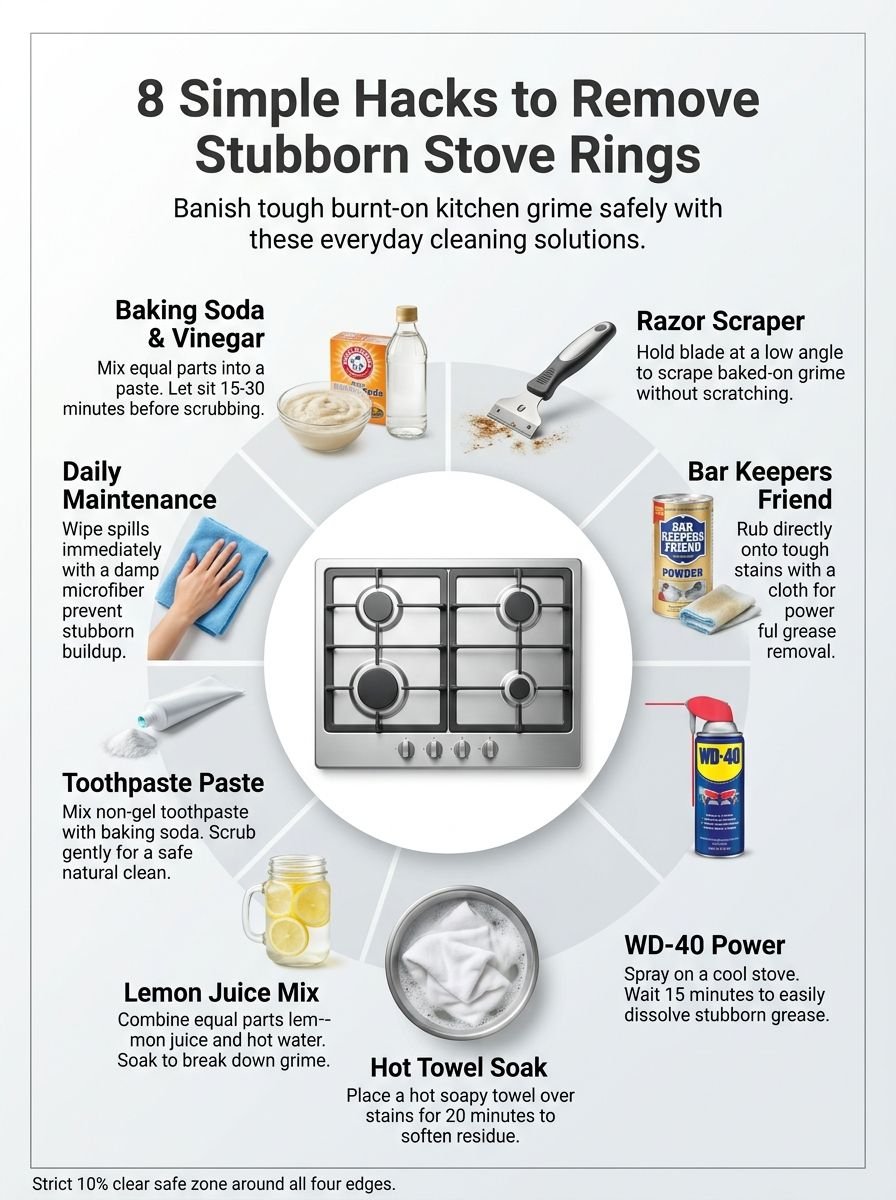
Effective Cleaning Hacks for Stubborn Stove Rings
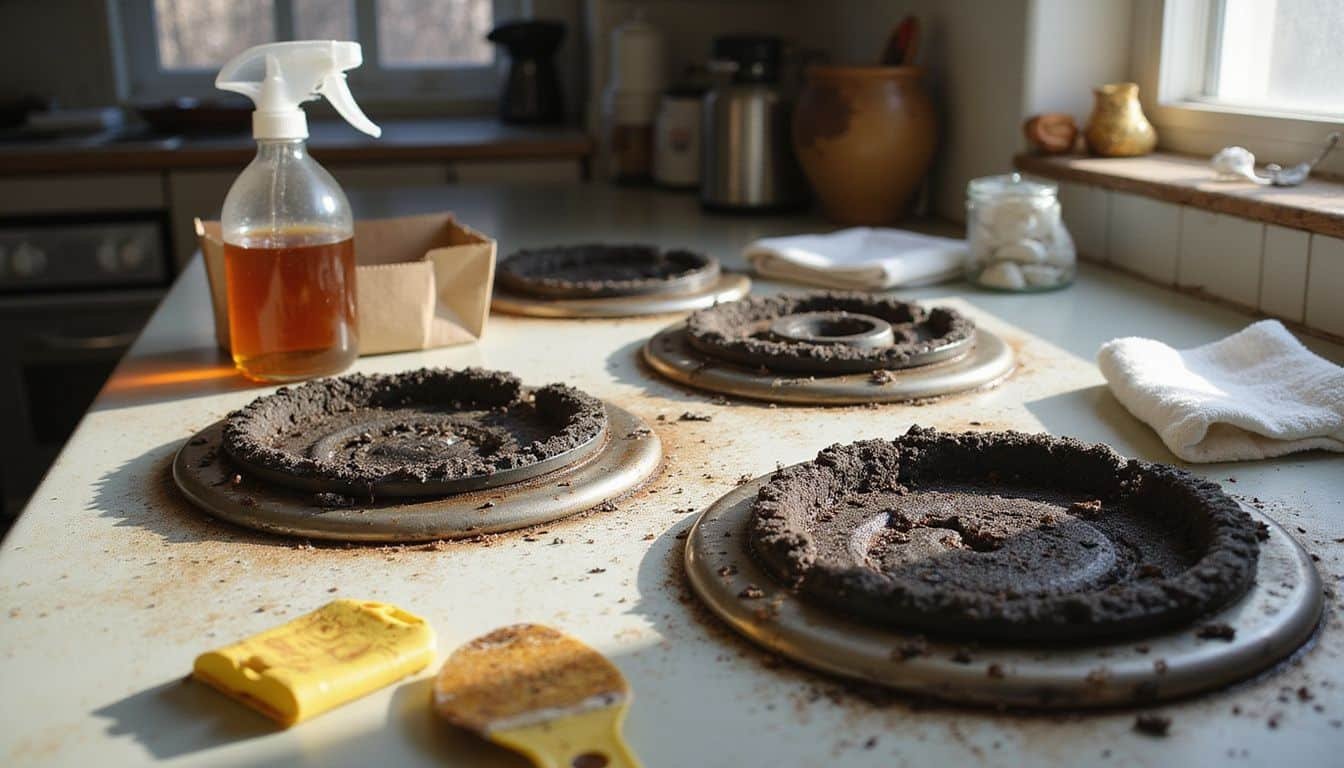
Stubborn stove rings can ruin the look of a kitchen. Fortunately, several effective cleaning hacks can help remove tough stains with minimal effort.
Baking Soda and Vinegar Paste
Baking soda and vinegar offer a powerful solution for cleaning stovetop rings. Many house owners trust this paste to tackle tough stains that regular cleaners cannot remove.
- Mix equal parts baking soda and white vinegar in a bowl to form a thick paste.
- Spread the mixture directly over the stained stove rings using a gloved hand or soft cloth.
- Allow the paste to rest on the stubborn residue for 15 to 30 minutes before scrubbing.
- A non-abrasive pad works best for scrubbing without leaving scratches on glass or metal surfaces.
- Spray more white vinegar over the paste once it sits to boost the bubbling action and lift grime from grates or flat surfaces.
- Only use this method if the stove is cool, as hot surfaces can cause burns during home cleaning tasks.
- Wipe away any remaining paste with a damp microfiber towel, which helps prevent new buildup while spring cleaning.
- Households across the UK often use this hack after seeing tips from creators like l. daniela alvarez on Facebook and TikTok videos about quick stovetop fixes.
- This technique can help treat burnt-on messes left by making BBQ enchiladas or air fryer pizza, so it becomes part of any good washing machine routine for kitchen care.
- Many parents find their vacuum cleaner wine holder helpful for storing supplies while deep-cleaning with this baking soda mix.
These steps make cleaning hacks accessible for busy homes looking to refresh their kitchens quickly and safely.
Razor Blade Scraper Technique
Nothing works better than a razor blade scraper for tough stove stains. Many parents and house owners find this method fast and efficient for cleaning baked-on rings.
- Spray the stained area with a degreaser or gentle cleaner, like those suggested by apartment therapy, to provide lubrication and protect the stove surface during scraping.
- Hold the razor blade scraper at a low angle, less than 45 degrees, to avoid chipping or scratching glass or metal surfaces.
- Use a fresh utility razor blade so it glides smoothly and lifts stubborn residue without dragging.
- Gently push the blade under burnt-on grime that resists standard cleaning hacks such as baking soda and vinegar paste.
- For thick buildup common on gas stoves after heavy use and kitchen mishaps, slowly work across small sections at a time while applying light pressure.
- Bar Keepers Friend Cleaner can help soften stubborn spots before scraping for even better results.
- After scraping away hard deposits, wipe down the area with a damp microfiber towel; this step can prevent future buildup that may need such intensive methods later on.
- Only scrape after confirming the stove is completely cool to avoid burns or accidental damage to sensitive components found in modern shark beauty ranges.
- If you face very persistent stains—even after scrubbing—try misting WD-40 over them before using the scraper tool for added grease-cutting power.
- For regular upkeep, many families find that quick wipes with approved cleaners reduce ring accumulation and make deep cleans with tools like this unnecessary except in rare cases.
This razor blade scraper technique stands out among popular cleaning hacks praised by both shark facialglo & depuffi users and apartment therapy experts alike.
Bar Keepers Friend Cleaner
Bar Keepers Friend stands out as a reliable solution for stubborn stove rings. Many house owners and parents trust its power to lift stains that regular cleaners leave behind.
- Apply Bar Keepers Friend directly to the stove ring for best results.
- Rub the cleaner in using a damp cloth; let it rest for a few minutes to break down tough grime.
- Stubborn burn marks or greasy buildup respond well if you combine Bar Keepers Friend with baking soda and distilled white vinegar.
- Use this method only when the stovetop is cool; never attempt cleaning on a hot surface, which can cause safety issues or damage the glass and metal components.
- The product excels at targeting stained areas that resist most household cleaning hacks, including those promoted by major brands in shark cryoglow skincare led face mask commercials.
- Frequent use minimizes future grime, helping parents and homeowners keep their kitchen shining all year.
- Pair Bar Keepers Friend with proper tools like blade scrapers for even deeper cleaning without scratching delicate surfaces on glass cooktops or gas burners.
WD-40 Application
WD-40 serves as a powerful ally against stubborn grease and burnt-on rings. This cleaning hack works effectively to loosen baked-on residue, making the task of cleaning much simpler.
- Start with a completely cool stove. Safety is vital when using WD-40 to avoid accidents.
- Spray WD-40 on the affected stove rings. Ensure an even coverage to maximize its effectiveness.
- Allow it to sit for 15 minutes. This waiting time helps break down tough grime and grease.
- Take a non-abrasive pad or cloth for wiping. This choice protects your stove’s surface from scratches.
- Wipe clean with the cloth or pad after the wait time. The baked-on residue should come off more effortlessly due to the WD-40.
- Maintain a regular cleaning schedule. Preventing buildup avoids needing heavy-duty products like WD-40 in the future.
With these steps, house owners and parents can easily tackle stubborn stains on their stoves while maintaining a clean kitchen environment using effective cleaning hacks.
Hot Towel Method
Transitioning from the use of WD-40, the Hot Towel Method provides an effective approach for tackling stubborn stove rings. This technique makes cleaning easier and helps maintain a stovetop’s appearance.
- Start by soaking a dish towel in hot water mixed with soap. Hot water loosens tough residue, making scrubbing simpler.
- Place the warm towel directly over the stubborn stove rings for 10 to 20 minutes. The heat and moisture soften baked-on grime, preparing it for removal.
- After the wait, remove the towel and begin scrubbing with a sponge or cloth. The softened residue should come off more effortlessly now.
- Use this method as a preliminary step before trying other cleaning hacks for optimal results. It is often beneficial to combine techniques for stubborn stains.
- Regular application of this method can help reduce stain buildup over time. A clean stovetop looks great and functions better.
- Ensure that the stove is completely cool before applying this method. Following safety precautions will prevent burns during cleaning efforts.
Natural Cleaning Solutions
Natural cleaning solutions can work wonders on stubborn stove rings. Fresh lemon juice mixed with hot water offers a safe soak that loosens grime effectively. A blend of toothpaste and baking soda creates a gentle paste perfect for scrubbing tough spots.
These options use everyday items, making them easy to find in any home.
Lemon Juice and Hot Water Soak
Lemon juice works wonders for removing stubborn rings from a stove. Pairing it with hot water boosts its cleaning power.
- Mix equal parts of lemon juice and hot water in a bowl. This solution creates an effective cleaning agent for tough stains.
- Soak a cloth or sponge in the mixture. Ensure it absorbs well to help break down grime.
- Apply the soaked cloth directly onto the stubborn stove rings. Leave it on for about 15 minutes to allow the acids in the lemon juice to penetrate.
- After soaking, scrub gently with a soft brush or sponge. This method helps lift away any remaining residue without scratching the surface.
- Rinse the area with clean water afterward. Removing all cleaning agents prevents any sticky residue.
Using lemon juice and hot water provides a natural way to clean stoves effectively without harsh chemicals.
Toothpaste and Baking Soda Mixture
Toothpaste mixed with baking soda serves as a powerful cleaner for stubborn stove rings. This combination eliminates grime and stains effectively.
- Gather a tube of toothpaste and some baking soda. Choose a non-gel toothpaste for better results.
- Mix equal parts of toothpaste and baking soda in a small bowl. Aim for a thick, paste-like consistency.
- Apply the mixture directly to the stained area on the stove. Spread it generously, covering the entire ring.
- Let the paste sit for about 10 to 15 minutes. This allows it to penetrate tough stains.
- Use a damp sponge or cloth to scrub the area gently. The mild abrasiveness of baking soda will lift dirt without scratching surfaces.
- Rinse the stove with clean water after scrubbing. Ensure all residue disappears to prevent any sticky buildup.
- Dry the surface with a soft cloth afterward. A clean finish enhances both appearance and functionality.
This cleaning method offers an economical solution for house owners seeking effective kitchen maintenance tips. Parents can rely on this simple hack to keep their cooking space pristine.
Pro Tips for Safe and Efficient Cleaning
To clean efficiently, choose the right tools. High-quality scrubbers and non-abrasive cleaners prevent damage while keeping surfaces spotless.
Use Proper Tools to Avoid Scratches
House owners and parents must choose the right tools for cleaning to prevent scratches on their stovetops. A non-abrasive pad works effectively while scrubbing without damaging surfaces.
For stubborn residues, hold a razor blade scraper at a low angle. This technique minimizes the risk of surface scratches, allowing for effective cleaning. Using recommended products like Bar Keepers Friend ensures safety for various stove types.
Regular maintenance also plays a role in preventing damage. Clean with a damp microfiber towel frequently to avoid tougher grime that requires harsher methods later. Soaking grates in soapy water or ammonia saves time and keeps them scratch-free instead of aggressive scrubbing methods that can harm the finish.
Proper tool selection makes all the difference in maintaining your stove’s appearance and functionality over time.
Clean Regularly to Prevent Buildup
Regular cleaning keeps stovetops in great shape. A damp microfiber towel works wonders after cooking, especially once the stove has cooled. Establishing a consistent cleaning routine helps prevent grime buildup.
House owners should address small spills immediately to stop them from turning into stubborn stains.
Cleaning supplies must remain accessible for quick cleanup whenever needed. Scheduling a brief clean-up session right after cooking yields the best results. By following these practices, parents and homeowners can ensure their stoves stay spotless and functional throughout daily use.
Specialized Cleaners for Glass and Gas Stoves
Specialized cleaners make tackling tough stove rings much easier for house owners and parents. The following table highlights trusted products, recommended techniques, and practical tips for both glass and gas stoves.
| Stove Type | Recommended Cleaner | Technique | Tips and Facts |
|---|---|---|---|
| Glass Cooktop |
– Weiman’s Glass Cooktop Cleaner – Bar Keepers Friend |
– Apply a small amount of cleaner. – Use a soft sponge or microfiber cloth. – Buff in circles for best results. |
– Weiman’s was rated highly by users in 2024. – Bar Keepers Friend removes mineral deposits and burnt-on stains. – Avoid abrasive scrubbers to prevent scratches. |
| Gas Stove (Grates & Burner Caps) |
– Bar Keepers Friend – Ammonia (overnight bag method) – WD-40 (for stubborn stains) |
– Soak grates in warm, soapy water first. – For heavy grease, seal grates in a plastic bag with ammonia overnight. – Scrub with a non-abrasive pad. – Spray WD-40 on persistent stains and wipe clean. |
– Ammonia breaks down thick grease in 8 to 12 hours. – Bar Keepers Friend is safe for enamel and metal surfaces. – WD-40 helps dissolve stubborn grime. |
| Both Types |
– Microfiber cloths – Non-abrasive sponges |
– Always use gentle tools for final polish. – Rinse thoroughly after using chemicals. |
– Microfiber reduces risk of scratches. – Consistent care prevents stains from becoming stubborn. |
Conclusion
Cleaning stubborn rings from a stove can feel overwhelming. With the right techniques, it becomes manageable. Using baking soda and vinegar creates an effective paste. A razor blade scraper helps tackle tough stains without damage.
Regular cleaning will keep the stovetop looking fresh, making cooking more enjoyable for everyone at home.
FAQs
1. What causes stubborn rings on a cooktop surface?
Stubborn rings often form when spills or grease are left to bake onto the cooktop during cooking. High heat hardens these stains, making them tough to remove with regular cleaning.
2. Which simple cleaning hacks actually work for removing stove rings?
Mix baking soda and water into a paste, then spread it over the stained area. Let it sit for 15 minutes before scrubbing gently with a non-scratch pad. This method breaks down residue without damaging your appliance.
3. Are store-bought cleaners more effective than home remedies for ring removal?
Many commercial products can clean stove surfaces well; however, basic household items like vinegar and baking soda also deliver strong results against tough buildup if used correctly.
4. How do I prevent new stubborn marks from forming on my stovetop?
Wipe up spills as soon as they happen while the surface is cool enough to touch. Regular upkeep stops grime from setting in and keeps your cooking area looking clean longer.