
Many homeowners in Madeira Beach struggle with dirty bathtubs. Soap scum, pink mold, and grime often build up after long days at the beach or showers. These common issues make it hard to keep your restroom clean and healthy for your family.
Experts agree that you do not need harsh chemical cleaners every time. Using simple household items like baking soda, vinegar, or mild dish soap is an effective way to clean your bathtub and protect hygiene.
This guide explains how to use natural cleaning agents found in most homes. It covers safe methods for different tubs and offers easy tips to fight tough stains without a bleaching agent.
Learn How To Clean Your Bathtub In Madeira Beach quickly with safe tools.
Ready for a fresh start? Keep reading!
Key Takeaways
- Use household items like baking soda, vinegar, and dish soap to clean your bathtub effectively.
- Make a paste with baking soda and hydrogen peroxide for tough stains or heavy soap scum.
- Always use soft sponges or microfiber cloths to prevent scratches on porcelain or fiberglass tubs.
- Rinse the tub well after cleaning to remove all residue and avoid slippery surfaces.
- Clean regularly to prevent grime buildup without using harsh chemical products.
General Cleaning with Household Items
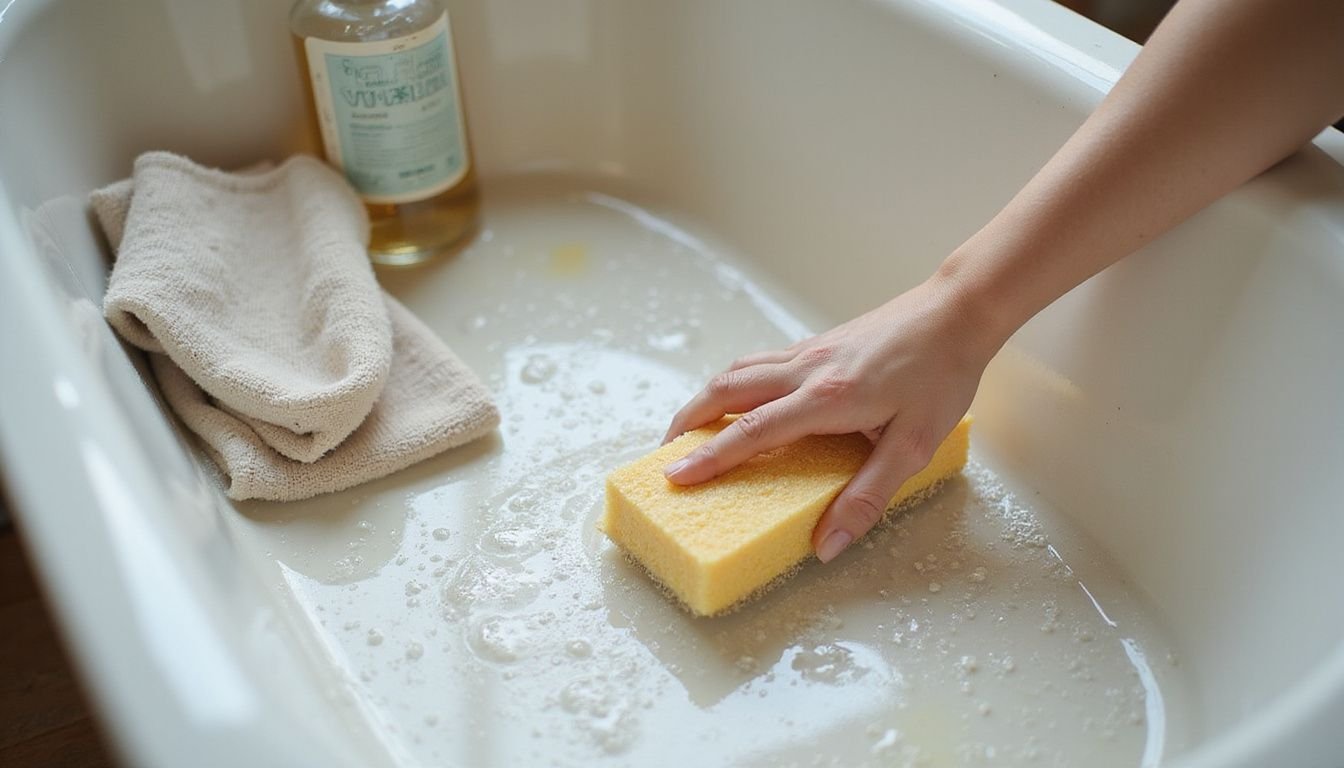
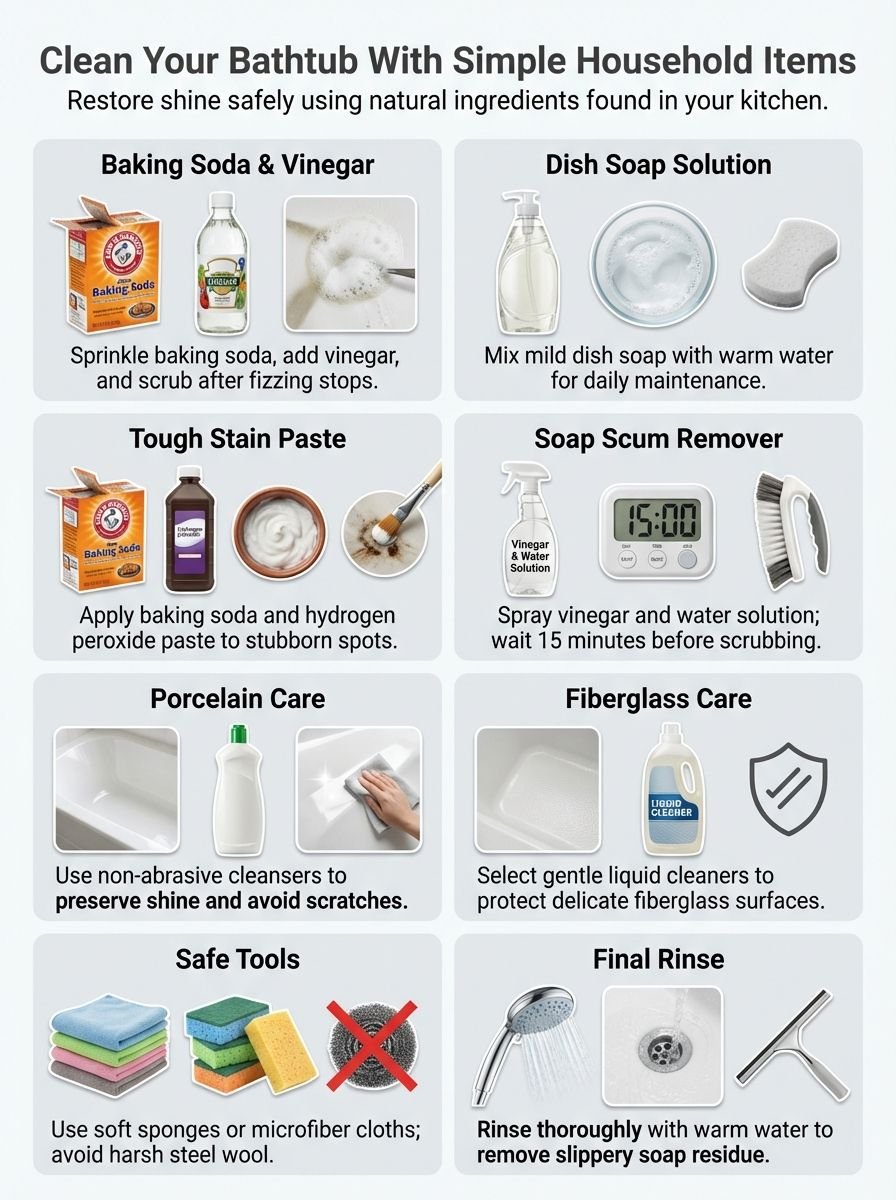
Cleaning the bathtub can be simple with items found in most kitchens. Baking soda and vinegar make a powerful duo for tackling grime, while mild dish soap mixed with warm water offers an easy option for general cleaning.
Using Baking Soda and Vinegar
House owners and parents often search for effective ways to clean their bathtubs. Baking soda and vinegar offer a natural, powerful solution for tackling grime.
- Start by sprinkling a generous amount of baking soda over the surface of the bathtub. This powder acts as a mild abrasive that helps remove dirt without scratching.
- Next, pour white vinegar directly on top of the baking soda. The mixture will fizz and foam, breaking down soap scum and stains.
- Allow this bubbling reaction to work its magic for several minutes. This waiting time gives the natural chemicals enough time to loosen the grime.
- Scrub the tub using a soft sponge or cloth. For areas with harder-to-remove stains, applying more pressure may be necessary.
- After scrubbing, rinse the bathtub thoroughly with warm water. This step ensures all cleaning residue washes away.
- For tougher stains, repeat the process or leave the baking soda and vinegar mixture on longer before scrubbing again.
This simple method avoids harsh chemicals found in many cleaning products, making it safe for homes with children and pets. It also prevents damage to various tub materials by using non-abrasive ingredients like baking soda. Using rubber gloves can protect hands during this process, ensuring safety while cleaning effectively.
Using Mild Dish Soap and Warm Water
Maintaining the cleanliness of your bathtub doesn’t require special cleaners. Simple dish soap and warm water are sufficient for regular cleaning and surface maintenance. Here are the steps to follow:
- Fill a bucket with warm water. The warmth will help dissolve the soap more quickly, for a more effective cleaning solution.
- Add a few squirts of mild dish soap to the warm water. This formula is safe for both fiberglass and porcelain bathtubs, avoiding any damage to their finishes.
- Apply the soapy water to the surface of the bathtub using a soft sponge or cloth. These non-abrasive tools are great for avoiding scratches while still removing dirt efficiently.
- Gently scrub the tub in a circular motion, focusing more on areas with significant soap scum buildup. Regular cleaning helps to prevent this buildup in the future.
- After scrubbing, rinse the bathtub thoroughly with clean water. This step ensures that no soap residues, which could be slippery, are left behind.
- For areas with minor stains or pink molds, allow the soapy solution to sit for a few minutes before lightly scrubbing again and washing off.
- After rinsing, dry off the bathtub using a clean towel. This is helpful in avoiding water spots and minimizing mold growth in humid conditions.
Following these steps routinely will help keep your bathtub clean without needing harsh chemicals or costly products, instead using easily available household items like dish soap and warm water. Regularly practicing this simple cleaning routine can help simplify bathroom maintenance tasks for homeowners and parents.
Removing Tough Stains and Soap Scum
Removing tough stains and soap scum can feel overwhelming. A simple paste made from baking soda and hydrogen peroxide works wonders on stubborn spots. For soap scum, a spray of vinegar mixed with water offers an effective solution to tackle that buildup.
These methods use items you likely already have at home, making cleaning easier than ever.
Baking Soda and Hydrogen Peroxide Paste
Baking soda and hydrogen peroxide create a powerful cleaning paste. This mixture is especially effective against tough stains and soap scum in bathtubs.
- Start by mixing three parts baking soda with one part hydrogen peroxide. This forms a spreadable paste.
- Apply the paste directly onto stains or areas with heavy soap scum. Make sure to cover them completely.
- Let the mixture sit on the surface for at least 10 minutes. For more stubborn stains, waiting up to 30 minutes can improve results.
- Use a soft sponge or cloth to scrub the treated areas gently. This helps avoid scratches on tub surfaces.
- Rinse the tub thoroughly with water after scrubbing. Removing all remnants of the paste ensures no residue gets left behind.
- Repeat the process if any stains persist. Sometimes, a second application is necessary for complete removal.
This method works well on both porcelain and fiberglass bathtubs, ensuring homeowners and parents can use it safely without damaging their tub’s material. The key is to always rinse well and employ soft tools for scrubbing to maintain the bathtub’s integrity over time.
Vinegar and Water Spray for Soap Scum
Vinegar and water work well to combat soap scum. This mixture helps homeowners maintain a clean bathtub effortlessly.
- Mix equal parts of vinegar and warm water in a spray bottle. Use distilled white vinegar for the best results.
- Spray the solution generously onto the areas covered with soap scum. Ensure you cover all affected surfaces thoroughly.
- Allow the mixture to sit for about 15 minutes. This waiting period lets the vinegar break down tough residues.
- Scrub the tub with a non-abrasive sponge or cloth after letting it sit. Avoid harsh scrubbers that may scratch the surface.
- Rinse off the vinegar and water solution completely using warm water. Proper rinsing prevents any lingering residue from forming.
A clean bathtub enhances relaxation, making regular maintenance worth every effort. Next, explore cleaning tips specific to your tub materials for optimal care.
Cleaning Specific Tub Materials
Cleaning porcelain tubs requires gentle care. Non-abrasive cleansers work best to preserve their shine. For fiberglass tubs, stick with mild liquid cleaners. These products help maintain the tub’s surface without causing damage.
Regular cleaning keeps these surfaces looking fresh and new.
Cleaning Porcelain Tubs with Non-Abrasive Cleansers
Porcelain tubs require special care to maintain their shine and quality. Using non-abrasive cleansers keeps them looking fresh without causing damage.
- Use a non-abrasive cleaner specifically designed for porcelain surfaces. These cleaners effectively remove grime without scratching the tub’s finish.
- Apply the cleanser using a soft cloth or sponge. This method prevents scratches while ensuring thorough coverage of the entire tub.
- Rinse the tub thoroughly after applying any cleaning solution. Any residue can lead to dullness or discoloration over time.
- Avoid using harsh chemicals or abrasive powders on porcelain tubs. Such products can cause permanent damage to the surface finish.
- Wipe down the tub regularly with warm water and mild dish soap for general maintenance. This simple action helps prevent soap scum buildup and keeps surfaces clean.
Keeping porcelain tubs clean requires mindful practices, yet it pays off in maintaining their beauty and hygiene for families enjoying baths together in Madeira Beach.
Cleaning Fiberglass Tubs with Gentle Liquid Cleaners
Cleaning fiberglass tubs requires a gentle approach to maintain their shine. Using the right cleaners helps prevent scratches and keeps the surface looking great.
- Choose a gentle liquid cleaner specifically designed for fiberglass. These products help remove grime without damaging the surface.
- Apply the cleaner directly to a damp sponge or cloth. This method ensures an even distribution, making it easier to clean while avoiding excessive product use.
- Gently scrub the tub in circular motions. This technique lifts dirt and soap scum without scratching the fiberglass.
- Rinse the tub thoroughly with warm water after cleaning. Proper rinsing prevents any residue from remaining on the surface, leaving it sparkling clean.
- Use non-abrasive tools like soft sponges or microfiber cloths for scrubbing. Avoid steel wool or rough pads that can scratch delicate fiberglass surfaces.
- For tough stains, switch to a paste made from baking soda and hydrogen peroxide. Apply it directly to stained areas, let it sit for a while, then scrub gently before rinsing.
- Regular cleaning with these methods will prolong the life of your fiberglass tub and keep it looking new over time.
Tips for Effective Bathtub Cleaning
To clean your bathtub effectively, use soft sponges or cloths. These tools help prevent scratches while scrubbing away grime and soap scum. Rinse the tub thoroughly after cleaning to ensure no cleaning products remain.
This step keeps the surface safe for family members and pets alike.
Use Non-Abrasive Tools to Avoid Scratches
Non-abrasive tools play a key role in protecting bathtub surfaces. Scratches can ruin the finish of fiberglass and porcelain tubs. Soft sponges, microfibre cloths, and gentle scrub brushes work well.
House owners should choose these over steel wool or harsh pads.
Selecting liquid cleansers labeled as non-abrasive ensures safety for all tub materials. For fiberglass tubs, specific cleaners designed to be gentle are highly effective. Porcelain tubs also benefit from mild powders that won’t scratch their surface.
Keeping bathtubs free of scratches preserves their appearance and longevity against soap scum buildup.
Rinse Thoroughly After Cleaning
Rinsing thoroughly after cleaning is essential. It eliminates all cleaning agents from the bathtub’s surface. Residue buildup can lead to soap scum, posing risks for skin contact. A good rinse enhances shine and cleanliness.
Proper rinsing helps sensitive materials like fiberglass and porcelain maintain their integrity. Overlooking this step can compromise the effectiveness of cleaners used earlier in the process, making it harder to keep a pristine tub over time.
Conclusion
Keeping a bathtub clean in Madeira Beach is simple with common household items. Regular cleaning prevents grime and soap scum buildup. For best results, use baking soda and vinegar for day-to-day cleaning.
When tough stains appear, try the hydrogen peroxide paste. Always choose non-abrasive tools to protect your tub’s surface. With these easy tips, anyone can enjoy a sparkling clean bathtub without harsh chemicals.
FAQs
1. What simple household items can remove soap scum from a bathtub in Madeira Beach?
White vinegar and baking soda work well to break down soap scum. These common kitchen staples help lift buildup without harsh chemicals.
2. Is it safe to use dishwasher detergent on my bathtub surface?
Dishwasher detergent is effective for cleaning bathtubs, but always check your tub’s material first. Some surfaces may scratch or dull if the cleaner is too abrasive.
3. How often should I clean my bathtub in Madeira Beach to prevent soap scum?
Clean your bathtub once a week using gentle cleaners like vinegar or mild dishwasher detergent. Regular cleaning stops soap scum before it becomes tough to remove.
4. Does hard water in Madeira Beach make removing soap scum harder?
Yes, hard water leaves more mineral deposits that mix with soaps and create stubborn stains. Use household items such as vinegar regularly to keep your tub clear of residue and buildup.