
Bathroom tile and grout can get dirty fast. Many families struggle with mold growth, stains, or dingy lines between tiles. These issues look bad and may cause health problems if not treated early.
Tile cleaning is a simple way to improve the look of any bathroom. Research shows that regular grout maintenance helps stop stain buildup before it gets worse. Using basic cleaning products like baking soda and a spray bottle makes the job easier and safer.
This guide explains How To Clean Bathroom Tile And Grout in easy steps for anyone to follow. Readers will learn what cleaning solutions work best, how to remove tough spots from grout, and ways to keep both tile and grout looking new for longer.
Clean tiles make bathrooms feel fresh again. Keep reading for helpful tips you can use today.
Key Takeaways
- Regular cleaning with baking soda, vinegar, and water keeps tile and grout bright.
- Use a brush to scrub stubborn stains; avoid bleach on colored grout to stop damage.
- Always dry tiles after cleaning to prevent mold and mildew growth.
- Seal grout every few months for extra stain protection and long-lasting results.
- Good ventilation and quick spill cleanup reduce moisture problems in the bathroom.
Materials Needed for Cleaning Tile and Grout
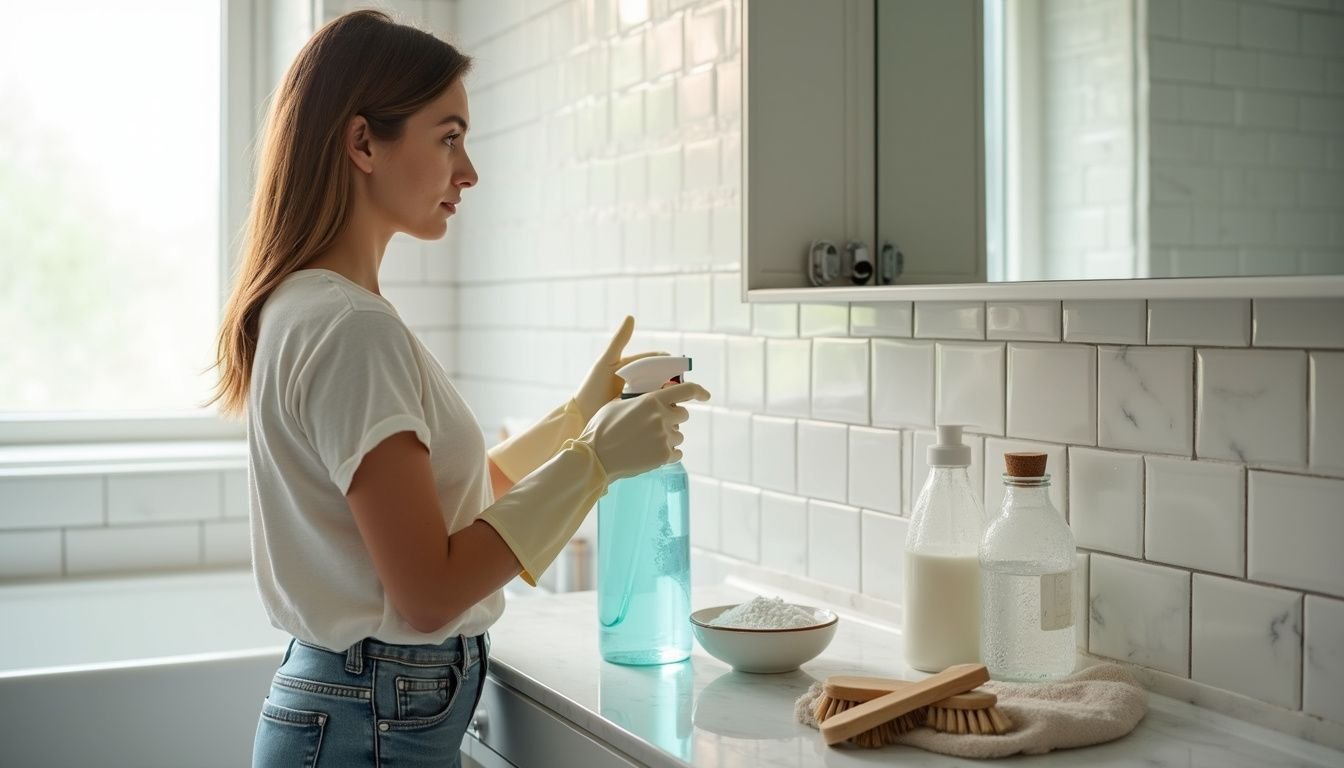
Moving from understanding the importance of keeping your bathroom clean, we now focus on the materials you need to clean tile and grout effectively. These items are essential in tackling grime, preventing discoloration, and maintaining a sparkling bathroom.
- A spray bottle – Fill this with your chosen cleaning solution to easily apply it to the tiles and grout.
- Baking soda – Acts as a gentle abrasive that can scrub away stains without damaging surfaces.
- White vinegar – Mixes with water to create a natural, effective cleaner for removing dirt and soap scum.
- A small brush – A toothbrush works well for getting into the grout lines where dirt accumulates.
- A larger brush or scrubbing pad – Use this for covering bigger tile areas more efficiently.
- Hydrogen peroxide – Helps in lifting tougher stains and brightening grout when baking soda alone isn’t enough.
- Rubber gloves – Protects your hands from harsh chemicals and keeps them clean during the process.
- Microfiber cloths – Ideal for wiping surfaces after cleaning, leaving them dry and streak-free.
- Vacuum cleaner or dustpan and brush – Removes loose debris before wet cleaning begins, making the process more effective.
- Sealer for grout maintenance – Apply this after cleaning is done to protect grout from future stains and moisture buildup.
These materials will prepare you for detailed tile and grout cleaning, ensuring your bathroom remains a clean, inviting space.https://www.youtube.com/watch?v=_db1JpaAjJY
How to Clean Bathroom Tile
Cleaning bathroom tile can seem like a chore, but it doesn’t have to be. Gather your tools and follow these simple steps for sparkling results.
Step-by-step cleaning process
Maintaining bathroom tile and grout requires appropriate supplies and a well-devised strategy. Property owners and parents can yield gleaming results with several straightforward steps.
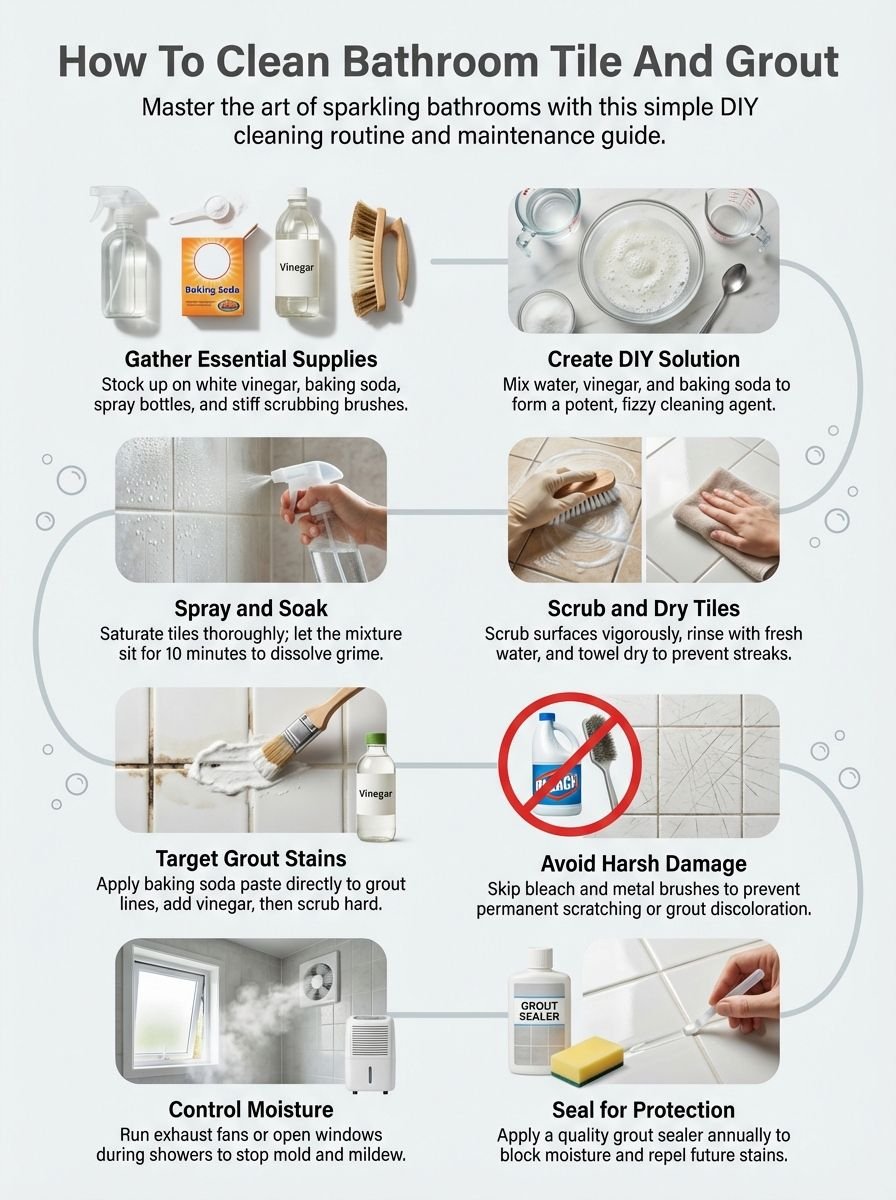
- Assemble your tools. You will necessitate a spray container, baking soda, vinegar, a scrubbing brush, and a damp rag.
- Formulate your cleansing agent. Blend water and vinegar within the sprayer. Incorporate a small quantity of baking soda which will incite a bubbly action that aids in elevating grime.
- Administer the agent squarely on the bathroom tile. Ensure to saturate all sections uniformly.
- Leave the agent idle for 5-10 minutes. This pause allows the cleaning compound to disintegrate soap residue and discolorations.
- Scrub the tiles earnestly with the brush. Pay attention to patches that appear more soiled than others.
- Wash the tiles with pure water using a damp cloth to eliminate any lingering cleaning agent.
- Dry the tiles entirely with a clean towel to repel new dirt from adhering to wet surfaces.
- Proceed to cleanse the grout by spreading the same vinegar and water blend along the rows.
- Scatter baking soda directly onto the grout before spraying your agent over it once more for an augmented cleaning lift.
- Permit this blend to idle for another 5-10 minutes for deep stain elimination efforts.
- Use your scrubbing brush to labor on discolored or stained regions within the grout rows.
- Erase any remaining residue with your damp cloth until all hints of baking soda are absent.
- Conclude by drying off any dampness between tiles with your towel.
This method keeps bathroom tiles and grout refreshed and plays a vital part in upholding sanitation standards in one of the frequently occupied spaces in any residence.
Products to use and avoid
Use a mild cleaning solution or a mix of white vinegar and water in a spray bottle for safe tile cleaning. Baking soda works well on tough stains, especially for grout stain removal.
A soft brush helps protect tiles during scrubbing while still getting rid of dirt. House owners and parents often rely on store-bought bathroom tile cleaners labeled as safe for natural stone, ceramic, or porcelain.
Avoid harsh chemicals like bleach or ammonia, which can damage grout and cause discoloration over time. Do not use metal brushes since these scratch both tiles and grout easily. Stay clear of oil-based cleaners because they tend to leave slippery residues that create hazards in the bathroom.
Stick with tried-and-true products to support proper grout maintenance and long-lasting results from regular tile cleaning routines.
How to Clean Grout Effectively
Cleaning grout can feel like a challenge, but with the right methods, it becomes manageable. Mixing baking soda and water creates an effective paste for stain removal. Apply this solution directly to your grout lines and scrub gently with a brush.
For tough stains, add vinegar and watch them fizz away. To keep grout looking fresh, regularly vacuum the area to remove dirt before it embeds itself into the surface. Sealing the grout also protects against discoloration in the future.
Removing stains from grout
Stains on grout can make a bathroom look dirty. Homeowners must tackle these stains promptly to maintain a fresh appearance.
- Use baking soda and water to create a paste. This mixture serves as an effective cleaning solution for stubborn stains.
- Apply the paste directly onto stained areas of the grout. Spread the mixture evenly over each stain for best results.
- Let the paste sit for about 10-15 minutes to allow it to penetrate the stain deeply.
- Scrub the area with a brush or an old toothbrush. Use firm pressure to lift away dirt without damaging the tile or grout.
- Rinse the area with warm water afterward. This step removes any residue from the baking soda mixture, leaving the surface clean.
- For tougher stains, vinegar can serve as an alternative solution. Spray it directly on the stains, then follow up with baking soda for enhanced cleaning power.
- Avoid using bleach on colored grout, as it can lead to discoloration and damage over time.
- Regular vacuuming of tiled floors helps prevent grime buildup before it becomes a problem.
These steps ensure that homeowners keep their bathroom tiles in excellent condition while effectively maintaining their grout’s appearance over time.
Preventing grout discoloration
Grout can easily discolor if not properly maintained. To prevent this, keep the bathroom well-ventilated. Good airflow reduces moisture buildup, which helps stop mold and mildew. House owners should also clean spills immediately to avoid staining.
Sealing grout is another effective method for prevention. A quality sealant creates a protective barrier against dirt and grime. Regularly applying this solution keeps the grout looking fresh longer.
Homeowners can use baking soda mixed with water as an eco-friendly cleaning solution to gently scrub their grout without causing damage.
Maintenance Tips for Tile and Grout
To keep tile and grout in great shape, reduce moisture buildup. Wipe down surfaces after use to prevent mildew growth. Sealing the grout can also help it stay clean longer and resist stains.
Regular care makes a big difference in maintaining its appearance and durability.
Minimize moisture buildup
Moisture buildup can lead to mold and mildew on bathroom tile and grout. Homeowners should focus on improving ventilation. Open a window or use an exhaust fan while showering. This helps reduce humidity levels in the room.
Regularly wipe down wet surfaces after each use, especially around tiles and grout lines. Using a squeegee makes this task easier and more effective. Sealing grout also protects it from moisture absorption, keeping bathrooms looking clean for longer periods.
Emphasizing these practices ensures better grout maintenance over time.
Seal grout for long-lasting results
Sealing grout protects it from stains and moisture. This simple step helps maintain a clean bathroom tile appearance. Homeowners should choose a high-quality grout sealer for the best results.
Apply the sealant evenly, ensuring every joint is covered.
Regularly check the sealed grout to identify any wear or damage. Reseal as necessary to prevent discoloration and keep grime at bay. By following these steps, families can enjoy a fresh and inviting bathroom environment for years to come.
Conclusion
Cleaning bathroom tile and grout brings fresh life to a space. Homeowners can follow simple steps for effective results. They should use the right products and maintain their surfaces regularly.
Keeping moisture at bay helps prevent stains and discoloration. A little effort goes a long way in keeping tiles looking great and grout intact.
FAQs
1. How can I keep bathroom tile clean for longer periods?
Regular tile cleaning prevents soap scum and dirt from building up. Use a mild cleaner weekly to protect bathroom tile surfaces and help with long-term tile maintenance.
2. What is the best way to handle grout cleaning and stain removal?
Scrub grout lines with a stiff brush using a mix of baking soda and water, or use a store-bought grout cleaner for tougher stains. Rinse well after stain removal to avoid residue.
3. Why does grout need special care compared to tiles?
Grout is porous and absorbs moisture easily, making it more likely to trap mold or dirt than smooth bathroom tile. Routine grout maintenance keeps these lines looking fresh and strong.
4. Can regular household cleaners damage my tiles or grout?
Some harsh chemicals can erode both bathroom tile finishes and weaken grout over time. Choose gentle products designed specifically for effective tile cleaning and safe grout maintenance instead of all-purpose cleaners.