
Many people use their kitchen sink all day, but they do not realize how much bacteria can grow there. Tiny food bits and water spots often stick around after washing dishes or rinsing raw meat.
This can make the sink unsafe for families, especially kids who touch many surfaces.
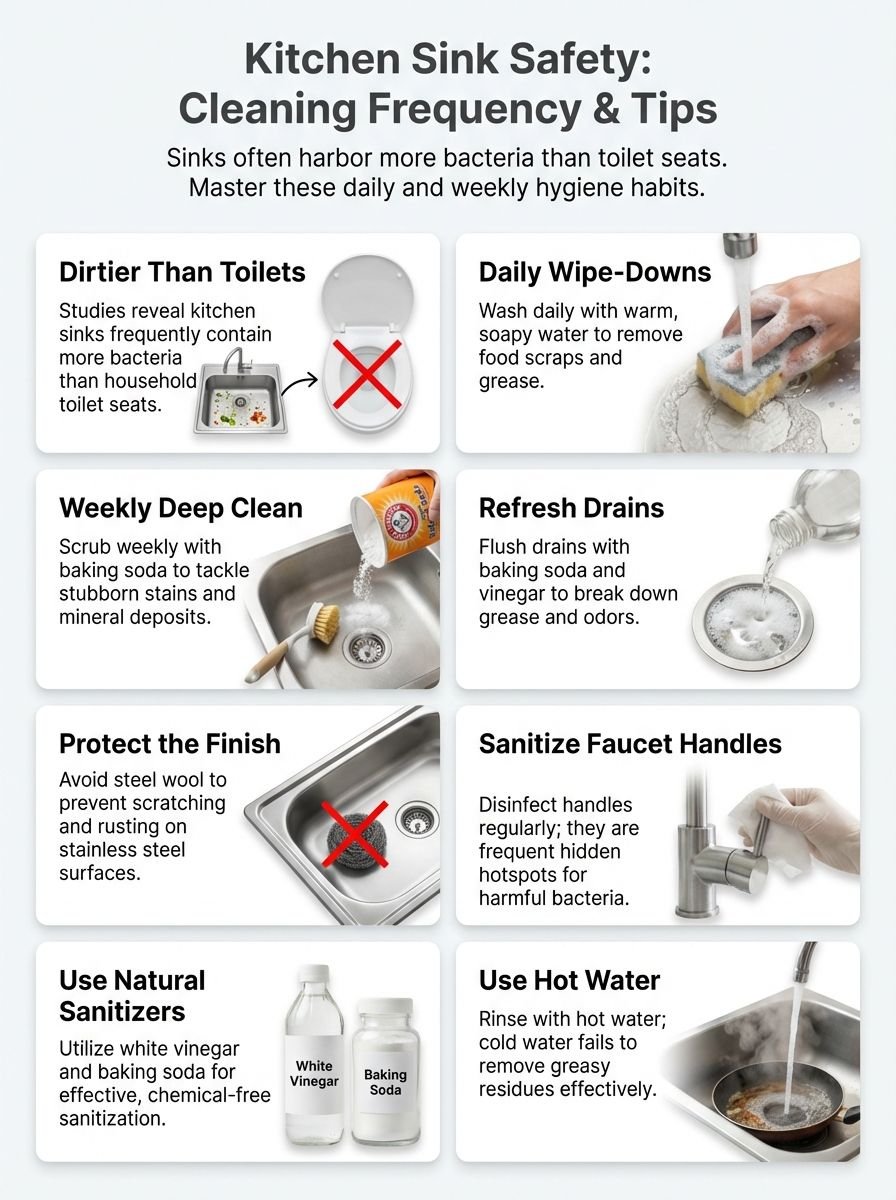
A recent study showed that the kitchen sink is usually dirtier than a household toilet seat. Bacteria love damp spots like drains and mineral deposits on stainless steel sinks. Simple cleaning with dish soap is not always enough to keep germs away.
This blog will show exactly how often you should be cleaning your kitchen sink for safety. Readers will learn daily habits, deep cleaning methods, and tips for cleaner drains using products like baking soda or safe chemical cleaners.
Find out which mistakes could be making your cleanups less effective.
Clean sinks lead to safer homes—read on to find out why timing matters!
Key Takeaways
- Clean your kitchen sink every day with warm, soapy water to remove germs, food bits, and grease.
- Deep clean the sink once a week using baking soda, vinegar, or safe cleaners to get rid of stains and mineral deposits.
- A study found kitchen sinks are usually dirtier than toilet seats because bacteria grow in damp spots like drains.
- Sanitizing after cleaning helps kill harmful bacteria from raw meat and keeps your family safer.
- Do not forget to clean drains and faucet handles often; hidden bacteria can cause bad smells or make people sick.
How Often Should You Clean Your Kitchen Sink?

Keeping your kitchen sink clean is vital for safety. Daily cleaning prevents germs and food debris from building up, especially after washing raw meat. Weekly deep cleaning helps tackle stubborn stains and mineral deposits on stainless steel sinks.
Regular maintenance ensures a fresh, sanitary space for food preparation.
Daily cleaning practices
Wipe the kitchen sink with warm, soapy water each day using a soft sponge or dishcloth. This simple step removes food scraps, grease, and bacteria left behind after cooking or washing dishes.
If your family often handles raw meat, use dish soap to target germs that can spread illnesses.
Rinse away debris around the drain and faucet to prevent mineral deposits and water spots from building up. Allow the surface to air dry or use a clean cloth for drying. Avoid steel wool on stainless steel sinks since it can scratch and cause rust.
These daily cleaning practices make deep cleaning easier while helping maintain a safe space for meal prep in busy households.
Weekly deep cleaning
Deep cleaning your kitchen sink once a week helps remove grime, mineral deposits, and water spots that build up from daily use. Scrubbing the surface with baking soda and dish soap can break down stubborn stains on a stainless steel sink.
Parents find that using a soft brush or non-scratch sponge protects the finish while still clearing away food debris left behind after meals prepared with raw meat.
Sanitizing solutions help kill germs that standard cleaners might miss. Pouring boiling water combined with vinegar down the drain flushes bacteria and breaks up grease for better drain cleaning.
Weekly deep cleaning lowers health risks by keeping harmful microbes out of family kitchens. Regular attention also keeps sinks looking clean and smelling fresh, even in busy homes filled with activity from washing machine use or running the dishwasher nearby.
How to Properly Clean Your Kitchen Sink
To clean a kitchen sink effectively, use warm water mixed with dish soap. Scrub the surfaces to remove food residue and grime. After rinsing, apply a sanitizing cleaner specifically designed for kitchens.
This step helps eliminate harmful bacteria that may linger after washing.
Using warm, soapy water
Warm, soapy water helps remove grease, food bits, and bacteria from the kitchen sink. Parents and house owners can use dish soap mixed with hot water to scrub stains and stuck-on debris.
Cleaning the stainless steel sink this way prevents mineral deposits and water spots from building up.
Running a soft sponge or cloth gently over all areas keeps the surface safe for food prep. This method works well after handling raw meat or cleaning up messes that attract germs. For weekly deep cleaning, focus on corners and hard-to-reach spots where grime hides most often.
Using warm, soapy water is an easy habit that supports daily safety in every kitchen.
Sanitizing with appropriate cleaners
Using warm, soapy water is a great start. Next, sanitizing with appropriate cleaners ensures safety in the kitchen. Choose a cleaner that kills germs effectively. Look for products designed for kitchen surfaces and safe on stainless steel sinks.
Mix baking soda with vinegar to create a natural sanitizer. This solution eliminates bacteria and helps remove mineral deposits. Apply it generously around the sink and scrub gently with a sponge.
Rinse well after scrubbing to ensure no residue remains. Regularly using these cleaners will keep the kitchen sink safe for food preparations and prevent unpleasant odors from raw meat or other waste.
How to Clean the Sink Drain for Safety
Cleaning the sink drain is vital for kitchen safety. A dirty drain can cause unpleasant odors and attract pests.
- Clear out visible debris. Remove food particles, hair, and other waste from the sink drain. Use gloves for hygiene.
- Pour baking soda down the drain. This natural cleaner helps break down grease and eliminates odors.
- Follow with vinegar. Vinegar reacts with baking soda to create fizzing action that cleans buildup inside the pipes.
- Wait a few minutes. Allow the reaction to work on mineral deposits and stubborn grime in the drain.
- Flush with hot water. Running hot water through the drain clears away remaining residue and ensures good flow.
- Use a drain snake if needed. For stubborn clogs, this tool can remove blockages deep within the pipes effectively.
- Consider using a commercial cleaner occasionally. Look for enzymatic products designed specifically for drain cleaning to maintain cleanliness.
Keeping the sink drain clean contributes to a safe kitchen environment for families and guests alike.https://www.youtube.com/watch?v=4NPrVxyjAAA
Recommended Cleaning Products for Your Kitchen Sink
After tackling the sink drain, choose effective cleaning products for your kitchen sink. Dish soap works wonders. It cuts through grease and removes food particles efficiently. Baking soda serves as a natural scrubber; it eliminates tough stains without scratching surfaces.
For sanitizing, many people rely on white vinegar. This product fights bacteria and neutralizes odors easily. Specialized stainless steel cleaners can enhance shine while preventing water spots.
Always follow manufacturer instructions for the best results. Using these recommended cleaning products ensures a hygienic kitchen sink that keeps families safe from harmful germs or bacteria often found in raw meat residues and mineral deposits.
Common Mistakes to Avoid When Cleaning Your Sink
Cleaning a kitchen sink effectively requires attention to detail. Avoiding common mistakes can enhance both safety and cleanliness.
- Skipping daily cleaning practices leads to bacteria buildup. Clean the sink after each use to maintain hygiene.
- Neglecting deep cleaning tasks contributes to mineral deposits and stains. Schedule weekly deep cleaning using appropriate cleaners for stainless steel sinks.
- Overusing abrasive cleaners can damage the sink’s surface. Choose gentle dish soap along with baking soda for effective cleaning without scratches.
- Forgetting the drain while cleaning increases odors and clogs. Regularly perform drain cleaning to prevent blockages and ensure proper flow.
- Using dirty sponges or cloths introduces germs back into the sink. Always opt for clean materials when wiping down surfaces or scrubbing stains.
- Ignoring the faucet area creates hidden germ hotspots. Pay attention to faucet handles, as they often harbor bacteria, especially after handling raw meat.
- Rinsing with cold water does not remove all residues effectively. Use warm, soapy water to eliminate food particles and ensure thorough cleansing of the entire sink area.
- Failing to sanitize after cleaning leaves harmful bacteria behind. Use sanitizers or vinegar solutions for an extra layer of safety after regular washing sessions.
- Relying solely on one type of cleaner limits effectiveness against various contaminants. Mix different products when necessary but avoid combining bleach with ammonia-based items, which can create hazardous fumes.
- Disregarding water spots may lead to unsightly stains over time. Wipe down your kitchen sink regularly with a microfiber cloth after rinsing to keep it looking pristine and shine-free from spots.
Conclusion
A clean kitchen sink promotes safety and hygiene. Regular cleaning prevents bacteria from raw meat or food particles. Homeowners should scrub their sinks daily and perform deep cleaning weekly.
Using warm, soapy water works best, while sanitizing with proper cleaners tackles germs effectively. Keeping the sink fresh ensures a healthy home for families.
FAQs
1. How often should you clean your kitchen sink for safety?
Clean your kitchen sink at least once a week to remove food residue and bacteria. If you handle raw meat or cook often, clean the sink after each use to prevent contamination.
2. What is the best way to deep clean a stainless steel sink?
Use baking soda and dish soap for deep cleaning a stainless steel sink. Scrub all surfaces, rinse with warm water, then dry with a soft cloth to avoid water spots and mineral deposits.
3. Should I worry about drain cleaning when washing my kitchen sink?
Yes, regular drain cleaning helps prevent clogs and keeps bacteria from building up in your kitchen sink. Pour hot water down the drain weekly; add baking soda if needed for extra freshness.
4. Can leaving dirty dishes in the kitchen sink affect safety?
Leaving dirty dishes can attract germs that spread across sinks and counters. Wash dishes right away using dish soap; this reduces risk of cross-contamination from leftover food or raw meat juices.