
Smoke smell can make a house feel less inviting and harm air quality. Many homeowners search for quick cleaning solutions to remove cigarette smoke odor from flooring, walls, and upholstery.
One fact stands out: simple mopping with water will not get rid of stubborn stench or tackle the grime left behind by cigarettes. Proper mopping techniques work best when paired with strong deodorizers, microfiber cloths, and household staples like vinegar or ammonia-based cleaners.
This blog explains What’s A Good Mopping Solution To Clean A Smokers House Fast! Readers will learn which products cut through smoke residue fast. They will also see how carpet cleaning methods and air filters help restore clean air to any room.
Clear answers await those looking to refresh their home quickly. Ready for fresh results? Keep reading!
Key Takeaways
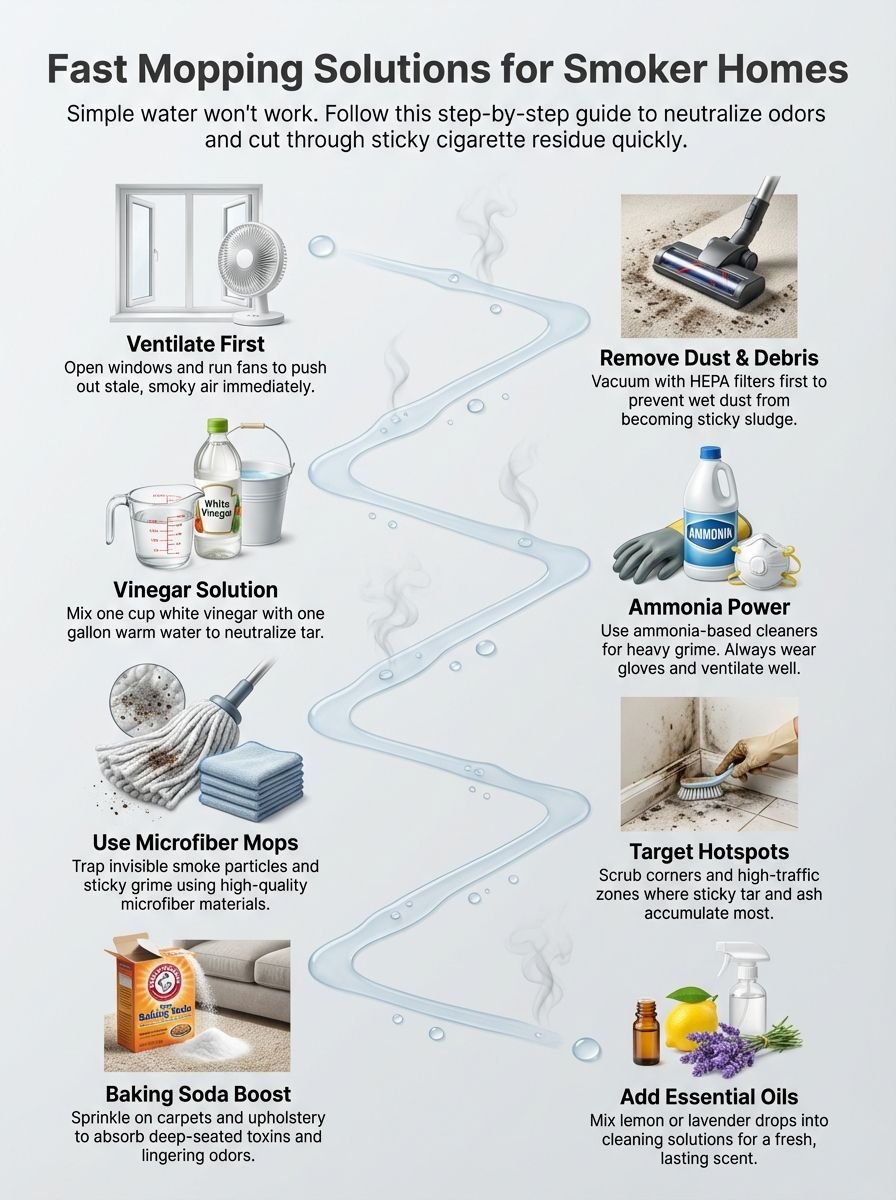
- Vinegar and warm water make an effective mopping solution for removing smoke odor and residue from floors. Mix one cup of white vinegar with one gallon of warm water for best results.
- Ammonia-based cleaners break down stubborn cigarette smoke smells but require good ventilation and safety precautions, such as gloves.
- Use a microfiber mop to trap dust, dirt, and sticky tar left by smoking; focus on high-traffic areas and corners where grime builds up the most.
- Baking soda absorbs lingering odors when sprinkled on carpets or upholstery before vacuuming; essential oils can add a fresh scent after cleaning.
- Always ventilate rooms well by opening windows or using fans while cleaning to help remove smoky air quickly and prevent mold growth.
Preparing the Area for Cleaning

To clean effectively, start by opening windows or doors to let fresh air flow through. Next, clear away any loose debris and dust from surfaces to ensure the area is ready for deep cleaning.
Ventilate the space
Open all windows before starting any cleaning solutions or mopping. Turn on ceiling fans to improve airflow and speed up smoke smell removal. Set the home’s HVAC system to fan mode if possible, letting fresh air circulate through every room and the air ducts.
Use portable box fans to push stale, smoky indoor air outdoors.
Proper ventilation helps remove cigarette smoke odor and reduces chances of mold growth during carpet cleaning or upholstery cleaning projects. Good airflow is important after water damage or using strong cleaners such as ammonia-based products and tsp (trisodium phosphate).
Clean vents in the air duct system frequently for best results against persistent odors.
Remove loose debris and dust
Once fresh air circulates, it becomes easier to handle dust and debris. Start with a vacuum cleaner that has a HEPA filter for best results. This step helps stop cigarette smoke odor from sticking to surfaces during cleaning.
Sweep or vacuum all floors, paying attention to corners and under furniture where ash or dirt may collect.
Use a microfiber cloth on shelves, tables, and baseboards before any mopping begins. Dust often traps the sticky residue left by cigarette smoke in carpets and upholstery as well. Regular carpet-cleaning or dry cleaning reduces lingering particles inside fabrics.
Removing loose debris first allows mopping solutions to reach stains faster and supports faster smoke smell removal throughout the house.
Best Mopping Solutions for a Smoker’s House
For a smoker’s house, effective cleaning solutions can make a big difference. Vinegar mixed with warm water cuts through smoke residue, while ammonia-based cleaners tackle tough odors effectively.
Vinegar and warm water solution
Mixing distilled vinegar with warm water makes an effective cleaning solution for cigarette smoke odor. This blend cuts through sticky residues left by tobacco on floors and tiles.
Many professional cleaning services recommend this mix for quick results. Use a ratio of one cup white vinegar to one gallon warm water.
Mop hard surfaces with the solution, focusing on corners and edges where tar builds up. The acidity in vinegar helps neutralize strong odors, speeding up smoke smell removal without leaving chemical fumes behind.
House owners find this method safe for homes with children or pets, making it a smart choice before trying stronger options like ammonia-based cleaners or an ozone generator.
Ammonia-based cleaners
Ammonia-based cleaners cut through tough grease and grime. They work well against cigarette smoke odor, making them suitable for a smoker’s house. Homeowners can use these cleaners on floors, countertops, and appliances.
It is crucial to wear gloves while using them due to their strong nature. Always ensure good ventilation by opening windows before getting started.
Mopping with ammonia solutions helps remove lingering smells from the environment. These products can turn a smoky home into a fresher space quickly. After cleaning, consider combining other methods for full-effect odor removal in high-traffic areas as well as corners of the room.
Commercial smoke odor removers
Ammonia-based cleaners help remove smoke odors, but commercial smoke odor removers target these smells even more effectively. These products often contain advanced formulas specifically designed to neutralize cigarette smoke odor in homes.
Many brands use chemical compounds that penetrate surfaces to eliminate persistent smells.
Some commercial options include sprays and foggers for quick application. Others come in the form of concentrated liquids for mopping or soaking upholstery and carpets. Homeowners often find success using ozone generators as well; these machines can break down odor-causing molecules in the air and on surfaces.
For best results, individuals should follow the manufacturer’s instructions closely while ensuring proper ventilation during use.
Mopping Techniques for Effective Cleaning
Mop with a microfiber cloth for effective cleaning. This type of mop traps dirt and absorbs moisture, making it great for removing smoke residue. Focus on corners and areas where people walk the most.
These spots often hold onto odors and grime longer than others.
Use a microfiber mop
Using a microfiber mop makes cleaning a smoker’s house much more effective. These mops trap dust, dirt, and smoke residue better than traditional mops. The fine fibers capture particles that cling to surfaces, ensuring thorough cleaning.
Focus on high-traffic areas where cigarette smoke lingers most. Microfiber mops also work well on corners where grime collects easily. For best results, combine this tool with solutions like vinegar and warm water or ammonia-based cleaners for strong smoke smell removal.
Now it’s time to examine key mopping techniques for the best outcomes.
Focus on corners and high-traffic areas
Corners and high-traffic areas often collect smoke residue and odors more than other parts of the house. Homeowners should pay special attention to these spots while mopping. Smoky grime builds up in corners where dust settles frequently, especially near doorways or entry points.
A microfiber mop effectively captures dirt in these challenging areas without causing damage.
High-traffic zones require extra effort during cleaning. The frequent movement causes a buildup of odors from cigarette smoke that needs thorough treatment. Using a strong cleaning solution like vinegar mixed with warm water can help break down stubborn residues quickly.
After tackling these critical spots, moving on to effective mopping techniques will ensure a fresh environment throughout the home.
Additional Tips for Odor Removal
Baking soda acts as a powerful odor absorber. Sprinkle it on carpets and upholstery to neutralize smoke smells effectively. Essential oils can also freshen up the space. Adding a few drops to your cleaning solution leaves behind a pleasant scent.
Use odor-absorbing materials like baking soda
Baking soda works wonders for removing cigarette smoke odor. It absorbs unwanted smells effectively. Sprinkle it on carpets, upholstery, and hard surfaces. Let it sit for several hours or overnight to maximize its effectiveness.
Afterward, vacuum or wipe the area clean. For stubborn odors, combine baking soda with essential oils for a pleasant scent boost. This method is simple and inexpensive compared to professional cleaning services that specialize in smoke smell removal.
Consider adding essential oils for a fresh scent
Essential oils can enhance the air in a smoker’s house. They provide a pleasant aroma that masks unpleasant smoke odors. For effective results, mix a few drops of essential oil with water in a spray bottle.
Choose oils like lavender or lemon for their fresh scents.
After mopping, lightly mist the floors and furniture with this mixture. The scent will linger and help combat cigarette smoke odor over time. Using these natural fragrances not only freshens up the space but also creates a more inviting home environment for family and guests.
Conclusion
Cleaning a smoker’s house quickly requires effective mopping solutions. Vinegar and warm water work well to cut through grime and neutralize odors. Ammonia-based cleaners also tackle stubborn smoke smells efficiently.
Using a microfiber mop helps capture dirt better, especially in tricky spots like corners. Finally, adding baking soda or essential oils can refresh the air, making a noticeable difference.
FAQs
1. What cleaning solutions work best for mopping a smoker’s house to remove cigarette smoke odor fast?
A strong mix of TSP, or trisodium phosphate, with warm water cuts through nicotine stains and helps with smoke smell removal. This solution works well on hard floors but always test it first in a small spot.
2. Can professional cleaning services help get rid of smoke smells faster than home methods?
Professional cleaning services use advanced tools like ozone generators that break down stubborn cigarette odors deep in surfaces. They also handle carpet cleaning and upholstery cleaning more efficiently than most store-bought products.
3. How important is elbow grease when using any mopping solution for a smoker’s house?
Elbow grease makes a big difference; scrubbing loosens sticky residue from tobacco tar so the cleaning solutions can lift it away fully. Without enough effort, even good products leave some odor behind.
4. Should I use the same product for carpet and upholstery as I do on hard floors?
No; carpets and sofas need special formulas designed for fabric during upholstery or carpet cleaning since harsh chemicals like TSP can damage fibers or cause discoloration. Always check product labels before starting each type of surface cleanup to avoid mistakes that set odors deeper into your home.