
Stubborn stove rings can ruin the clean look of any kitchen. Many house owners and parents struggle to get rid of these marks, even after using different cleaning products. Dirty circles will often stay on glass or metal stoves, no matter how hard someone scrubs.
Kitchen cleaning experts say that most stains come from burned food or spilled liquids left too long on hot surfaces. These rings stick fast because heat bakes them onto the stovetop.
Still, a mix of smart stove maintenance and the right household cleaning tools like baking soda or dish soap can break down even the toughest spots.
This guide covers simple ways to remove stubborn rings from stove tops for a spotless finish. Step-by-step instructions show which cleaning tips work best for each type of mess. People who want a shiny stove without harsh chemicals will find practical help here.
Find out what really works below!
Key Takeaways
- Stubborn stove rings often result from burnt food or spills left too long on hot surfaces and require special cleaning methods for removal.
- Baking soda and vinegar paste, as well as lemon juice with hot water, are safe and effective household remedies to break down tough stains.
- For glass stovetops, carefully using a razor blade at a 30-degree angle removes baked-on grime without scratching the surface.
- Commercial stovetop cleaners save time by targeting grease and residue with minimal scrubbing—always follow product instructions for best results.
- Prevent future rings by wiping spills immediately, deep-cleaning monthly, using gentle cleaning tools, and keeping cookware clean after each use.
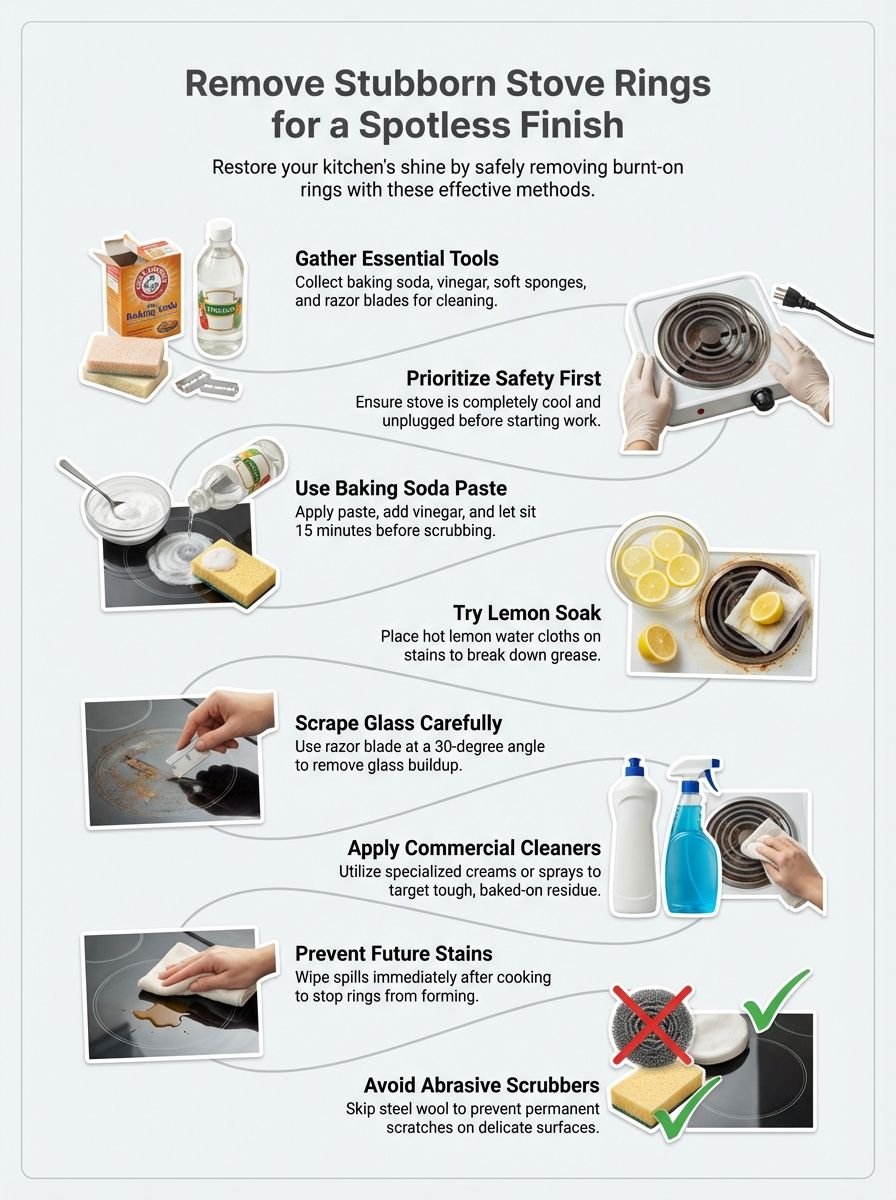
Preparation Before Cleaning
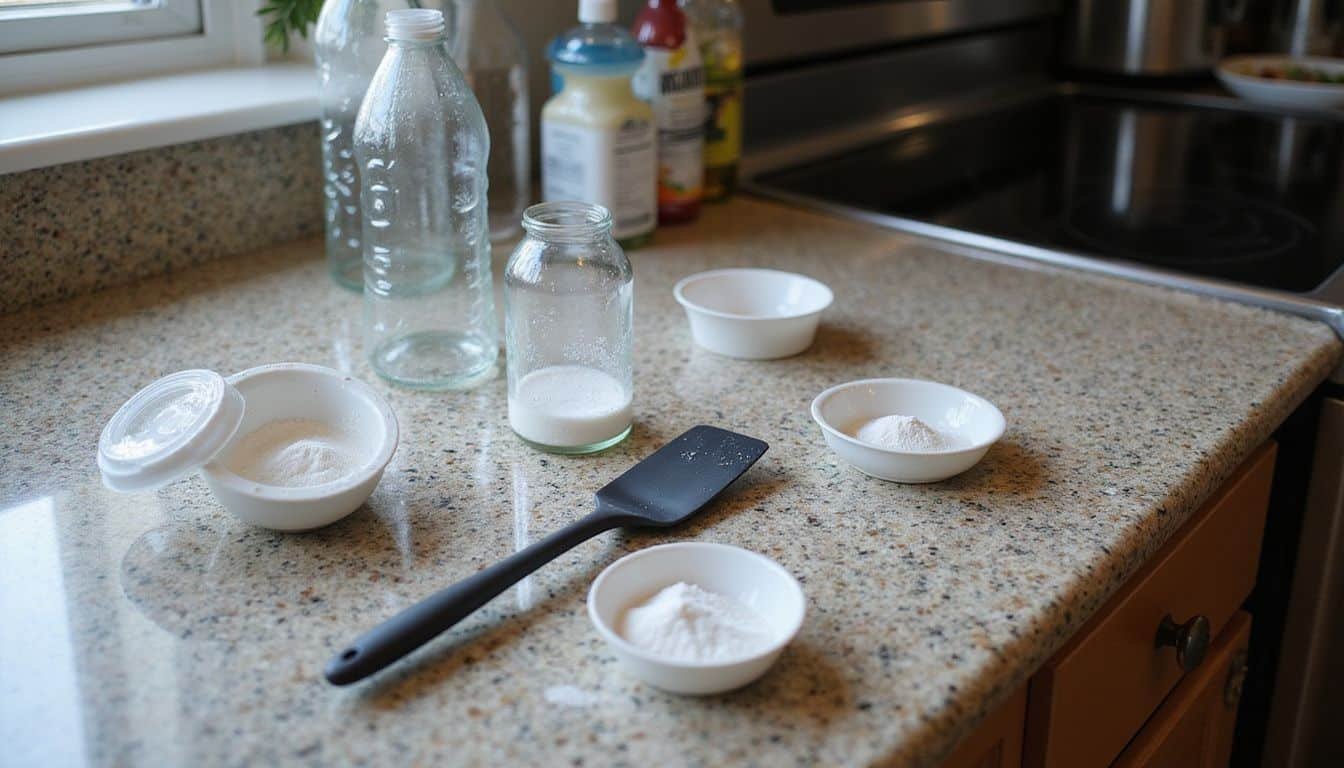
Before starting the cleaning process, gather all necessary tools and materials. This includes baking soda, vinegar, a rubber spatula, and any commercial cleaners you plan to use. Ensure the stove is cool and unplugged for safe cleaning.
Gather necessary tools and materials
House owners and parents need the right supplies for effective stove maintenance. A soft sponge, microfiber cloth, rubber spatula, and sturdy nylon scrub brush tackle daily kitchen cleaning tasks.
White vinegar and baking soda serve as powerful household cleaning products that cut through burnt-on stains while staying safe for most surfaces.
For tough stove rings on gas burners or glass cooktops, a small razor blade works well but should only be used with care. Disposable gloves help protect skin from harsh chemicals in some commercial stovetop cleaners.
Having a bowl or bucket of hot water nearby speeds up rinsing between scrubs or soaks. Storing these basic tools together saves time during routine cleaning next time a stubborn ring appears.
Ensure the stove is cool and disconnected
After gathering the necessary tools and cleaning products, take care to make the work area safe. Unplug electric stoves or shut off the gas supply for gas models. Wait until all heating elements or burners cool down completely before starting any kitchen cleaning.
Touching hot stove rings causes burns that are a risk for both adults and kids. Most experts in household cleaning recommend feeling gently above each burner with the back of your hand to check temperature.
Cleaning tips often overlook this simple step, but skipping it leads to injury. Practicing good stove maintenance means never rushing when dealing with stubborn rings on stovetops or cooktops.
This habit keeps parents, children, and anyone involved in stove cleaning out of danger while they tackle stuck-on grease and stains using baking soda or other products.
Cleaning Methods for Stubborn Stove Rings
Cleaning stubborn stove rings can feel challenging. Yet, simple methods make the task easier.
For instance, a baking soda and vinegar paste works wonders on tough stains. Another great option is to soak the rings in lemon juice mixed with hot water for effective cleaning. Use a razor blade carefully on glass stovetops to remove stuck-on grime without scratching the surface.
Commercial stovetop cleaners also provide powerful solutions for stubborn residues.
Baking soda and vinegar paste
Mix baking soda with a small amount of water to form a thick paste. Spread this mixture directly on the stubborn stove rings. Pour white vinegar over the paste and watch it fizz as it reacts with tough stains, helping lift burnt food and grease from metal surfaces.
Let the solution sit for 10–15 minutes before scrubbing gently with a soft brush or nylon scrubber. Wipe away residue using a damp cloth for a spotless finish. This household cleaning method avoids harsh cleaning products, making kitchen cleaning safe for families focused on effective stove maintenance and practical cleaning tips.
Lemon juice and hot water soak
Lemon juice and hot water can effectively tackle stubborn stove rings. Homeowners should mix equal parts of lemon juice and hot water in a bowl. Soaking a cloth in this mixture, they can lay it over the affected areas for about 15 minutes.
The acidity in the lemon helps break down grease and grime.
After soaking, scrubbing with a soft sponge makes cleaning easier. Following up by wiping the area with a damp cloth removes any residue. This method cleans while also leaving behind a fresh scent, making it an appealing option for stove maintenance.
Razor blade technique for glass stovetops
Using a razor blade can effectively tackle stubborn rings on glass stovetops. This method requires careful handling, but it yields great results. First, keep the stovetop surface slightly damp to avoid scratching.
Hold the razor blade at a 30-degree angle against the ring. Use steady pressure to scrape off any residue or buildup.
Many homeowners prefer this technique because it removes grime without damaging the glass surface. After scraping, wipe down the area with a clean cloth and some stove cleaner for an extra shine.
Regular maintenance helps prevent future stains and makes cleaning easier next time.
Commercial stovetop cleaners
Commercial stovetop cleaners offer effective solutions for removing stubborn stove rings. These products often combine powerful ingredients that target grease and baked-on stains. Homeowners can choose from sprays, wipes, or creams based on their preferences.
Using a commercial cleaner simplifies the cleaning process. Most formulations require minimal scrubbing and deliver quick results. House owners should follow product instructions for best outcomes.
With regular stove maintenance and proper cleaning tips, one can maintain a spotless finish easily.
Preventing Future Stains and Rings
To keep stove rings at bay, users should clean spills immediately after cooking and use a protective cover when the stove is not in use. Simple habits make a big difference for stove maintenance.
For more cleaning tips, continue exploring!
Regular maintenance tips
Regular maintenance ensures a clean and functional stove. House owners and parents can easily follow these tips to keep their stoves in top condition.
- Clean spills immediately; doing this prevents tough stains from forming on the stove surface. A quick wipe with a damp cloth after cooking makes a big difference.
- Use a gentle cleaning solution regularly; vinegar mixed with water works effectively for daily cleaning. This mixture avoids harsh chemicals while still providing a spotless finish.
- Check burners for blockages often; ensuring that burner holes are clear helps maintain good flame distribution during cooking. Blocked burners can lead to uneven heating and potential hazards.
- Inspect the stove’s surface routinely; looking for scratches or damage allows for timely repairs or replacements, which enhances both safety and appearance. Fixing small issues early prevents larger problems down the road.
- Keep cookware clean; using dirty pots and pans can transfer grease and grime back onto the stove surface during cooking. Regularly washing cookware after use keeps everything tidy.
- Schedule deep cleaning sessions monthly; dedicating time each month provides an opportunity to thoroughly scrub stubborn spots, ensuring long-term cleanliness. A focused approach prevents buildup over time.
- Avoid abrasive tools while cleaning; steel wool or harsh sponges can scratch the surface, making it easier for dirt to settle in future cleans. Soft sponges work best for maintaining shine without damage.
- Store utensils safely away from the stovetop; preventing them from being placed directly on the surface reduces risks of scratches or burns when reaching across hot zones to grab items while cooking.
Each of these simple steps contributes significantly to effective stove maintenance, promoting both cleanliness and safety in the kitchen environment.
Proper cleaning techniques after cooking
Clean the stove immediately after cooking to prevent stains. Wipe up spills with a damp cloth while they are still fresh. Use warm, soapy water for tough spots, but avoid abrasive scrubbers that can scratch surfaces.
After cleaning with soap and water, rinse thoroughly and dry the stovetop to leave no residue behind. For extra shine, apply a small amount of vinegar or a commercial cleaner specifically made for stoves.
These steps ensure effective stove maintenance and keep the kitchen looking spotless.
Conclusion
Removing stubborn rings from a stove can feel challenging, but it’s achievable. Using simple methods like baking soda and vinegar or a lemon juice soak can restore shine to the surface.
Regular maintenance prevents these stains from forming. By adopting effective cleaning techniques post-cooking, homeowners maintain a spotless finish with ease. A clean stove not only looks great but also improves cooking experiences.
FAQs
1. What causes stubborn rings on stove surfaces?
Stubborn marks often form from spills, grease, or burnt food that gets baked onto the surface during cooking. These stains become tougher to remove if left for long periods.
2. Which cleaning agents work best for removing tough stove rings?
A paste made with baking soda and water works well for most stains. For harder spots, a vinegar solution can help break down residue without damaging the cooktop.
3. Can I use steel wool or sharp tools to clean my stove?
Avoid using steel wool or sharp objects because they scratch and damage the finish of your appliance. Use a soft cloth or non-abrasive pad instead to protect the surface while cleaning.
4. How do I keep my stove spotless after cleaning off stubborn marks?
Wipe up spills right away before they dry out or burn onto the surface. Clean regularly with gentle cleaners to prevent buildup; this keeps your stovetop looking new and spotless longer.