
Scratches on floor tiles can ruin the look of any home. House owners and parents deal with this problem often, especially in busy areas where kids and pets play. Even simple scuff marks or surface damage can make clean ceramic tiles seem old and worn out.
Many people think they need expensive tile repair products or a handyman to fix these scratches. In fact, there are quick DIY tile repair tricks using household cleaning tips that work wonders for tile maintenance.
With the right approach, almost anyone can handle tile restoration at home without stress.
This blog post covers how to remove scratches from floor tiles quickly and effectively. Discover easy fixes like baking soda paste, toothpaste application, or a vinegar and olive oil mixture.
Find out which method works best for your type of ceramic tile while learning how to stop future damage before it starts.
Keep reading for the easiest ways to restore shiny floors fast!
Key Takeaways
- You can remove most light scratches from ceramic floor tiles at home. Use baking soda paste, non-gel toothpaste, or a mix of vinegar and olive oil for best results.
- Identify your tile type before repairs. Ceramic, porcelain, and natural stone need different care methods to prevent damage during cleaning.
- Always test any new cleaner or polish on a small hidden area first. This helps you avoid harming the tile surface with harsh products.
- To stop future scratches, use furniture pads and area rugs in busy areas. Sweep floors often to keep dirt from scratching the tiles.
- Regular polishing keeps your floor shiny and can help hide minor marks over time without needing expensive professional help.
Identifying the Type of Floor Tile
Ceramic tiles, porcelain tiles, and natural stone all need different tile maintenance methods. Ceramic tiles often show fine scuff marks or surface damage more easily, while harder materials like porcelain resist scratches better.
Natural stone can look similar to ceramic but feels colder and may have subtle color shifts from minerals inside the slab.
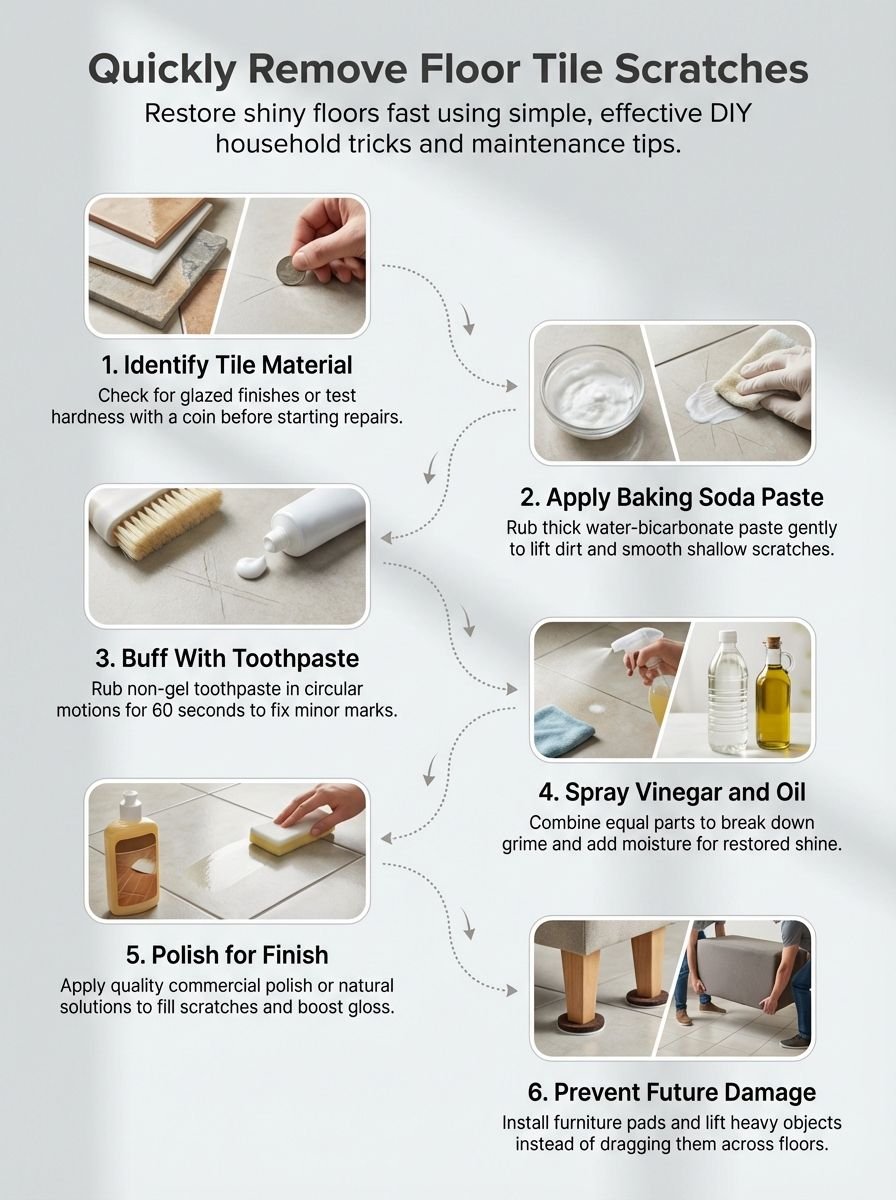
Tile repair products work best when matched to the right material. To identify your tile type quickly, check leftover boxes or inspect for a smooth glazed finish common in ceramic varieties.
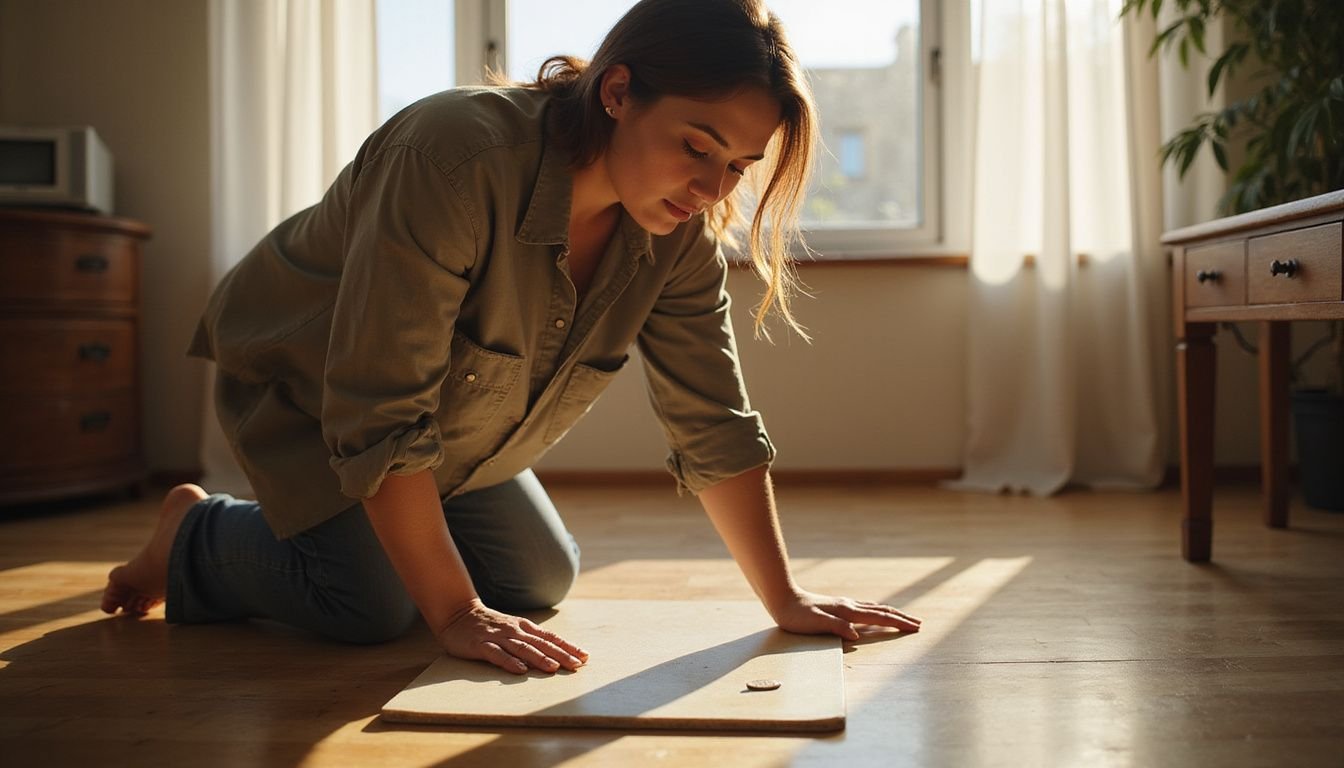
If no clues exist, even a quick scratch test with a coin can help; ceramic will mark more easily than tougher porcelain. Knowing the specific floor tile helps choose safe diy tile repair solutions without risking permanent damage during home improvement efforts.
Move on to easy ways house owners can tackle minor scratches with everyday cleaning product staples found at home.
DIY Methods to Remove Scratches
Homeowners can easily tackle surface damage on their floor tiles with simple DIY methods. They can use common household items to erase scuff marks and restore the shine of ceramic tiles.
Baking soda paste
Mix water and sodium bicarbonate to form a thick paste. Apply this baking soda mixture directly on the scratched area of ceramic tiles. Use a clean microfiber cloth or soft sponge to rub the paste gently over scuff marks and minor surface damage.
Baking soda works as a gentle abrasive, lifting dirt while smoothing out shallow scratches without damaging tile surfaces.
DIY tile repair using this method saves money and time for house owners interested in simple home improvement solutions. Rinse the spot with lukewarm water and dry it thoroughly after scrubbing.
Many DIY enthusiasts recommend repeating the process for deep marks until results improve. For those eager to try other household cleaning tips, toothpaste offers another approach under DIY methods to remove scratches from floor tiles quickly and effectively.
Toothpaste application
Toothpaste works as a gentle abrasive and can help remove light surface damage or scuff marks from ceramic tiles. Apply a small amount of non-gel toothpaste directly onto the scratch.
Use a clean, soft cloth to rub it in with small circular motions for about 60 seconds. Wipe away any residue using a damp microfiber towel, then dry the area thoroughly.
Tile maintenance experts suggest this diy tile repair technique for minor scratches on household surfaces. Toothpaste gently buffs out blemishes without harming the glaze or color of most floor tiles.
Homeowners should avoid using whitening or gel-based pastes, which may leave unwanted residues behind. This method offers an easy home improvement hack before turning to specialized tile restoration products found on Stack Exchange forums or at local stores.
Vinegar and olive oil mixture
A vinegar and olive oil mixture can effectively repair surface damage on ceramic tiles. Mix equal parts of white vinegar and olive oil in a spray bottle. Spray the solution onto the scratched areas of the tiles.
Use a soft cloth to rub the mixture over the scratches gently. The vinegar helps in breaking down any grime, while the olive oil adds shine and moisture to restore your tile’s appearance.
This simple DIY method offers an easy way for homeowners to maintain their floors without relying on expensive tile repair products.
Polishing Techniques for a Smooth Finish
Polishing floor tiles can restore their shine and hide scratches. Homeowners can use various techniques to achieve a smooth finish.
- Use a quality tile polish designed for ceramic tiles. This product helps fill in scratches and gives the surface a glossy look.
- Apply the polish evenly using a soft cloth or sponge. Work in small sections to ensure thorough coverage.
- Buff the tiles with a clean, dry cloth after applying the polish. This step enhances the shine and removes any excess product.
- Consider using a polishing machine for larger areas. These machines offer consistent results and save time during tile maintenance.
- Mix olive oil and vinegar for a natural polishing solution. This combination works well for cleaning while adding shine.
- Test any new product on an inconspicuous area first. This precaution prevents potential damage to ceramic tiles.
- Reapply polish every few months to maintain the finish of your floor tiles.
These polishing techniques will greatly benefit homeowners looking to repair ceramic tiles and improve their overall home appearance.https://www.youtube.com/watch?v=ZVazUigHTJo
Preventing Future Scratches
Regular maintenance keeps ceramic tiles looking great. Use furniture pads to protect your floors from scratches caused by heavy objects. These pads stick to the bottom of chairs and tables, preventing scuff marks as you move them around.
Avoid dragging items across tile surfaces. Lift heavy things instead to avoid surface damage. Keeping dirt and grit off the floor through routine sweeping or vacuuming can also help maintain your tiles’ shine.
Using area rugs in high-traffic zones adds an extra layer of protection against future scratches too.
Conclusion
Removing scratches from floor tiles can be simple and effective. Homeowners often overlook DIY methods that use common household items. Baking soda, toothpaste, and vinegar mixed with olive oil work remarkably well to restore tile surfaces.
Regular polishing can help maintain a smooth finish against future wear and tear. With these solutions, anyone can keep their ceramic tiles looking new longer without much effort.
FAQs
1. What causes surface damage on ceramic tiles, and can I fix it myself?
Surface damage often comes from moving heavy furniture or dropping hard items onto ceramic tiles. Many scratches are shallow and you can repair them at home with simple tile maintenance steps.
2. Which methods work best for quick tile restoration after scratches appear?
For light surface marks, clean the area well first. Use a soft cloth with a gentle cleaner to remove dirt. Next, apply a specialized scratch repair kit made for ceramic tiles; these kits fill in minor grooves fast and blend the finish.
3. Do all types of floor tile need different scratch removal techniques?
Most standard ceramic tiles respond well to basic repair methods like cleaning and using polish or filler products designed for tile restoration. Porcelain may require specific solutions due to its density but general approaches still help reduce visible flaws.
4. How can regular tile maintenance prevent future scratches or surface damage?
Placing felt pads under furniture legs protects against new marks on your floors. Sweep grit away often since debris causes many small scratches over time; this routine care keeps your floor looking better longer while reducing the need for frequent repairs to damaged areas of your ceramic tiles.