
Ceiling fans often collect grease and dust over time. Many homeowners struggle with greasy buildup that does not come off easily. Cleaning an oily ceiling fan can turn into a bigger mess if done the wrong way.
Even vacuuming can fail to catch all the grime, leaving blades sticky and dirty.
Research shows that using a microfiber cloth helps remove both oil and fine particles from fan blades more effectively than paper towels or dry rags. Regular cleaning prevents dirt from spreading throughout your home each time you use the fan.
This step-by-step guide on How To Clean Sily Fan gives easy methods for tackling tough, greasy residue without making a mess below the fan. Follow these instructions to keep cleaning simple, safe, and stress-free.
Discover tips that make cleanup fast and effective in every room.
Key Takeaways
- Use a microfiber cloth and a cleaning solution made from dish soap and vinegar to remove greasy buildup. Microfiber traps oil better than old rags or paper towels.
- Always turn off the ceiling fan at the switch and unplug if possible before cleaning. Cover floors with drop cloths to catch falling dust.
- Wipe blades gently using smooth strokes, starting with dry dust removal before applying any liquid cleaner. Focus on corners where grease hides.
- Clean the motor housing and pull chains as well, using mild soap and water only—avoid soaking electrical parts for safety.
- After cleaning, properly dispose of dirty cloths and gloves, then store supplies for next time. Lubricate moving parts every six months to keep your fan running smoothly.
Gather the Necessary Supplies
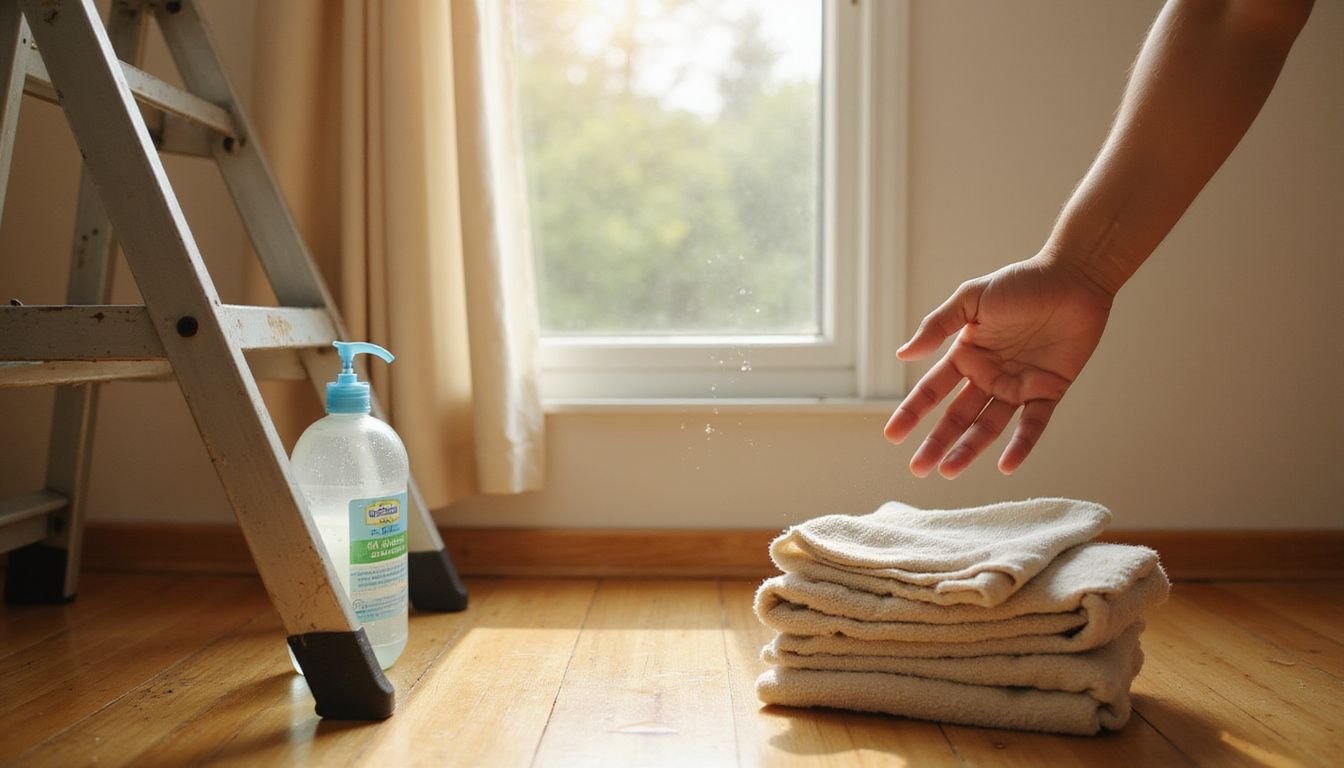
To get started, a few items are essential. Grab a cleaning solution, some soft cloths or old towels, and keep your step ladder handy for reaching the fan blades.
Cleaning solution
Most homeowners use a mild detergent mixed with warm water as their cleaning solution for ceiling fans. For oily buildup, mix one tablespoon of dish soap in half a gallon of water.
Add two tablespoons of white vinegar if you want extra grease-cutting power. White vinegar helps break down stubborn grime without damaging surfaces.
Pour the mixture into a spray bottle or small bucket for easy application. Avoid harsh chemicals that can strip paint or damage fan blades, especially on wood or painted finishes. Always test your cleaning solution on a small spot before using it over the entire surface to ensure it will not cause any discoloration.
Microfiber cloths or old rags
Microfiber cloths trap oily dust better than cotton rags. Their fine fibers pick up grease and grime from the ceiling fan blades without spreading it around. Old t-shirts or dish towels can substitute if no microfiber is on hand, but they may leave streaks or lint behind.
Many cleaning professionals reach for microfiber because it lifts debris in one swipe, reducing the chance of mess falling onto your floors.
Choose a clean cloth for each blade to avoid reapplying dirt as you work across the fan. Dampen the fabric with a mild cleaning solution before wiping to help break down stubborn stains and lift greasy residue efficiently.
Always use a sturdy step stool or ladder to ensure safety while cleaning hard-to-reach areas on your ceiling fan. Next, gather your step ladder or sturdy stool so you can safely access every part of your fixture.
Step ladder or sturdy stool
A step ladder or sturdy stool gives safe access to high places like a ceiling fan. Most ceiling fans sit between 7 and 9 feet above the floor, so standing on a chair can lead to slips or wobbles.
A household stepladder with non-slip feet keeps users balanced while they clean oily blades and hard-to-reach parts. Parents should check that the ladder locks in place before stepping up.
Proper height also makes cleaning easier and less messy, reducing spills from strain or awkward angles. For added safety, gloves give extra grip while reaching overhead. Once people have safe access using a secure platform, they can turn off the fan and cover the area for worry-free work.
Gloves and a drop cloth
Wearing gloves protects hands from harsh cleaning solutions. This simple step prevents skin irritation and keeps hands clean. A drop cloth catches dirt and grime that falls while cleaning the fan.
It also protects floors or furniture beneath the fan.
Gather these supplies before starting. They make the process smoother and help avoid a mess in your home. Next, turn off the fan and cover the area to ensure safety during cleaning.
Turn Off the Fan and Cover the Area
Before cleaning the ceiling fan, it is essential to turn it off. Covering the surrounding area helps prevent mess.
- Turn off the ceiling fan at the switch on the wall or pull the chain. This ensures safety while cleaning.
- Unplug the fan if possible to avoid any accidental movement. Disconnecting from power eliminates risks during cleaning.
- Spread a drop cloth or old sheet under the fan. This catches dust and debris that falls during the cleaning process.
- Make sure the area around the fan is clear of furniture and other items. A clean space minimizes obstacles and helps focus on cleaning efficiently.
- Consider using an extension cord for better reach if needed. It allows access without moving furniture too close to your workspace.
- Wear gloves to protect hands from residues and dirt while handling supplies and equipment. Gloves also keep surfaces cleaner by preventing smudges.
- Ensure proper lighting in the area to see dust buildup clearly on all parts of the fan. Bright light aids in thorough inspection before starting work.
Taking these steps sets a safe stage for effective ceiling fan cleaning without creating unnecessary messes in your home.https://www.youtube.com/watch?v=6t4Hi3peLMU
Remove Excess Dust and Debris
After ensuring the fan is off and the area is covered, proceed to cleaning the blades. Removing excess dust and debris makes the following steps simpler.
- Use a microfiber cloth or an old rag to wipe down each blade’s surface. This cloth effectively traps dust without scattering it.
- Climb up on a sturdy stool or step ladder to reach higher blades safely. Make sure to maintain balance while standing, as this prevents accidents.
- Gently run the cloth along each blade, applying slight pressure to lift stuck-on dirt and grime. This will help achieve a cleaner surface for further washing.
- Pay attention to all corners of the fan blades; grease often hides in less visible areas. Ensuring these spots are clean increases overall efficiency.
- For particularly greasy spots, consider using a dry sponge or scrub pad before moving on with liquid cleaners. This extra step can make a significant difference in cleanliness.
- Dispose of any visible debris by collecting it in your drop cloth or bag below while you work. Keeping the area tidy helps prevent additional mess during the cleaning process.
- If there are ceiling fan pull chains, gently clean around them as well, ensuring no dust accumulates in hard-to-reach areas.
This thorough approach removes much of the built-up grime before applying any cleaning solution, making it easier to finish up with sparkling results later.https://www.youtube.com/watch?v=YGlkyX4n0sE
Apply Cleaning Solution to the Blades
After removing excess dust and debris, it’s time to tackle the blades. Applying the cleaning solution correctly ensures a thorough clean.
- Choose a suitable cleaning solution. A mix of warm water and dish soap works well. Some prefer vinegar for its natural cleaning power.
- Pour the chosen solution into a spray bottle for easy application. This helps control how much liquid you use on the blades.
- Spray each blade lightly with the cleaning solution. Aim for an even coating without oversaturating them.
- Allow the solution to sit for a minute or two. This gives it time to break down any stubborn grease or grime.
- Use a microfiber cloth or rag to wipe each blade gently. Start at one end and move to the other, ensuring you cover every part of the surface.
- Wipe in one direction rather than back and forth. Doing this helps prevent dust from spreading back onto the freshly cleaned areas.
- Repeat this process on all blades until they shine brightly again. Ensure no residue remains when finished.
- Clean up any drips or spills immediately using an old towel or cloth; this prevents slipping hazards later on during cleanup efforts.
Wipe Down Each Blade Thoroughly
Cleaning each ceiling fan blade is crucial for maintaining air quality and fan efficiency. A clean fan operates better and looks great.
- Use a microfiber cloth or an old rag soaked with the cleaning solution. This fabric traps dust and debris effectively without leaving scratches.
- Begin at one end of the blade and move towards the other end in smooth, even strokes. This method prevents spreading grime across the surface.
- Apply gentle pressure while wiping to remove stubborn grease or dirt buildup. Make sure to cover the entire surface of each blade thoroughly.
- Check for any missed spots after the initial wipe-down. Revisit these areas with a little more cleaner if necessary.
- Switch cloths as they become dirty to ensure optimal cleaning results on each blade. Used cloths can reintroduce grime instead of removing it.
- Repeat this process for all blades, ensuring that no residue remains behind after cleaning them properly.
Effective cleaning leads to better performance of the ceiling fan, making it essential before moving on to other areas like the motor housing or other components.
Clean the Motor Housing and Other Components
Cleaning the motor housing and other components of the ceiling fan is essential for optimal performance. This step ensures all parts are free from dust and grime.
- Locate the motor housing, usually at the center of the fan. Dust can accumulate here, affecting efficiency.
- Use a soft microfiber cloth to wipe down the exterior of the housing. This action removes dirt without scratching surfaces.
- Apply a small amount of cleaning solution to your cloth before wiping. A mild soap and water mixture works well for most fans.
- Avoid soaking any part of the fan, especially electrical components; focus on light, even pressure while cleaning.
- Inspect all visible wiring for dust or debris while you clean. Clear any buildup gently to prevent damage.
- Wipe down other exposed components like pull chains or remote controls. Grime can hide on these surfaces as well.
- Ensure that everything is dry before turning on the fan again to avoid potential hazards.
Now that the motor housing is spotless, it’s time to dispose of waste and clean up the area properly.
Dispose of Waste and Clean Up the Area
After cleaning the motor housing and other components, it’s time to dispose of waste and clean up the area. This step ensures a tidy space and prevents any mess from lingering.
- Gather all used cloths or rags. Place them in a plastic bag to contain any grease or dirt. Seal the bag tightly before disposal to avoid spills.
- Check for any leftover cleaning solution containers. Empty these into an appropriate waste bin if they are disposable or follow local regulations for hazardous waste if they are not.
- Clear away dust and debris accumulated during cleaning. Use a broom or vacuum to collect any fallen particles from the floor beneath the fan.
- Dispose of gloves properly after use. Throw them away in a trash bin, then wash hands thoroughly with soap and water.
- Remove any drop cloths from the floor once everything else is taken care of. Fold them neatly or toss them in the laundry if reusable.
- Wipe down surrounding surfaces where dust may have settled during cleaning, such as light fixtures, window sills, and nearby furniture.
- Inspect the area one last time for missed spots or items that need attention before leaving it clean and organized.
- Finally, store all supplies neatly in their designated places so they are ready for future use next time someone needs to clean their oily ceiling fan again.
Optional: Lubricate the Fan’s Moving Parts
After cleaning up, one last step can enhance the fan’s performance. Lubricating the moving parts helps maintain smooth operation and extends the fan’s life.
- Locate the oil ports on the motor. These small openings often sit at the top or side of the motor housing.
- Choose an appropriate lubricant. Use lightweight machine oil or a specialized fan lubricant designed for this purpose.
- Apply a few drops of oil into each port. Avoid using too much, as excess oil can attract dust and dirt.
- Rotate the blades manually after lubrication. This action spreads the lubricant evenly across all moving parts.
- Wipe away any excess oil that seeps out of the ports with a microfiber cloth or rag.
- Test the fan by turning it on at a low speed first, then gradually increase to check for smooth operation.
- Repeat this process every six months to keep your ceiling fan running efficiently and quietly, ensuring longer-lasting use.
Lubricating keeps everything in working order, boosting efficiency and preventing wear over time.
Conclusion
Cleaning an oily ceiling fan does not have to be a chore. With the right supplies and steps, anyone can tackle the task with ease. House owners can enjoy a dust-free environment after following this guide.
Parents will appreciate how quick and effective it is to maintain their fans. Keeping those blades clean creates a fresher space for everyone at home.
FAQs
1. How do I prepare my room before cleaning an oily ceiling fan to avoid making a mess?
Move furniture away from the fan and cover floors with old sheets or newspapers. This keeps oil drips off your surfaces and makes clean-up easy.
2. What supplies work best for washing a greasy overhead fan without spreading grime?
Use mild detergent, warm water, microfiber cloths, and a sturdy step stool. Wear gloves for safety. Avoid using harsh chemicals that can damage finishes.
3. Can I clean the blades while they are still attached to the fixture?
Yes, you can wipe each blade in place using damp cloths; hold each blade steady as you clean to prevent bending or wobbling.
4. How often should I wash my oily ceiling fan to keep it running well and looking good?
Clean the blades every few months if used often or sooner if grease builds up quickly in kitchens or busy rooms. Regular care prevents dust sticking to oil which helps maintain airflow efficiency and appearance.