
Many homeowners spot floor tile scratches after moving furniture, from pet claws, or from dropped toys. Parents worry that bathroom tiles and ceramic tiles will look old fast. They want clear steps on How To Remove Scratches From Floor Tiles without replacing them.
A useful fact is that many light floor tile scratches sit on the glaze, not deep in the tile. That means simple home improvement fixes like toothpaste, a baking soda paste, or a scratch remover product can remove many marks.
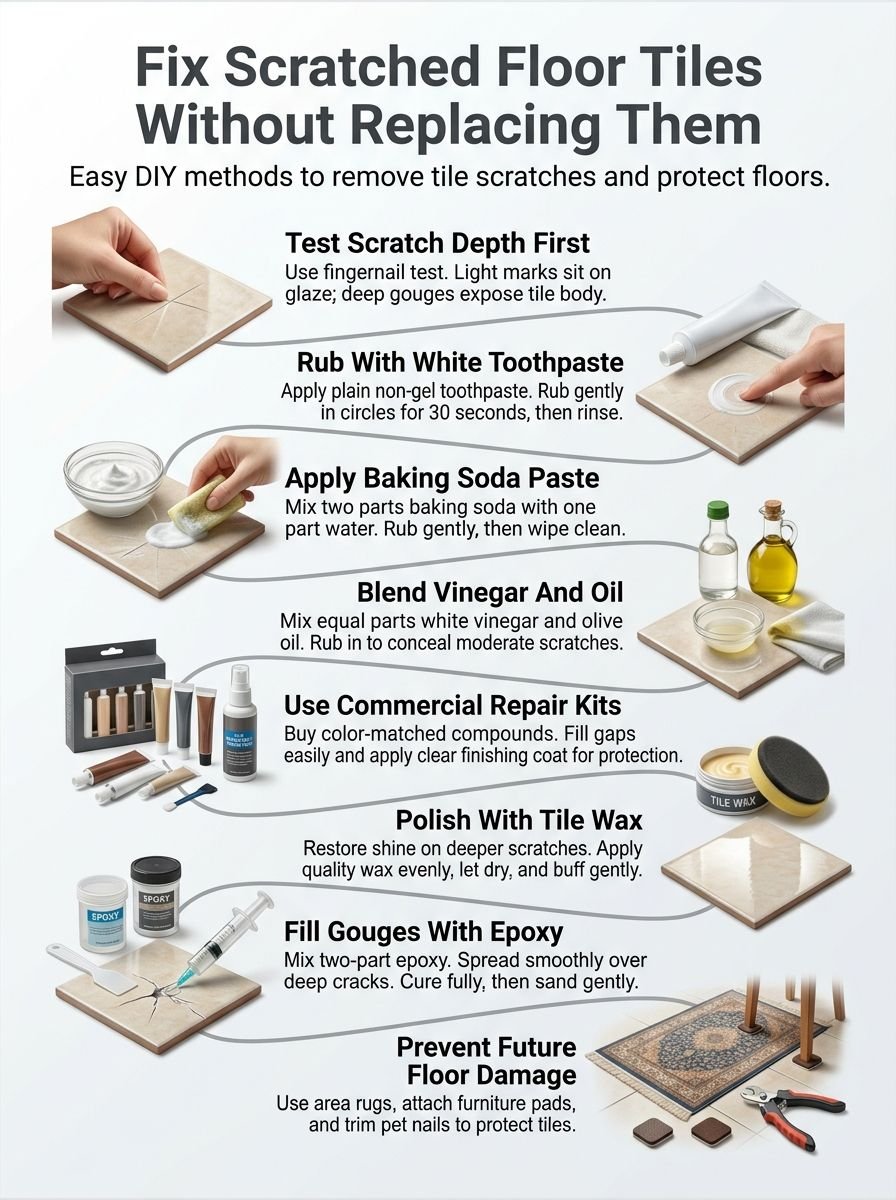
This guide lists DIY fixes for light scuffs, steps for moderate scratches using scratch repair kits and polish, and options for deep damage with epoxy or repair compounds. It also names tools and materials, from a cloth or paper towel to a tile cleaning product, and gives tile maintenance tips to help stop new floor tile scratches.
Keep reading.
Key Takeaways
- Homeowners can remove light floor tile scratches with simple DIY methods. Toothpaste and baking soda paste are quick fixes for surface marks.
- For moderate scratches, a vinegar and olive oil blend or commercial repair kits work well. These products come with color-matching compounds to hide damage.
- Deep scratches may need epoxy or special tile repair compounds. Clean the area first, then apply and sand it smooth after curing.
- Using rugs, furniture pads, regular cleaning, and trimming pet nails helps prevent new scratches on tiles in busy areas of the home.
- Always test any product on a hidden tile spot before full use to protect glaze color and finish.
Identifying the Type of Scratch
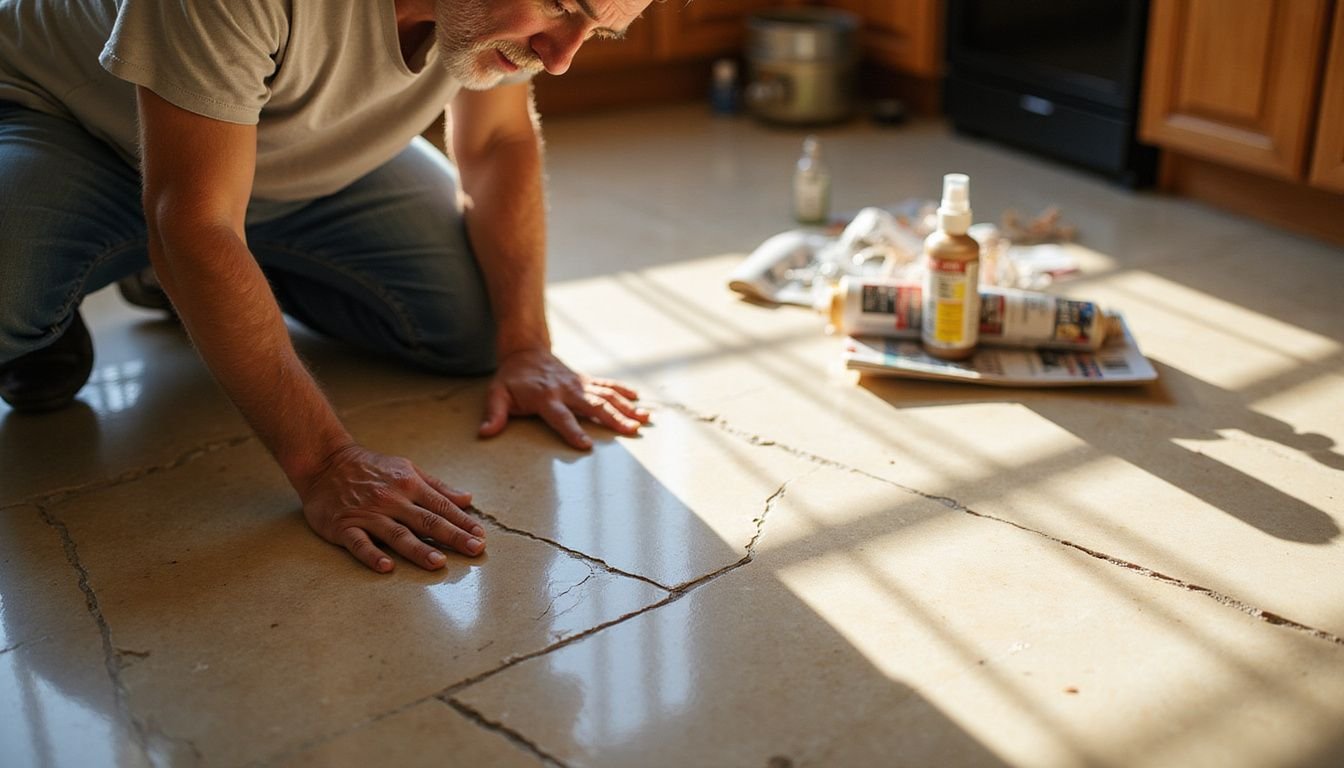
Homeowners often spot surface damage that looks like smudges or an oil stain mark on tile. A light scratch stays on the glaze and only dulls the shine. Moderate scratches cut the glaze and feel rough under a fingernail.
Deep scratches expose the tile body and can show a different color.
Check tiles after dailycleaning and use a fingernail test to gauge depth. Owners can post photos on home improvement stack exchange or facebook for quick guidance. Local bunnings workshop counters stock scratch remover products and can suggest next steps.
Next, try DIY methods for removing light scratches.
DIY Methods for Removing Light Scratches
DIY methods can effectively tackle light scratches on floor tiles. Simple items like toothpaste and baking soda can work wonders without much effort.
Toothpaste Method
Toothpaste Method works well on light tile scratches. Parents and owners can try safe home steps.
- Owners should choose plain white, non-gel toothpaste, avoid whitening formulas.
- They should gather a soft cloth, a soft-bristled toothbrush, and a microfiber pad.
- Households must clear the floor of dust and grit before work.
- A damp cloth with mild soap works for initial cleaning.
- A pea-sized amount of paste should sit directly over the scratch.
- Gentle circular rubbing for thirty seconds usually helps.
- Careful blotting removes residue and reveals the true damage.
- One or two gentle repeats often remove faint marks.
- Rinsing the tile with clean water clears all paste.
- Drying with a fresh cloth prevents water spots.
- A quick test on an unseen tile edge avoids damage.
- Whitening paste should not touch porous or glazed ceramic.
- Tiles should not be tested on a wooden floor or laminate surface.
- A baking soda paste acts as a mild abrasive for deeper marks if toothpaste fails.
- Commercial repair kits suit stubborn gouges that do not fade.
- Such kits speed repairing and often match tile color.
- Clear nail polish can seal tiny hairline scratches as a short-term fix.
- Full drying prevents smudges and tracking after any sealant.
- Parents should avoid paint on tiles, as it peels and looks uneven.
- Families must store toothpaste and tools out of reach of children and pets.
- Parents can log in to local repair forums like tidytipshackurhouse and lifehacks for advice.
- Search posts by users such as hamster101 for simple, tested tricks.
Baking Soda Paste
Baking soda paste offers a cheap way to reduce light tile scratches. Parents and homeowners can try it with common household tools.
- The homeowner should gather these items: baking soda, clean water, a soft cloth, a soft brush, a plastic scraper, and tile sealer.
- A parent should test the paste on a hidden tile edge for five minutes, then wipe to check for any change in the finish.
- An easy mix uses two parts baking soda with one part water, stirred until it forms a thick paste that will not drip.
- The person should apply the paste over the scratch, spread it with the soft cloth, and keep pressure light to avoid extra abrasion.
- That person should rub in small circles with the soft brush for up to thirty seconds per spot, then pause and recheck the mark.
- Then dry with a clean towel and inspect the tile under bright light for any remaining lines or dull spots.
- A leaded pencil can shade narrow grooves on dark tiles for cosmetic blending, and the homeowner can seal that area if the look improves.
- Users may seek video guides on Instagram from accounts like sister yan, mitchellmc, or jake jwh20, and they can create new account profiles or recover a forgotten account or forgotten password using an email address or phone number.
- Next review techniques for moderate scratches, such as a vinegar and olive oil blend or a commercial tile scratch repair kit.
Techniques for Moderate Scratches
Moderate scratches can mar the beauty of floor tiles. Homeowners can use a blend of vinegar and olive oil to restore shine and conceal imperfections. They might also consider using commercial tile scratch repair kits for a quick fix that suits their needs.
These products often come with clear instructions, making them easy to apply even for those without experience.
Vinegar and Olive Oil Blend
Vinegar and olive oil create an effective blend for treating scratches on floor tiles. This natural solution helps in repair and enhances shine.
- Combine equal parts of vinegar and olive oil in a bowl. This mixture utilizes the cleaning power of vinegar while the olive oil adds moisture and shine.
- Dip a soft cloth into the mixture. Wring it out to avoid excess liquid that could damage the tiles.
- Gently rub the scratched area with the cloth. Use circular motions to ensure even coverage and effective treatment.
- Allow the solution to sit on the scratch for a few minutes. This gives it time to penetrate and soften any scuff marks.
- Wipe away any residue with a clean, damp cloth. Ensure no leftover mixture remains, as this could make tiles slippery.
- Dry the area with a fresh towel or cloth for added sheen. The combination leaves your tiles looking polished and refreshed.
This simple method offers homeowners an easy way to treat scratches without harsh chemicals or excessive costs. It serves as an eco-friendly option that integrates well into daily cleaning routines while maintaining beautiful flooring surfaces.
Commercial Tile Scratch Repair Kits
Commercial tile scratch repair kits offer a quick solution for scratched floor tiles. Many homeowners find these kits easy to use and effective.
- These kits often include a color matching compound. This feature helps create an invisible repair that blends well with existing tile colors.
- Users can apply the compound directly to the scratch with a small applicator. This simple step makes it easy to fill in gaps without much effort.
- Some kits come with a finishing coat, providing extra protection against future scratches. Applying this coat can enhance the durability of the repaired area.
- Many commercial products are available for various types of tiles, whether ceramic, porcelain, or vinyl. Homeowners should choose the specific kit designed for their tile material.
- Instructions typically accompany each kit, making them user-friendly for anyone, even those who are not handy around the house. Following these guidelines ensures better results and fewer mistakes.
- Several kits may also include cleaning solutions to prepare the surface before applying repairs. A clean surface often leads to stronger adhesion and improved appearance.
Using commercial tile scratch repair kits allows parents and house owners to keep their floors looking great without the need for replacement tiles. Next up is learning how to address deeper scratches effectively through wax and polish application or by using specialized epoxy compounds.
Addressing Deep Scratches
Deep scratches can ruin the look of floor tiles. Using wax and polish can help restore their shine. Applying a mixture of epoxy or tile repair compounds may fill in the damage effectively.
These options provide quick fixes without needing a full replacement.
Wax and Polish Application
Applying wax and polish can restore floor tiles and minimize the appearance of scratches. This method enhances shine and provides a protective layer.
- Choose a quality wax specifically made for tile floors. Look for products that suit the tile type, whether ceramic, porcelain, or vinyl.
- Clean the surface thoroughly before application. Use a mild detergent mixed with water to remove dirt and grime, then dry completely.
- Apply the wax evenly using a clean cloth or mop. Work in small sections to avoid streaks and ensure uniform coverage.
- Allow the wax to dry according to the manufacturer’s instructions. Drying time can vary based on humidity and temperature.
- Buff the floor gently once the wax dries. Use a soft cloth or buffing pad to enhance shine and eliminate any excess wax.
- For an extra layer of protection, apply a second coat after the first one dries completely. Ensure each coat dries well before adding another layer.
- Maintain your polished tiles regularly with gentle cleaning agents to keep them looking vibrant and protect against future scratches.
Using this process allows homeowners and parents to tackle scratches effectively while giving their floors an appealing finish.
Using Epoxy or Tile Repair Compounds
After applying wax and polish, homeowners can address deeper scratches with epoxy or tile repair compounds. These materials provide a strong solution for restoring floor tiles.
- Epoxy fills in cracks and scratches effectively. This versatile adhesive comes in two parts: resin and hardener. Mixing these components creates a durable material that bonds well with tile surfaces.
- Homeowners should clean the scratched area first. Use a mild cleaner to remove dirt and debris. This ensures the epoxy adheres properly to the tile.
- A putty knife aids in applying the mixed epoxy. Users can spread the compound smoothly over the scratch or damage area, ensuring it fills evenly.
- Allow the epoxy to cure fully according to manufacturer instructions. Curing usually takes several hours or longer based on temperature and humidity levels. Patience is key for achieving optimal results.
- After curing, sand down any excess material gently with fine-grit sandpaper. This process helps create a smooth finish that blends seamlessly with surrounding tiles.
- Tile repair compounds come as an alternative option for repairs too; these products often include ready-to-use formulas specifically designed for tile surfaces. Homeowners should choose one that matches their tile color closely for better results.
- Applying a compound requires similar steps as using epoxy, from cleaning to sanding after application.
- Using either method, homeowners can restore their tiles’ appearance without complete replacement while saving time and money on extensive renovations.
Preventing Future Scratches on Floor Tiles
Preventing scratches on floor tiles can save homeowners time and money. Simple steps help maintain the tile’s beauty and durability.
- Use area rugs in high-traffic zones. Placing rugs near entrances and in busy areas reduces wear on tiles.
- Choose furniture pads for chairs and tables. These pads create a protective barrier between furniture legs and tiles, preventing scratches.
- Clean the floors regularly with a soft broom or microfiber mop. Dirt and debris can scratch the surface if left unattended.
- Avoid dragging heavy objects across the floor. Lifting items prevents potential gouges that could affect the tile’s appearance.
- Trim pet nails to avoid scratches from playful pets running around the house. Keeping nails short helps minimize damage to your tiles.
- Utilize floor mats at entrances to trap dirt before it enters your home; this protects your tiles from abrasive materials that can cause scratches.
- Seal grout lines periodically to protect them from stains and wear; sealing helps maintain the overall look of the tile flooring while enhancing its lifespan.
- Opt for non-abrasive cleaning products for regular maintenance; using gentle cleaners ensures that tile surfaces remain unscathed over time.
- Maintain humidity levels inside the home, as excessive moisture can weaken adhesives holding tiles in place, increasing vulnerability to cracks or chips.
- Inform family members about proper floor care practices; teaching everyone how to take care of tile floors promotes long-lasting results.
Conclusion
Removing scratches from floor tiles can save homeowners time and money. Simple DIY methods work wonders for light scratches, like using toothpaste or baking soda. For more serious damage, a blend of vinegar and olive oil may help.
Applying wax or commercial repair kits addresses deeper marks effectively. With these tips, anyone can restore their tiles without the hassle of replacement.
FAQs
1. What is the first step to remove scratches from floor tiles without replacing them?
Clean the floor tile and the grout with a mild cleaner and water. Dry the spot. Inspect the scratch to see if it is light or deep. Light scratches often polish out. Deep scratches need a repair kit or filler.
2. How do I remove light scratches from floor tiles?
Make a baking soda paste or use a nonabrasive polish. Apply with a soft cloth and buff in a circular motion. Rinse and dry. Finish with a tile sealer to protect the area. Do not use steel wool, it can dull the glaze.
3. How do I fix deep scratches or gouges without replacing tiles?
Choose a tile repair kit or color‑matched epoxy filler. Clean the gouge, fill it, and let the filler cure. Sand smooth with fine sandpaper, then polish. Seal the repair to match the finish of the floor tiles.
4. Can I remove scratches from all tile types, and what precautions should I take?
Not all tile types respond the same. Hard tile and glazed tile often polish well. Natural stone needs pH neutral cleaning and special fillers. Test any method in a hidden spot first. Avoid strong acids and rough pads near grout and edges. Call a pro for wide or structural damage.