
Scratches on tiles are a common issue for many house owners and parents. Busy homes with kitchen tiles or hallway floor tiles often show signs of wear from pets, kids, or heavy furniture.
These marks can make ceramic tiles, porcelain tiles, or natural stone floors look dull and old before their time.
Tiles may seem tough due to the hardness of glazes, but even hard surfaces scratch over time. Studies note that baking soda paste and other simple solutions help treat light scratches while deeper scratches might need different care.
This blog post shares easy DIY tile repair methods using items like toothpaste, baking soda paste, vinegar blends, sandpaper, and wax polish. It also explains when commercial kits are best and how good tile maintenance stops new scratches from forming.
Discover quick ways for How To Remove Scratches From Floor Tiles right at home. Keep reading to find out which method works best for your floor!
Key Takeaways
- Scratches on floor tiles are common in busy homes with kids, pets, or heavy furniture and can make ceramic, porcelain, or natural stone tiles look old.
- Homeowners can use simple DIY methods like plain white toothpaste for light scratches and baking soda paste for surface to moderate marks.
- Deeper scratches often need a vinegar and olive oil blend or special wax polish made for tile surfaces.
- For severe damage that DIY cannot fix well, commercial tile scratch repair kits work better; always follow kit instructions closely.
- Prevent future scratches by using doormats at entrances and cleaning regularly with a soft broom or vacuum attachment.

Understanding Tile Scratches
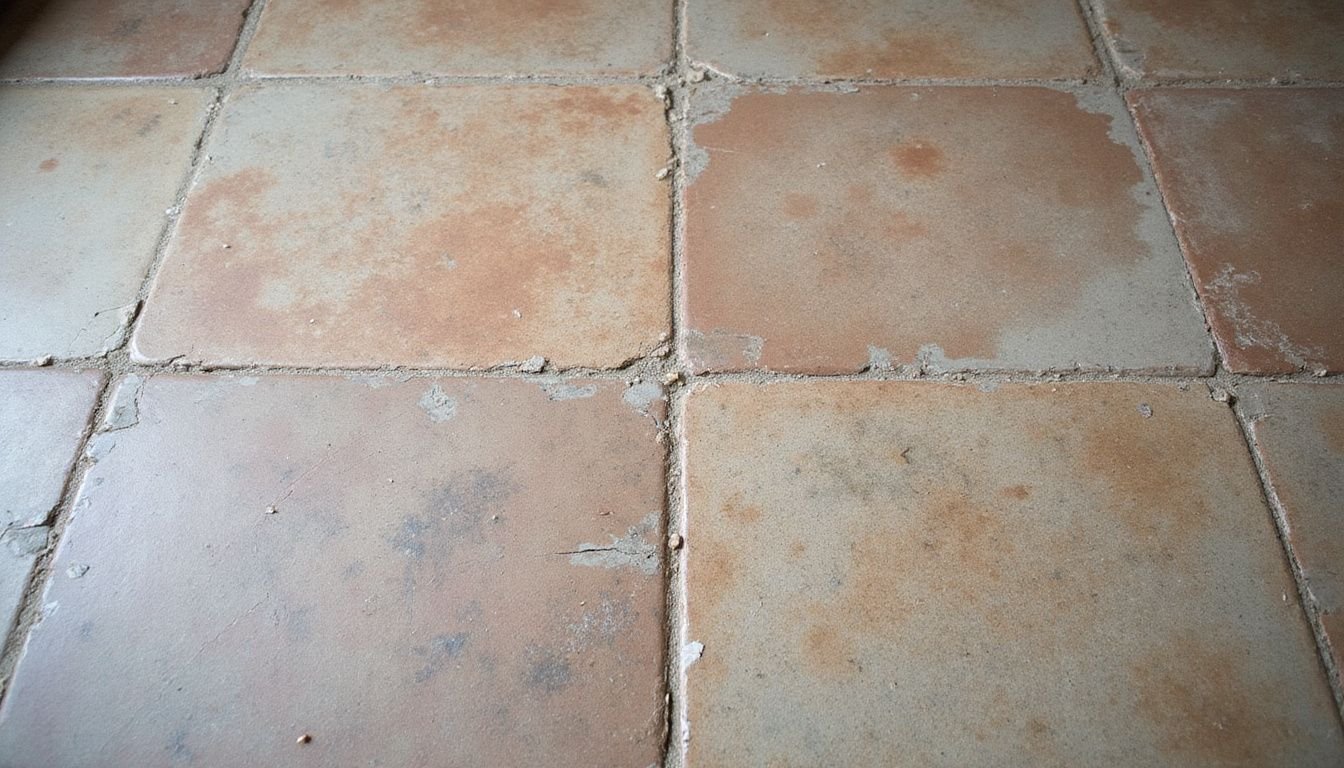
Moving from the basics, it helps to first know what causes scratches on tiles. Households with kids or pets often see these marks appear due to small rocks, grit from shoes, heavy furniture movement, or dropped objects.
Over time, even regular sweeping and mopping can leave tiny grooves if dirt acts as an abrasive.
Different types of floor tiles respond differently to damage. Ceramic tiles may show light scratches that look dull while porcelain resists scuffs but can chip at the edges. Natural stone—like marble or slate—is beautiful yet softer; it shows deep scratches more easily than manufactured materials.
Kitchens tend to get scratched quickly because they see high traffic and accidental spills of hard items like utensils. Knowing which type covers your floors matters for tile maintenance since some repair methods work better on certain surfaces than others.
DIY Methods to Remove Scratches from Floor Tiles
DIY methods to remove scratches from floor tiles provide straightforward solutions for homeowners. Using common household items, anyone can rejuvenate their tile surfaces and enhance their overall appearance.
Toothpaste for Light Scratches
Toothpaste works well for light scratches on ceramic tiles, porcelain tiles, and kitchen tiles. Choose a plain white toothpaste without added gels or colors. Apply a small amount to the scratched area and rub gently using a soft cloth or sponge in circular motions.
The mild abrasives in toothpaste polish away fine marks without harming the surface.
Rinse the tile with clean water, then dry it completely. Examine the spot under good lighting to check progress; repeat if needed. Many parents find this method safe since most toothpastes contain ingredients gentle enough not to damage floor finishes during routine tile maintenance.
This DIY tile repair solution saves time and avoids harsh chemicals often found in commercial abrasives.
Baking Soda Paste for Surface and Moderate Scratches
Baking soda paste works well on surface and moderate scratches found on ceramic tiles, porcelain tiles, or even natural stone tiles. Mix two parts baking soda with one part water to make a thick paste.
Apply the mixture directly onto the scratch using a soft cloth or sponge. Gently rub in small circles for several minutes, but do not use too much pressure that might harm kitchen tile surfaces.
Homeowners can see visible improvement using this simple DIY tile repair method. Wipe away any leftover paste with a damp microfiber cloth and let it dry fully before walking over it again.
This easy fix helps maintain proper tile maintenance without needing special products or expensive tools.
Some deeper marks or gouges may need stronger solutions like vinegar and olive oil blends for further results.
Vinegar and Olive Oil Blend for Deeper Scratches
Baking soda paste works well for surface and moderate scratches. For deeper scratches, a vinegar and olive oil blend becomes effective. This mixture can help restore the shine of ceramic or porcelain tiles.
Combine equal parts vinegar and olive oil in a small bowl. Use a soft cloth to apply this solution directly onto the scratch. Rub gently until the scratch begins to fade; it will also leave behind a protective layer.
This method aids in addressing deep scratches and also improves tile maintenance by enhancing appearance.
Wax and Polish for Covering Severe Scratches
Applying wax and polish helps cover severe scratches on tiles. Choose a product made for ceramic, porcelain, or natural stone tiles. Clean the affected area before starting the application.
This step ensures that dirt does not interfere with the repair process.
Use a soft cloth to apply the wax evenly over the scratch. Buff it in gently until you see a shine. This method will help conceal imperfections while giving your floor a fresh look.
Regular maintenance can prevent deep scratches and keep tile surfaces looking their best.
When to Use Commercial Tile Scratch Repair Kits
Commercial tile scratch repair kits prove useful in specific situations. House owners should consider them for medium to deep scratches that DIY methods cannot fix effectively. These kits often contain specialized compounds designed for ceramic, porcelain, or natural stone tiles.
Parents might find such products valuable when dealing with frequent wear and tear from children or pets. Repair kits save time and effort compared to tile replacement. They allow homeowners to restore the appearance of their kitchen tiles without professional help.
Always follow the instructions on the packaging for best results.
Preventing Future Scratches
After discussing commercial tile scratch repair kits, homeowners should focus on keeping their tiles safe. Placing doormats at entrances can help catch dirt and debris before they reach the floor.
This simple step will reduce scratches on kitchen tiles and other areas.
Regular cleaning plays a crucial role in prevention as well. Using a soft broom or vacuum with a brush attachment keeps grit away from surfaces. Homeowners should consider applying protective coatings to ceramic, porcelain, or natural stone tiles for added defense against future damage.
Taking these steps ensures that tiled floors remain beautiful and scratch-free for years to come.
Conclusion
Removing scratches from floor tiles doesn’t have to be a hassle. Simple DIY methods work wonders for various types of scratches. Homeowners can use toothpaste for light marks or baking soda paste for deeper imperfections.
For severe scuffs, wax and polish provide an excellent finish. With these tips, maintaining beautiful tiles becomes a breeze.
FAQs
1. What are the best tile repair methods for light scratches on ceramic or porcelain tiles?
For light scratches, a baking soda paste works well. Mix water and baking soda until it forms a thick paste. Gently rub it into the scratch using a soft cloth. Rinse with clean water and dry.
2. Can deep scratches on kitchen tiles be fixed with simple DIY solutions?
Deep scratches often need more than surface treatment. For these, try retouching with specialized tile repair kits designed for ceramic or porcelain tiles. If damage is severe, consider tile replacement as a long-term solution.
3. How do I maintain natural stone tiles to prevent future scratches?
Regular tile maintenance helps protect natural stone tiles from new marks. Sweep often to remove grit that causes scratching and use mats in high-traffic areas.
4. Is there an easy way to tell if my floor needs full tile replacement instead of repair?
If cracks run through the entire thickness of your floor material or if large sections show wear, then simple DIY tile repair may not work; you likely need professional assessment for possible replacement.
5. Are common cleaning products safe for use after removing scratches from kitchen or bathroom floor surfaces?
Most gentle cleaners are safe after scratch removal on ceramic, porcelain, and natural stone floors; avoid harsh chemicals that could harm repaired spots or weaken grout lines during regular upkeep.


One response to “How To Remove Scratches From Floor Tiles: Simple DIY Solutions”
As a tile professional at Baton Rouge Tile Pros, I can tell you this is a great article on tile maintenance and repair.