
Oven cleaning often feels like an uphill battle. Grease, food spills, and burnt-on stains can make any kitchen look messy. Many house owners and parents struggle to find the best way for deep cleaning your oven without harsh chemicals or wasted effort.
Natural methods work well for deep cleaning your oven. Using baking soda paste mixed with water helps break down grime while keeping things safe in the kitchen. White vinegar reacts with the baking soda to lift stubborn stains and odors.
This blog post offers step-by-step methods for a spotless finish. Readers will find tips on removing racks, using non-toxic cleaners, handling tough spots, and taking care of modern ovens—even those with self-cleaning features.
Discover simple solutions that help save time and keep your oven fresh.
Key Takeaways
- Natural cleaners like baking soda and vinegar break down oven grease and grime safely, without harsh chemicals or strong odors.
- Always remove oven racks and loose debris before cleaning. Soak the racks in hot, soapy water for at least 30 minutes to loosen stuck-on food.
- Use newspapers or towels around your oven to protect floors from drips when deep cleaning with paste, steam, or commercial products.
- For stubborn stains, use a razor blade scraper carefully or try your oven’s built-in steam clean cycle if available.
- Wipe all surfaces thoroughly after using any cleaner. Rinse multiple times to avoid leftover residue that could affect taste or safety.
Preparing for the Cleaning Process
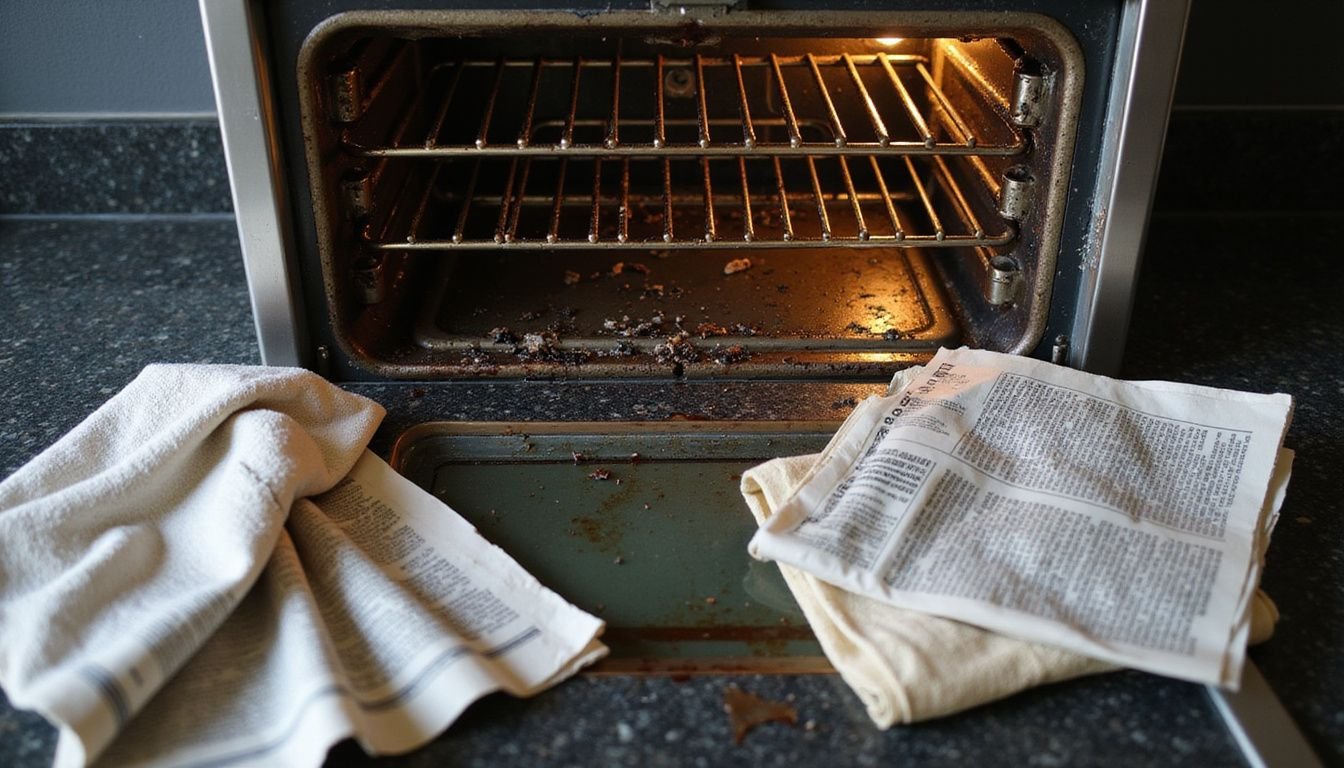
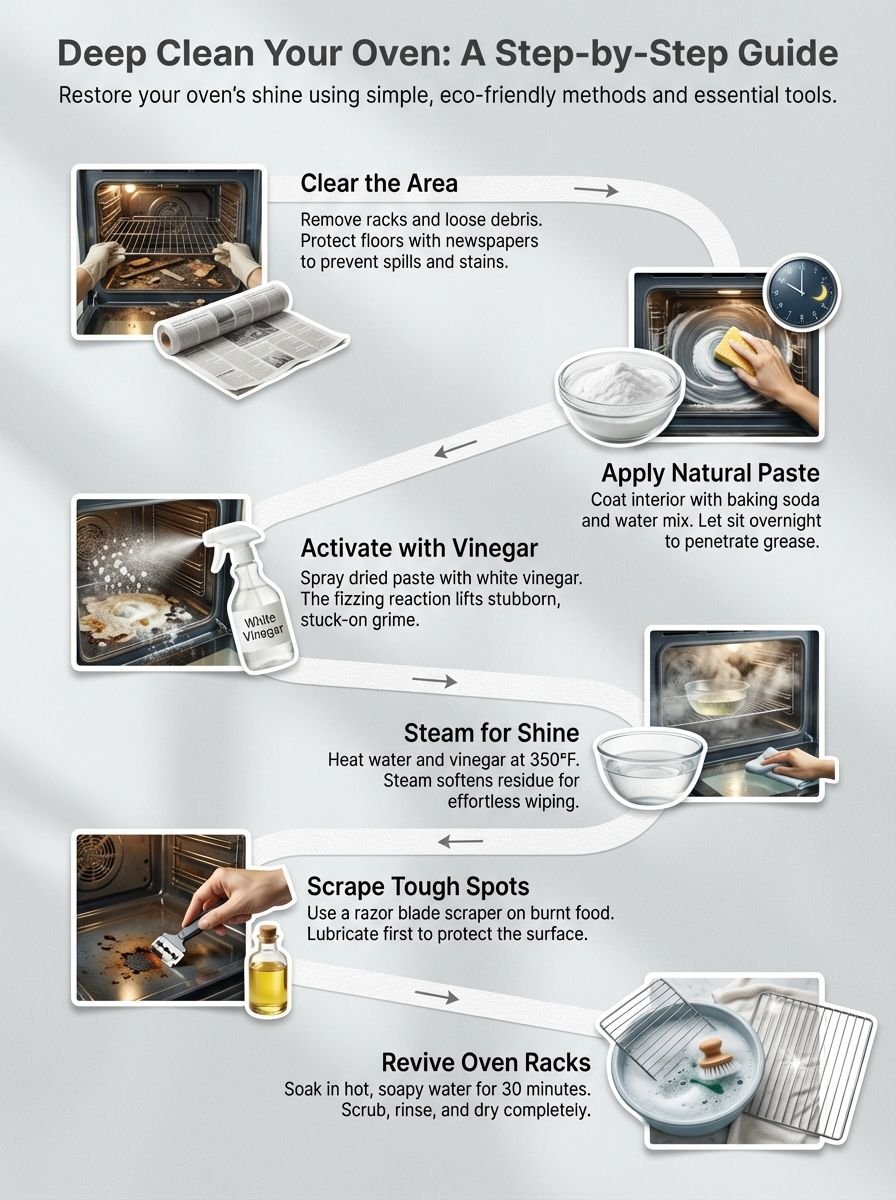
Before starting the cleaning process, remove all oven racks and any loose debris. Next, cover the surrounding areas with newspaper or towels to protect them from spills and stains.
Remove oven racks and debris
Take out all oven racks and knobs before starting any oven cleaning. Pull loose food debris, crumbs, or burnt bits from the bottom of the oven using a non-scratch sponge or paper towel.
Use a vacuum cleaner to catch small crumbs and dust left behind inside the unit for an easy deep clean.
Oven racks need extra attention, so set them aside to soak later in hot, soapy water. Clearing these parts first makes deep cleaning faster and helps baking soda paste, vinegar steam, or commercial cleaners reach every surface.
This basic step prevents baked-on messes from spreading during kitchen cleaning sessions.
Protect surrounding areas with newspaper or towels
After taking out the oven racks and clearing loose crumbs, many forget to shield their kitchen floor. Spills from deep cleaning products or drips from baking soda paste can stain tiles or damage hardwood.
Newspapers work well for this job. Lay them over the floor near your self-cleaning oven or any surface around it before starting with commercial oven cleaners.
Towels offer extra coverage against splashes and are easy to wash afterward. This simple setup helps catch stubborn stains, sticky spots, and wet messes that happen during oven cleaning.
Households often overlook this step but find cleanup much easier if they use these protective tools first. Following this habit prevents lasting marks on your floors while you deep clean with eco-friendly methods like steam clean cycles or non-toxic vinegar sprays.
Natural Cleaning Methods
Natural cleaning methods work wonders for your oven. Baking soda and vinegar create a powerful paste that cuts through grease easily.
Baking soda and vinegar paste
Mix half a cup of baking soda with a few tablespoons of water until it forms a thick paste. Spread this baking soda paste on the oven’s interior, coating grimy spots and tough stains.
Leave the mixture to work its magic for several hours or overnight, letting it tackle burnt-on grease in modern ovens without harsh fumes.
Spray dried areas of the paste with white vinegar from a spray bottle. The fizzing reaction helps lift stubborn grime while keeping cleaning non-toxic and eco-friendly. Wipe away residue using a damp cloth or non-scratch sponge for best results during deep cleaning projects at home.
For parents concerned about strong chemicals, this kitchen cleaning method remains safe yet powerful. After finishing with the natural solution, check out how vinegar steam cleaning brings even more shine to your oven’s inside walls and door glass.
Vinegar steam cleaning
Vinegar steam cleaning effectively tackles oven grime. For this DIY method, heat a pan filled with equal parts water and white vinegar to 350°F for about 30 minutes. The steam released softens baked-on food and grease inside the oven.
After steaming, allow the oven to cool down. Then wipe it clean with a non-scratch sponge or cloth to remove residues. This eco-friendly cleaning method leaves behind no harmful chemicals while ensuring a spotless finish in any kitchen.
Using Commercial Oven Cleaners
Commercial oven cleaners tackle tough grime with ease. They come in various forms, including sprays and gels that stick to surfaces for better cleaning power. House owners should read the labels carefully before use to ensure safety.
Proper ventilation is key during application to avoid breathing in harmful fumes.
Application and ventilation
Open windows for proper ventilation before using commercial oven cleaners. Protect floors by laying down newspapers or towels. Apply the cleaner as per the manufacturer’s instructions; avoid contact with heating elements to prevent damage.
Let it sit for the recommended time, usually ranging from 30 minutes to several hours, depending on the product.
After waiting, wipe down the oven with a damp cloth. Rinse multiple times to ensure all chemical residue is gone. For stubborn stains, use a razor blade scraper; coat those areas with cleaner first for easier scraping.
Consider using an eco-friendly steam cleaning method or a built-in steam clean cycle for better results in your deep cleaning efforts.
Proper rinsing techniques
Thoroughly wipe the oven with a damp cloth. This step helps remove any leftover cleaner from the surface. Rinse the cloth frequently to ensure you eliminate all residues effectively.
Doing this multiple times guarantees a clean finish without any chemical traces left behind in the oven interior.
Once the rinsing is complete, house owners can move on to tackling tough stains that may remain after cleaning.
Tackling Tough Stains
Challenging stains can diminish an oven’s appearance. A razor blade scraper effectively removes stubborn spots without scratching the surface. Using the built-in steam clean cycle softens grime and makes cleaning easier. Both methods prove beneficial in restoring your oven’s sparkle.
Razor blade scraper for stubborn spots
A razor blade scraper works effectively for removing stubborn stains in an oven. House owners should first lubricate the area with cleaner to make scraping easier. This method allows for spot treatment after using a natural or commercial cleaning method, such as baking soda paste or vinegar steam cleaning.
Care must be taken while using the scraper to avoid damaging the oven’s surface. Following safety precautions is essential to prevent injury during this process. A non-scratch sponge can help clean around areas where the scraper cannot reach, ensuring a spotless finish without harm to the oven’s interior.
Built-in steam clean cycle
The built-in steam clean cycle effectively tackles tough stains in the oven. To start this cycle, users should follow the oven’s instructions for adding water. It’s essential to ensure that the oven is empty before beginning.
This step helps create steam that loosens grime for easier cleaning. After completing the steam clean cycle, wipe down the oven interior to clear away loosened debris. Regularly using this feature can help maintain both cleanliness and performance in any kitchen space.
Next, focus on cleaning those oven racks for a complete deep clean experience.
Cleaning Oven Racks
Cleaning oven racks requires some straightforward steps. First, soak them in hot, soapy water for an hour to loosen grime. Next, scrub the racks with a non-abrasive sponge for best results.
After scrubbing, rinse them thoroughly and dry them before placing them back in the oven.
Soaking in hot, soapy water
Soaking oven racks in hot, soapy water works wonders for tough grime. House owners can easily use a bathtub to achieve this. Just fill it with warm water and add dish soap or a detergent pod.
Let the racks soak for at least 30 minutes. This method helps loosen caked-on grease and food particles.
After soaking, grab a scrub brush or sponge to tackle any remaining residue. A little extra scrubbing will ensure all surfaces shine like new again. Once clean, rinse the racks thoroughly and let them dry completely before placing them back in the oven.
Following these steps contributes to effective oven cleaning while maintaining an eco-friendly approach using non-toxic cleaners like baking soda and vinegar when necessary.
Scrubbing and drying
After soaking the oven racks in hot, soapy water, scrub them thoroughly. A sponge or brush will help remove grime and residue effectively. Take care to clean all corners and edges for a spotless finish.
For the oven’s interior, use a damp cloth to wipe away loosened grime. This method ensures that dirt doesn’t linger after cleaning.
Allow both the racks and inside of your oven to dry completely before putting everything back together. Drying helps prevent moisture buildup that can lead to odors or rust. With everything sparkling clean, you can now enjoy cooking in your freshly cleaned space.
Next comes cleaning those dirty oven racks properly for optimal results.
Conclusion
Thoroughly cleaning an oven restores its shine and enhances the kitchen’s appearance. Homeowners can utilize natural methods or commercial cleaners, based on their preferences. Addressing tough stains regularly helps prevent grime buildup.
Adhering to these step-by-step methods guarantees a spotless finish, making each cooking experience more enjoyable. A clean oven not only operates better but also keeps meals tasting excellent.
FAQs
1. How do I perform deep cleaning on my oven for a spotless finish?
Start by removing racks and soaking them in warm, soapy water. Use a non-toxic cleaning solution to coat the interior surfaces of your oven. Let it sit to break down grime, then scrub with a soft brush or cloth. Wipe all surfaces until clean and dry before replacing the racks.
2. Is using the self-cleaning oven feature safe for kitchen cleaning?
The self-cleaning function heats your appliance at high temperatures to burn off residue; this can produce smoke and odors. Ventilate your space well during operation, and avoid leaving pets nearby while running this cycle.
3. Are non-toxic cleaning products effective for oven cleaning?
Non-toxic cleaners remove grease and food buildup without harsh chemicals that linger in your kitchen air or on cooking surfaces. Baking soda mixed with water makes an effective paste for scrubbing stubborn spots inside ovens.
4. How often should I schedule deep cleaning for my oven?
For most home kitchens, plan thorough oven cleaning every three to six months depending on use frequency and spill severity; regular maintenance prevents tough buildup between deep cleans.