
Homeowners and parents often face a big mess after a remodel. Construction dust and debris coat floors, vents, toys, and counters. Construction dust can stay in HVAC ducts and drop indoor air quality for weeks.
Loose nails and screws raise the risk of cuts and trips.
This guide gives clear Tips Post Construction Cleaning for a spotless finish. It provides a clean checklist for rough cleaning, light cleaning, and final cleaning. It names tools like HEPA vacuums, air scrubbers, floor scrubbers, industrial wet-dry vacuums, and microfiber cloths.
It covers PPE, N95 dust masks, sanitizing surfaces, debris removal, and floor maintenance. It helps parents keep kids safe and speed the project timeline. More tips follow.
Key Takeaways
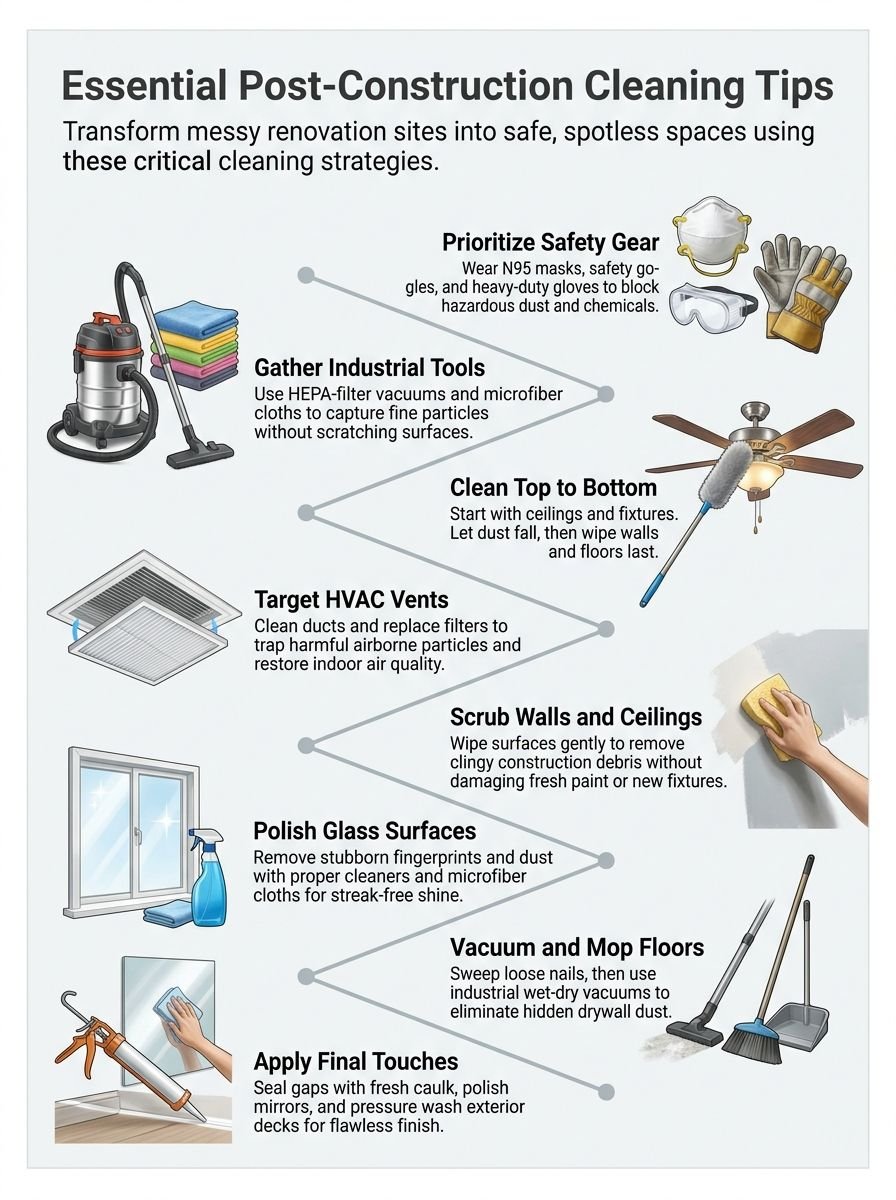
- Always wear protective gear like gloves, N95 masks, goggles, and steel-toe boots to prevent injuries and reduce health risks from dust and debris.
- Use essential tools such as HEPA vacuums, microfiber cloths, industrial wet-dry vacuums (Nilfisk SC901), sturdy ladders, and heavy-duty trash bags for effective cleaning.
- Start cleaning top to bottom: wipe ceilings first, then walls and fixtures; finish by vacuuming floors and carpets with commercial equipment from brands like Nilfisk Group.
- Clean HVAC vents thoroughly and install new filters to keep indoor air quality high; dirty ducts can lower air quality for weeks after construction.
- Focus on details—polish windows with glass cleaner, remove fingerprints from surfaces, pressure wash exterior siding or decks if needed—these steps ensure a spotless finish everywhere.
Overview of Post-Construction Cleaning
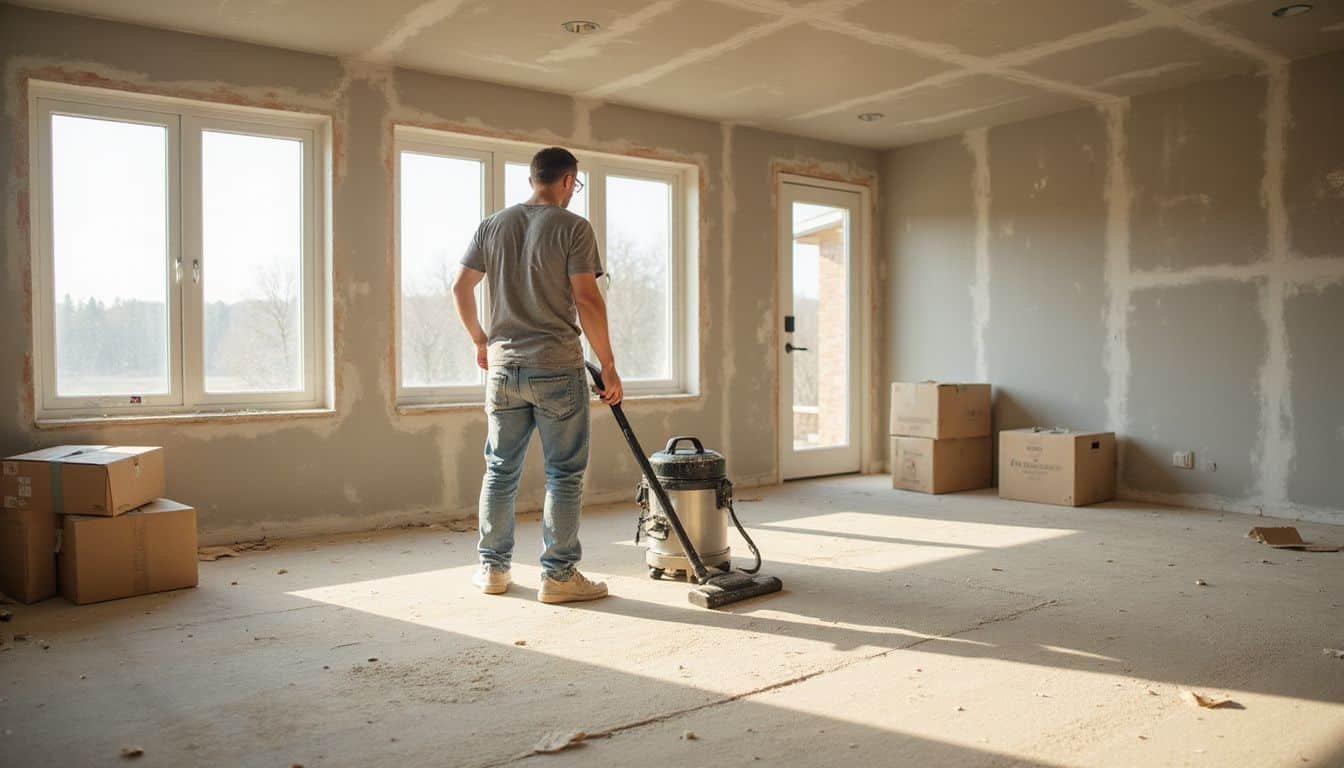
Post-construction cleaning involves removing debris and dust from a recently finished construction site. This process ensures that homes or commercial spaces become safe and livable, free from any remnants of construction activities.
[What is Post-Construction Cleaning?](https://zaulimasin.com/post-construction-cleaning/)
This service, post-construction cleaning, removes dust, construction debris, and hazardous residues after a home renovation or build. It covers deep cleaning of floors, windows, walls, vents, and HVAC grilles.
Professional cleaning services use HEPA-filter vacuums, industrial wet-dry vacuums, Nilfisk SC901 style machines, and steam cleaners to cut dust. Crews follow a cleaning checklist and wear PPE like protective gear, respirators, and safety goggles.
Parents should plan for dust removal and improved air quality before moving children back in. Contractors and janitorial services coordinate with the general contractor and facility maintenance to handle hazardous materials and site protection.
A HEPA air purifier and an industrial vacuum reduce airborne dust and allergens. House owners gain a safer, cleaner space that supports residential cleaning and construction site safety.
[Why is Post-Construction Cleaning Important?](https://zaulimaids.com/blog/category/post-construction-cleaning/)
Construction residue can hide sharp nails, fine dust, and chemical films that harm children and adults. Homeowners and parents need clear post-construction cleaning to cut health risks.
Professional crews use HEPA filter units and hazardous dust vacuums to trap fine particles. Containment and site prep also limit spread to living areas.
Cleaning teams follow a hazard communication plan and consult safety data sheets (SDS) before using cleaning chemicals. They wear personal protective equipment (PPE) like gloves, protective overalls, and steel-toe boots during interior cleaning.
Commercial vacuum cleaners, industrial wet/dry vacuums, and pressure washing speed the final cleaning phase. Facility managers and contract cleaners, such as SERVPRO®, help manage risk and follow cleaning protocols to prevent slip, trip, and fall incidents.
Key Areas to Focus on During Post-Construction Cleaning
Post-construction cleaning requires attention to specific areas for a thorough finish. Focus on floors, windows, and surfaces to ensure all dust and debris vanish without a trace.
Floors and Carpets
Floors and carpets collect dust, grout, and loose nails after construction. House owners should begin with a light cleaning phase, sweeping debris and using an industrial wet-dry vacuum cleaner.
A commercial cleaning team or a homeowner can use industrial vacuum cleaners from brands such as Nilfisk Group to remove fine dust. Use masking tape to protect thresholds and bare wood during the general cleaning stage.
Watch for chemical safety and wear gloves and eye protection when using cleaners. Keep kids and pets out during cleaning to support slip, trip, and fall prevention.
Stains on carpets may need a specialty cleaning or spot treatment from a professional cleaning service like Foreman Pro Cleaning or Augies Building Services. Contractors should log damage and report any water damage or fire damage to the foreman or project manager.
After floors look safe and dry, cleaning moves to windows and glass surfaces.
Windows and Glass Surfaces
Shifting focus from floors and carpets, windows and glass surfaces need special attention during post-construction cleaning. Dust and fingerprints often cling to new installations, making them look dirty.
Using industrial cleaning machines helps tackle these stubborn marks effectively.
Start by removing dust with a microfiber cloth or a soft brush. Next, spray an appropriate glass cleaner on the surface. Wipe it down with a clean cloth in circular motions for the best shine.
Don’t forget to check window frames for debris; they can trap dirt too. Proper care of these surfaces enhances light quality inside the home, improving air quality as well.
Walls, Ceilings, and Fixtures
Walls, ceilings, and fixtures play a significant role in the final look of a space. Dust and debris often cling to these surfaces after construction. Cleaning them requires focused attention and the right tools.
Homeowners should use microfiber cloths for walls and ceilings to capture dust effectively. For fixtures, gentle cleaning solutions remove grime without causing damage.
Fixtures may include light fittings or ceiling fans that accumulate dirt during construction. A damp cloth works well for most materials but test any cleaner on an inconspicuous area first.
High places can pose safety hazards; using ladders with proper support provides stability while working up high. Ensuring clean walls, ceilings, and fixtures contributes significantly to post-construction cleanup success in residential spaces as well as commercial settings.
Essential Tools and Equipment for Effective Cleaning
Post-construction cleaning requires the right tools for success. House owners and parents should gather specific equipment to achieve a spotless finish.
- Heavy-Duty Trash Bags: Use strong bags to collect debris, dust, and rubbish from construction sites. These bags can handle sharp objects and heavy loads without tearing.
- Broom and Dustpan: A sturdy broom sweeps up dirt and small debris easily. Pair it with a dustpan to gather the mess without hassle.
- Vacuum Cleaner: Choose a vacuum with a powerful motor to tackle fine dust particles effectively. A model designed for hard floors and carpets will boost cleaning efforts significantly.
- Mop and Bucket: Select a mop that works well on various surfaces, including tile and hardwood floors. Always use a bucket that holds enough water so you can rinse your mop frequently during the task.
- Microfiber Cloths: Soft cloths trap dust better than traditional rags or paper towels. They help clean windows, countertops, and other surfaces without leaving streaks behind.
- Sponges and Scrub Brushes: Use sponges for gentle cleaning of delicate surfaces, while scrub brushes tackle tougher spots like bathroom fixtures or tiled areas.
- Glass Cleaner: Opt for an effective glass cleaner that eliminates streaks from windows and mirrors quickly. This ensures all glass surfaces shine brightly after cleaning.
- Protective Equipment (PPE): Ear protection is crucial when dealing with noisy tools during cleanup in commercial construction projects. Gloves shield hands from sharp objects while working around debris.
- Ladder: A sturdy ladder allows access to high areas like ceilings or light fixtures safely during post-construction clean-up tasks.
- All-Purpose Cleaner: Stock an effective cleaner that can handle different materials safely; this will simplify the process while ensuring every surface gets the attention it needs for cleanliness.
Using these essential tools enhances efficiency in post-construction cleaning, making it easier for house owners to create a pristine environment after any building project concludes.https://www.youtube.com/watch?v=6wtiLyP6-zU
Safety Tips for Post-Construction Cleaning
Cleaning after construction presents challenges. Workers should wear protective gear like gloves and masks. Safety goggles protect eyes from dust and debris. It’s wise to keep cleaning products out of reach of children.
Ensure good ventilation while working with chemicals. Staying safe boosts efficiency during cleanup tasks. Explore more essential tips for a successful post-construction clean-up!
Use Proper Protective Equipment (PPE)
Proper protective equipment (PPE) plays a crucial role in ensuring safety during post-construction cleaning. Homeowners and parents must prioritize protection while tackling dust and debris.
- Safety goggles shield the eyes from dust, chemicals, and flying particles. They prevent irritation and long-term damage.
- N95 respirators filter harmful airborne substances, including dust and allergens. These masks ensure clean air while working in a newly constructed space.
- Heavy-duty gloves protect hands from sharp objects and hazardous materials. They also minimize skin contact with solvents or cleaning agents.
- Sturdy footwear with steel toes offers foot protection against falling items. It helps prevent injuries on the construction site.
- Disposable coveralls keep clothing clean while providing an extra layer of protection from toxins and allergens present in construction debris.
- Hard hats safeguard the head from potential impacts or falling debris in ongoing work areas. Wearing one is essential for personal safety.
- Earplugs reduce noise levels in loud environments, particularly where power tools operate frequently during construction cleanup.
Safety should always come first during any cleaning project after residential construction. Equip oneself properly to maintain a safe environment for everyone involved in the process.
Step-by-Step Cleaning Process
Start at the top of each room and work your way down. Focus on dusting light fixtures, wiping down walls, and cleaning windows before tackling floors to avoid redistributing dirt. Pay close attention to HVAC vents as well; clean these thoroughly to improve air quality throughout the space.
Start from Top to Bottom
Cleaning after construction requires a systematic approach. Starting from the top ensures that dust and debris fall down, making cleanup easier.
- Begin with ceilings and light fixtures. Dust accumulates here. Use a microfiber cloth or duster to remove build-up effectively.
- Move down to walls and baseboards. Wipe them thoroughly to remove streaks or marks left behind by contractors.
- Clean windows and glass surfaces next. Use a quality glass cleaner for streak-free results; make sure to clean both inside and outside.
- Focus on cabinets and shelves afterward. Wipe the interiors to eliminate dust or residue from construction materials.
- Next, tackle HVAC vents. Remove grates if possible, and clean them well to maintain air quality in the home.
- Clean floors thoroughly last. Sweep or vacuum first, then mop hard surfaces, ensuring all dust settles before finishing up.
- Check carpets for any loose debris after cleaning hard surfaces; vacuum carefully for a complete finish.
Following this order helps achieve a spotless result while organizing tasks efficiently during post-construction cleaning in both United States and Canada homes involved in building and construction projects.
Pay Attention to HVAC Vents and Air Quality
After working from top to bottom, focus on the HVAC vents and air quality. Dust and debris often settle in these areas during construction. Cleaning the vents ensures that the air circulating through your home remains clean.
Dirty HVAC ducts can lead to poor indoor air quality. Installing new filters helps trap particles. Regular maintenance reduces health risks for families, especially for children and those with allergies.
A well-maintained system improves energy efficiency too, supporting risk management efforts by homeowners.
Final Touches for a Spotless Finish
Focus on the small details for a flawless look. Dust off light fixtures and ceiling fans, ensuring they sparkle without grime. Polish mirrors until they shine; this adds depth to rooms and creates a brighter atmosphere.
Wipe down all surfaces with appropriate cleaners. Pay special attention to corners where dust collects. Clean any fingerprints from walls, cabinets, or doors with gentle solutions as necessary.
Apply fresh caulk around windows and baseboards to seal gaps and enhance the complete appearance.
For exterior cleaning, pressure wash siding or decks if needed after construction debris settles. Use a soft brush for delicate surfaces to avoid scratches. These final touches elevate the space, making it inviting and complete.
Next comes a summary of how best to conclude post-construction cleaning effectively.
Conclusion
Post-construction cleaning transforms a messy space into a beautiful home. House owners will find that focusing on key areas makes a significant difference. Clean floors, sparkling windows, and dust-free walls create an inviting environment.
Using the right tools and following safety tips simplifies the process. A thorough cleaning ensures every corner shines, reflecting the hard work put into construction.
FAQs
1. What first steps lead to a spotless finish after construction?
Start by clearing bulk debris and loose dust. Clean top to bottom so dust falls to the floor. Use a HEPA vacuum and microfiber cloths for best results. Work with project management to set clean milestones and final inspection points.
2. Which tools and products give the best results?
Use a HEPA vacuum, microfiber cloths, and pH-safe cleaners. Test cleaners on a small area first. Pick tools that trap dust, not spread it. Track tool use in the project management plan.
3. How do I handle post construction cleaning after a storm/disaster?
Check for water and heavy debris first. Remove soaked material and dry the site fast to stop mold. Clean and sanitize all surfaces. Tell project management about damage so they can adjust the schedule.
4. Is one clean enough, or do I need repeat work?
Do not trust one pass alone. Dirt hides in seams and vents. Plan at least two rounds, a rough clean and a final detail clean. Use a checklist and let project management sign off on the final walk‑through.