
Stubborn rings on the stove can make any kitchen look messy, no matter how much you clean. Many parents and homeowners struggle with these tough stains when they cook with pots and pans or enameled cast iron.
These marks often hold onto grease and food bits, refusing to come off even after a hot water soak.
Experts say using common cleaning agents like baking soda, glass cooktop creams, or safe stovetop cleaning products is better than reaching for sharp utensils that might scratch surfaces.
Harsh scrubbing may seem quick but risks damaging your appliance in the long run.
This blog post explains How To Remove Stubborn Rings From Stove Without Scratching The Surface step by step. It highlights smart cleaning tips and tools that keep your stovetop shining without harm.
Stay tuned if you want a spotless stove without scratches!
Key Takeaways
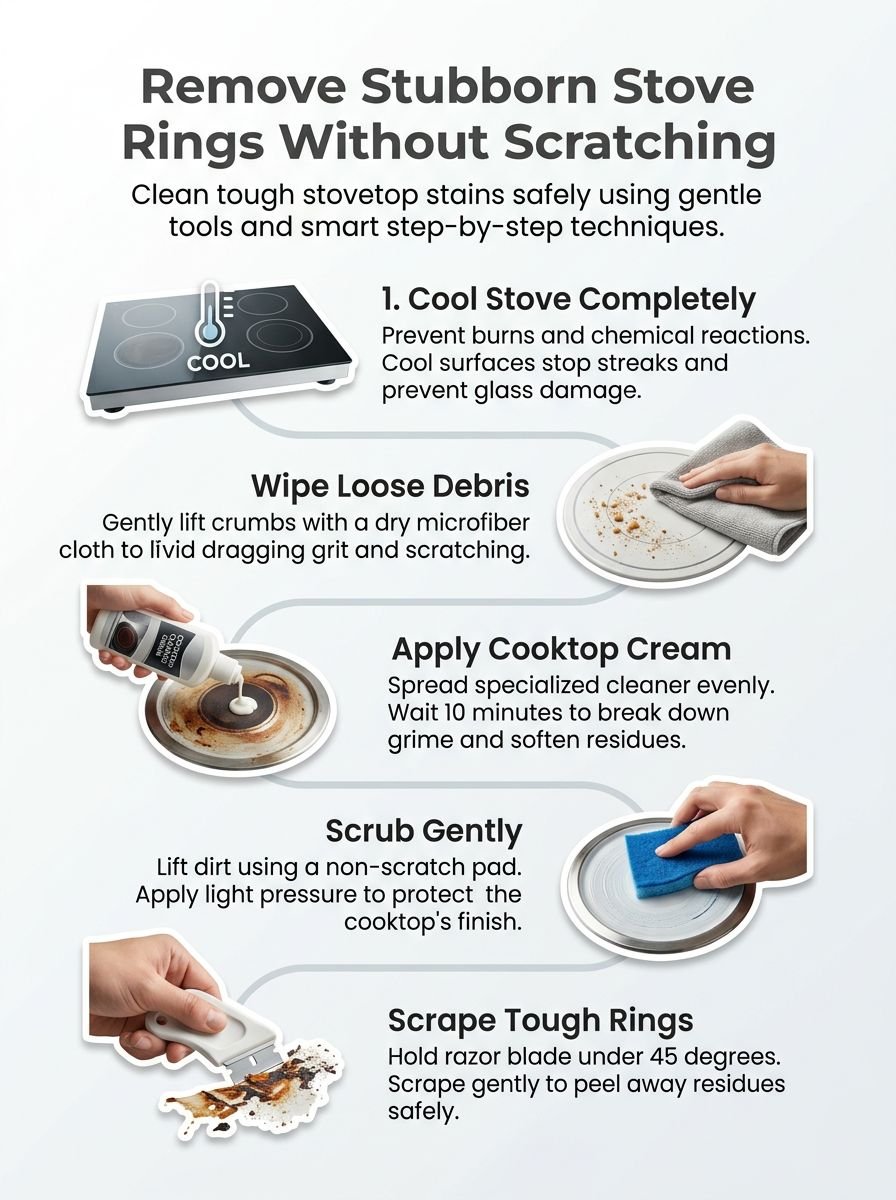
- Always let the stove cool before cleaning to avoid burns and streaks; use a microfiber cloth first to remove loose crumbs.
- Choose gentle cleaners like glass cooktop creams or baking soda. Let them sit for about 10 minutes before scrubbing.
- Use only soft sponges or non-scratch pads when cleaning rings. Avoid rough tools that might scratch the surface.
- For very stubborn stains, use a razor scraper held at less than a 45-degree angle. Scrape slowly with light pressure to protect your stovetop finish.
- Do not use harsh chemicals or metal scrubbers, as these can damage glass and ceramic stoves over time.
Prepare the Stove for Cleaning
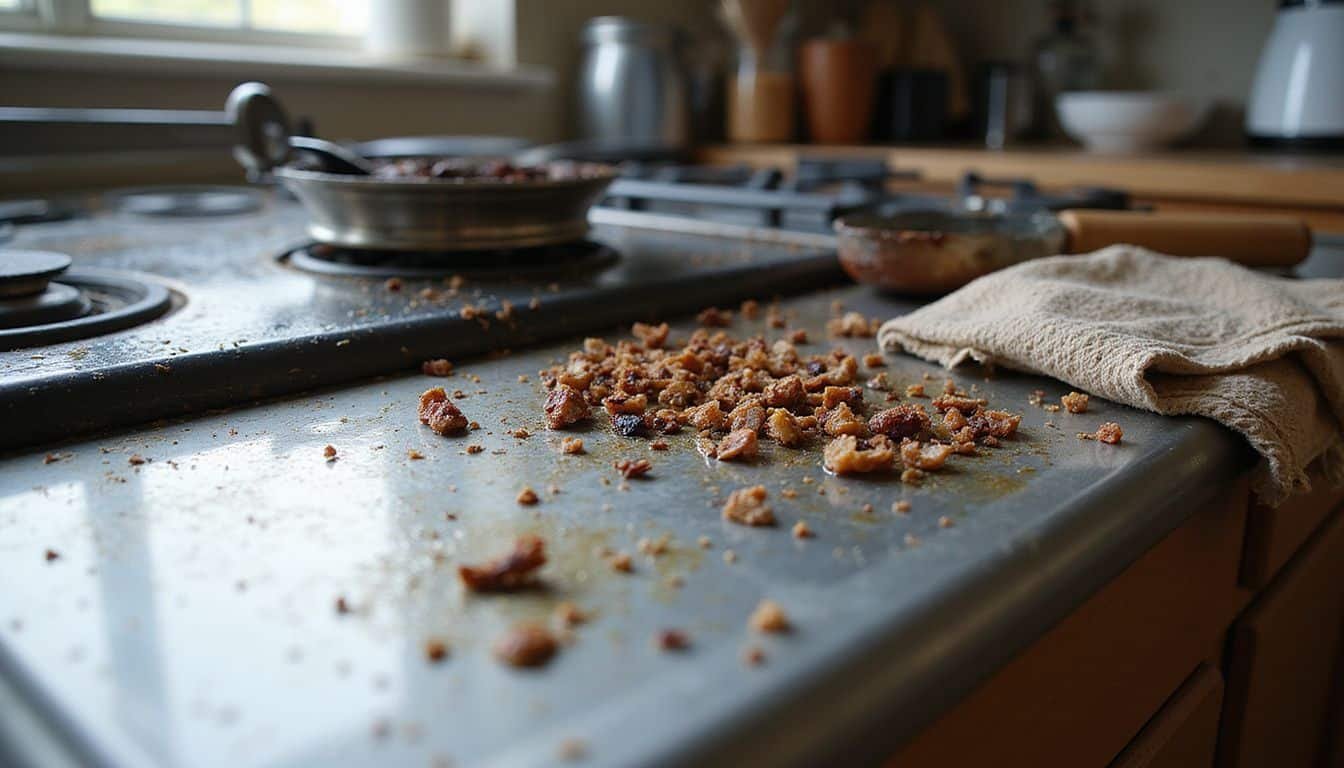
Before cleaning, ensure the stove has cooled down completely. Use a microfiber cloth to wipe away any loose crumbs or debris on the surface.
Wait for the surface to cool completely
Heat can make cleaning a stovetop risky and less effective. Hot surfaces may cause burns and might even set off chemical reactions with certain cleaning solutions, which can lead to stubborn stains or damage.
For safe stovetop cleaning, always wait until the cooktop feels cool to the touch. This step protects hands from injury and ensures that baking soda or specialized stove cleaners work as intended.
A completely cool surface also prevents streaks or smears during cleanup. Parents who rush this process risk scratching glass tops if debris softens or sticks due to lingering heat.
Using these simple cleaning tips helps maintain both safety and shine on every kitchen range. A microfiber cloth glides more smoothly over a cooled area, picking up loose crumbs before deeper stovetop cleaning begins.
Remove loose debris with a microfiber cloth
Loose crumbs and dried food often sit on stove tops after cooking. Using a microfiber cloth, one can gently lift away this debris without scratching glass or ceramic surfaces. The soft fibers trap dust, grease, and even fine particles that other materials might miss.
Many cleaning tips recommend starting with a dry or slightly damp microfiber cloth to prevent dragging grit across the surface.
House owners find that a high-quality microfiber towel works much better than paper towels or rough sponges. It reduces friction and helps keep the finish of your stove intact while preparing for deeper cleaning steps like using baking soda or a hot water soak later in the process.
Next comes choosing a specialized cleaning solution to tackle stubborn rings safely.
Use a Specialized Cleaning Solution
A specialized cleaning solution can tackle tough rings on your stove. Apply a glass cooktop cleaner or paste directly to the stains.
Apply a glass cooktop cream or paste
Squeeze a small amount of glass cooktop cream or paste directly onto the stained area. Spread it evenly using a soft microfiber cloth, making sure to cover all stubborn rings. This specialized cleaner lifts tough grime without scratching the surface.
Many popular brands include gentle abrasives that work safely on smooth ranges.
Manufacturers recommend letting the product sit for about ten minutes before wiping away any residue. Parents and homeowners find these cleaning tips help remove burnt food marks while keeping the stove shiny and free from scratches.
Baking soda is another safe option if cream or paste is not available; just be sure to use non-abrasive tools for application.
Let it sit for 10 minutes
Apply the glass cooktop cream or paste evenly over the stubborn rings. It will need time to break down the grime and stains. Let it rest for ten minutes for optimal results. This waiting period allows the cleaning solution to penetrate and soften tough residues.
Afterward, you can proceed with gentle scrubbing using non-abrasive tools like a soft sponge.
These tools work best after letting the solution sit, as they won’t scratch your stove’s surface. Once those ten minutes are up, you’ll be ready to tackle those rings effectively without damaging your appliance’s finish.
Gently Scrub with Non-Abrasive Tools
Use a soft sponge or a non-scratch scrub pad to clean the stove’s surface. This method prevents scratches while effectively removing stubborn rings.
Use a soft sponge or non-scratch scrub pad
Opt for a soft sponge or a non-scratch scrub pad to tackle those stubborn rings. These gentle tools effectively remove dirt without damaging the stove’s surface. A little cleaning solution on the sponge can help lift tough stains.
Apply light pressure while scrubbing to avoid scratching. This method keeps your cooktop looking new and shiny, making kitchen cleanup easier for homeowners and parents alike.
Avoid excessive pressure
Gently scrub the stove surface using a soft sponge or a non-scratch scrub pad. Pressing too hard can cause scratches or damage. Light pressure helps lift dirt without harming the cooktop’s finish.
This technique works best for removing stubborn rings while keeping the surface intact. Always prioritize care over force during cleaning to maintain your stove’s pristine condition.
Use a Razor Scraper for Tough Rings
For stubborn rings, a razor scraper works wonders. Hold the blade at a slight angle to protect your stove’s surface. Apply gentle pressure as you scrape away those tough stains. This tool gets into tight spots and removes residue without causing scratches.
Hold the blade at less than a 45-degree angle
Hold the razor blade at less than a 45-degree angle to the stove surface. This position helps minimize the risk of scratching while effectively scraping off stubborn rings. Use gentle pressure, moving the blade in smooth strokes.
Avoid pressing too hard; this prevents damage to your cooktop. Scraping lightly allows you to peel away tough residues without harming its finish. Keeping the angle low provides maximum control over the tool and enhances cleaning results on difficult stains or burned-on food remnants on your stove.
Gently scrape without pressing too hard
Use a razor scraper for stubborn rings on the stove. Keep the blade at an angle of less than 45 degrees. This technique helps avoid scratching the surface. Use gentle pressure as you scrape, letting the blade do most of the work.
Rushing or pressing too hard can damage your cooktop. Take your time; this method requires patience and precision for effective cleaning without harm to your stovetop’s finish.
Conclusion
Removing stubborn rings from a stove can be easy if done correctly. Start by preparing the surface and using the right cleaning solutions. Gently scrubbing helps lift dirt without causing scratches.
For tougher spots, a scraper at a slight angle works wonders. With these steps, anyone can keep their stovetop looking fresh and new.
FAQs
1. What causes stubborn rings to form on a stove surface?
Grease, food spills, and burnt residue often cause tough stains on cooktops. Over time, these materials harden with heat and become difficult to remove using standard cleaning methods.
2. How can I clean stubborn rings from my stove without scratching the surface?
Use a soft sponge or microfiber cloth with a mix of baking soda and water to make a gentle paste. Apply the paste directly onto the stain; let it sit for several minutes before wiping in slow circles. Avoid steel wool or abrasive scrubbers that may scratch glass or ceramic surfaces.
3. Are there any store-bought cleaners safe for removing cooked-on rings?
Yes, many brands offer non-abrasive cleaners made for smooth cooktops. Always check labels for compatibility with your stove’s material before applying any product; follow manufacturer instructions carefully.
4. Which common mistakes should I avoid when cleaning my stove top?
Do not use sharp tools like knives or razor blades that can leave permanent marks on your appliance’s finish. Skip harsh chemicals such as bleach which may damage coatings over time; stick with mild solutions designed specifically for kitchen surfaces instead.
Hyponyms replaced:
– “cooktop” changed to “stove surface”
– “scouring pad” changed to “soft sponge”
– “detergent” changed to “cleaners”