
Stains on clothes cause frustration for many people at home. A spill from coffee, ketchup stains after a meal, ink spots from schoolwork, or tough grease stains from cooking can ruin favorite shirts and pants in seconds.
Many parents and house owners want clear steps for How To Remove Stain For Clothes without expensive cleaners.
One key fact is that rinsing the stain with cold water before using any laundry detergent or stain remover boosts cleaning power right away. This first step pushes the stain out of the fabric instead of letting it sink deeper.
This guide gives simple steps for treating stubborn stains such as blood stains with hydrogen peroxide, grass marks, wine stains, and more by using everyday items like baking soda, dish soap, white vinegar, or oxygen bleach.
Find practical tips about pretreating stains and how to pick safe hot water settings with your washing machine or through hand-washing methods listed on each care label. Discover easy tricks that save time and protect everyone’s favorite clothes! Keep reading to become an expert in stain removal at home.
Key Takeaways
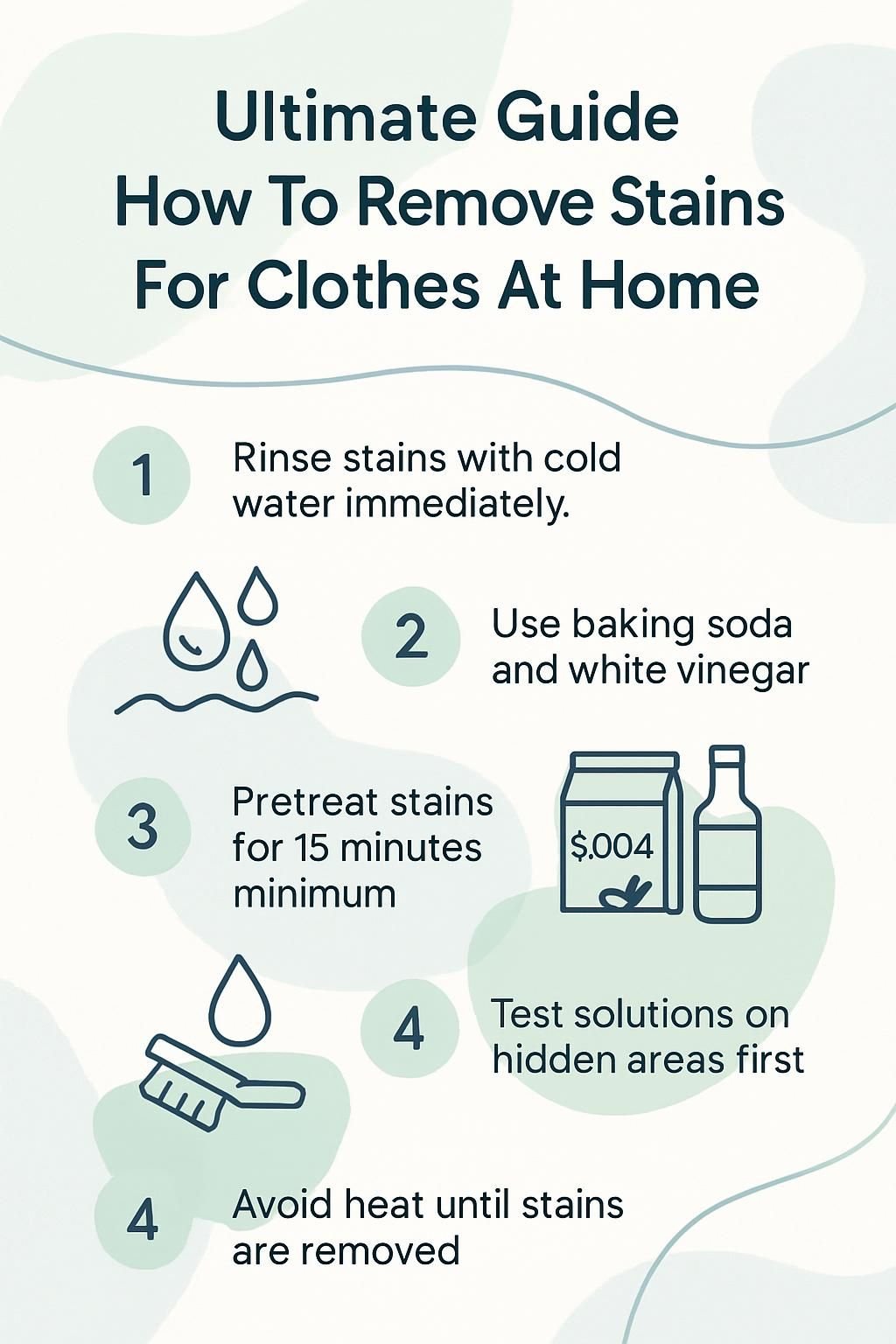
- Start by rinsing stains with cold water to stop them from setting. Always blot the area instead of rubbing it.
- Use common items like baking soda, dish soap, white vinegar, and hydrogen peroxide for homemade stain removers.
- Apply pretreatment solutions for at least 15 minutes or longer for tough stains but never let fabrics dry before washing.
- Test any new solution on a small hidden spot first to avoid damaging clothes. Follow care labels closely.
- Never use heat on stained clothing until the stain is fully gone; heat can make removal nearly impossible.
Steps to Remove Stains from Clothes
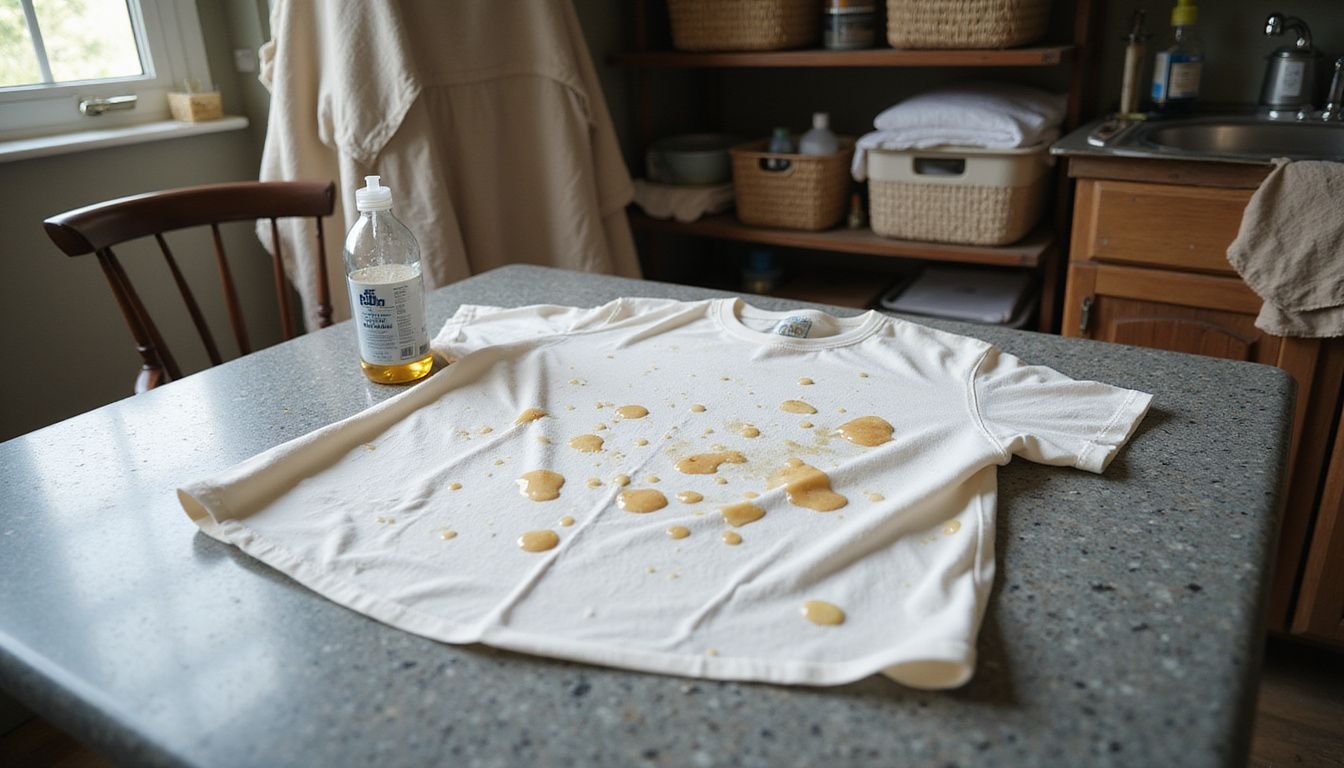
Removing stains from clothes involves a few straightforward steps. Start by rinsing the stained area with cold water to prevent the stain from setting in. Next, blot the stain gently with a clean cloth or paper towel to absorb excess liquid.
After that, apply a pretreatment solution like laundry detergent or dish soap for better results.
Rinse with Cold Water
Hold the stained fabric under running cold water. Place the stain face down and rinse it from the back of the garment. This helps push the stain out of fibers instead of forcing it deeper in.
Cold water works best for fresh stains like blood stains, wine stains, or ketchup stains because warm or hot water can set protein-based spots.
Parents and homeowners should always start with this step before using laundry detergent, baking soda, oxygen bleach, or hydrogen peroxide on stubborn stains. Quick action improves results and makes future laundering much easier when using washing machines at home.
Always follow any care label instructions to protect delicate items while rinsing fabric for effective stain removal.
Blot the Stain
Press a clean cloth or paper towel on the stained area to absorb as much liquid as possible. Blotting is more effective than rubbing, which can spread stains deeper into fabric fibers and make stain removal harder.
Parents dealing with grass stains or ketchup stains will see better results using this method.
Use cold water and rinse the back of the stained fabric to push out unwanted residue. This step works well for both fresh wine stains and stubborn ink stains. Follow laundry care label instructions before applying any pretreatment solution like baking soda paste, dish soap, or hydrogen peroxide.
Avoid scrubbing; gentle pressure with blotting prevents setting tough stains in clothes while keeping fabrics safe for washers.
Apply a Pretreatment Solution
After blotting the stain, choose a pretreatment method based on the type of mess. Stain removers, liquid laundry detergent, or a mix of dish soap and cold water make effective options for most common stains like ketchup or grease stains.
For tougher spots such as wine stains or stubborn ink stains, use a blend of white vinegar and baking soda.
Hydrogen peroxide works well for blood stains but test it first on a small hidden area to avoid unwanted bleaching. Dab the chosen solution gently into the fabric using your fingers or a soft-bristle brush.
Allow it to sit at least 15 minutes; for tough stains, leave overnight but do not let the area dry out completely. This step loosens grime so that washing in warm water lifts away even heavy soil marks.
Check laundry symbols and care tags before applying any chemical solutions to protect delicate materials like acetate from damage by harsh cleaners such as sodium hypochlorite found in chlorine bleach products.
Homemade Stain Removal Solutions
Homemade stain removal solutions can work wonders for tough marks. Simple ingredients like baking soda, vinegar, and dish soap tackle a variety of stains without harsh chemicals.
Baking Soda and Water Paste
Baking soda and water paste works wonders for removing tough colored stains. Mix equal parts of baking soda with water to create a thick paste. Apply this mixture directly onto the stain.
Allow it to sit for at least 30 minutes; this helps break down the stain effectively. For extra scrubbing power, use a soft-bristle brush to gently scrub the area after soaking.
It’s vital to check that the stain is completely gone before placing the garment in the dryer. Heat can set stubborn stains permanently, making them harder to remove later on. This method provides an easy and efficient way for house owners and parents to tackle unwanted marks on clothing using simple ingredients from home.
Dish Soap and Vinegar Mixture
Transitioning from the baking soda and water paste, house owners can consider a dish soap and vinegar mixture. This combination works well for tackling tough stains like grease, oil, or food residue on clothing.
The dish soap breaks down dirt while vinegar acts as a natural deodorizer.
To make this effective solution, mix equal parts of liquid dish soap and white vinegar in a bowl. Apply it directly to the stain using a clean cloth or sponge. Let it sit for about 30 minutes before rinsing with cold water.
This simple method often yields great results and helps remove stubborn stains without harsh chemicals.
Hydrogen Peroxide for Blood Stains
Transitioning from the dish soap and vinegar mixture, hydrogen peroxide serves as a powerful agent for blood stains on clothes. Apply it directly to the affected area during pretreatment.
Let the solution sit on the stain for at least five minutes to break down the blood effectively. For stubborn stains, leave it overnight.
Using a soft-bristle brush can help scrub away any remaining residue gently. Always check for complete stain removal before drying, as heat can set stubborn stains into fabric permanently.
Removing Common Types of Stains
Stains come from many sources like coffee, grease, and wine. Each requires a different approach for effective removal. Parents can easily tackle these challenges at home with the right methods.
Stain removal doesn’t have to be overwhelming. Explore various techniques to fight common stains and restore your clothes’ freshness!
Coffee or Tea Stains
Rinse the stained area under cold water from the back to push the coffee or tea stain out. Blot the stain with a clean cloth to absorb excess liquid. Avoid rubbing, as this can spread the stain further.
Pretreat coffee or tea stains with a liquid laundry detergent or a specialized stain remover for better results.
A mixture of dish soap and water also works well against these stubborn stains. Apply this solution directly onto the affected area and let it sit overnight. Check for complete removal before drying, since heat can set any remaining stains, making them difficult to eliminate later on.
Grease and Oil Stains
Transitioning from coffee or tea stains, grease and oil stains can be tricky. Begin by rinsing the stained area with cold water. Hold the fabric under running water from the back to push out as much grease or oil as possible.
Next, apply a pretreatment solution. A mixture of dish soap and water works well for these stubborn marks. Let it sit for at least 15 minutes, but overnight is best for tough cases.
After that time, gently scrub the stain using a soft-bristle brush; this helps work the cleaner into the fibers of your clothes.
For more resilient stains, try combining white vinegar and baking soda. This mixture can lift tougher colored stains effectively. Always check to see if the stain has completely disappeared before drying your garment to avoid setting it in permanently.
Wine Stains
Wine stains can be tough to tackle, but a quick response helps. Start by rinsing the stained area with cold water. This immediate step prevents the stain from setting into the fabric.
Next, blot the stain gently with a clean cloth or paper towel to absorb excess liquid. Avoid rubbing; it may spread the wine further. After that, apply a pretreatment solution like dish soap and vinegar mixture for effective removal.
For stubborn red wine stains, baking soda paste works wonders, drawing out color from fibers effectively.
Grass Stains
Grass stains can ruin a fun day outdoors. Removing them requires quick action. Start by rinsing the stained area with cold water to push out some of the grass residue. Next, blot the stain gently; this prevents it from spreading further into the fabric.
A paste made from baking soda and water works well for treating grass stains. Apply it directly onto the stain and let it sit for about 30 minutes before rinsing again with cold water.
Dish soap mixed with white vinegar also helps break down tough residues effectively. Let those solutions soak in a bit before washing in warm water, but avoid hot settings until you completely remove the stain.
Now that you’ve dealt with grass stains, let’s tackle other common types of stains like coffee or tea marks next!
Tips for Effective Stain Removal
Testing stain removal solutions on a small area of fabric can prevent damage to your clothes. Avoiding heat until the stains are completely gone helps prevent setting them in place.
Test Solutions on a Small Area
Test any stain removal solution on a small area of the fabric first. This step helps ensure the fabric won’t get damaged or discolored. Choose an inconspicuous spot, like inside a seam or under a collar.
Apply the solution and wait to see what happens.
If the test area shows no adverse effects after a few minutes, it’s safe to proceed with treating the stain. Using baking soda or dish soap mixed with water works well for many fabrics.
Always check care labels before starting treatment. Being cautious protects favorite clothes from stubborn stains like wine or grease that could cause big problems later on.
Avoid Heat Until Stains Are Gone
Heat can set stains permanently. It is crucial to avoid drying stained clothes until the stains are completely removed. If a garment still shows signs of a stubborn stain, repeating the pretreatment steps helps improve chances for success.
Placing stained items in a dryer can make the stain more difficult to remove later.
Hang damp clothing to dry if there’s uncertainty about complete stain removal. Rinsing an item with cold water before applying laundry detergent or other solutions prevents heat from interfering during future washes.
Proper care ensures that owners and parents keep their clothes looking fresh and clean without lasting damage from heat exposure.
Conclusion
Stain removal can be simple and effective at home. Start with cold water to rinse the stain from the fabric. Consider using homemade solutions like a baking soda paste or dish soap mixed with vinegar.
Always check for stains before drying; heat can set them in permanently. With these tips, anyone can tackle tough stains and keep clothes looking fresh.
FAQs
1. What is the first step in stain removal for clothes at home?
Check the care label on your clothing before treating any stains. This helps you choose safe methods and products like laundry detergent, dish soap, or oxygen bleach.
2. How do I remove grease stains from fabric?
Pretreat grease stains with dish soap or a strong laundry detergent. Rub gently into the spot and rinse with warm water before washing as usual.
3. Can hydrogen peroxide help lift blood stains?
Yes, hydrogen peroxide can break down blood stains on light fabrics. Pour it directly onto the area, let it bubble for a minute, then blot with cold water.
4. Are baking soda and white vinegar effective for tough spots like wine or ketchup stains?
Baking soda works well to absorb fresh spills such as wine or ketchup; sprinkle directly on the mark then add white vinegar if needed to boost cleaning power.
5. Should I use hot water or cold water when removing ink stains?
Cold water is best for ink stains since hot water might set them deeper into fibers; always pretreat these marks using gentle laundry soaps first.
6. When should chlorine bleach be used during stain removal at home?
Use chlorine bleach only if your garment’s care label allows it and other methods fail against stubborn spots; never mix with ammonia-based cleaners like varnish remover due to safety risks.