
Scratches on floor tiles can make a home look untidy and worn over time. Many house owners worry that fixing these marks means replacing the whole tile, which costs both money and time.
One useful fact is that simple scratch removal techniques like toothpaste, baking soda paste, or car wax often restore ceramic and porcelain tiles without heavy tools or harsh abrasives.
This saves families from buying new tiles while protecting their floors’ original finishes.
This guide covers How To Remove Scratches From Floor Tiles Without Replacing Them using easy DIY tips, trusted cleaning products, and safe surface restoration methods for all kinds of floor tiles including marble and glazed surfaces.
Find out how to fix those annoying scratches with tools you already have at home.
Keep reading to give your floor a fresh look again!
Key Takeaways
- Homeowners can fix light scratches on ceramic and porcelain tiles using non-gel toothpaste or a baking soda paste. These methods are safe, affordable, and use common household items.
- Commercial tile scratch repair kits work well for deeper marks that home remedies cannot fix. These kits often include fillers, touch-up markers, and polishing pads.
- Cleaning the tile with a degreasing cleaner before any treatment helps improve results by removing dirt and grime.
- Prevent future scratches by placing mats at entryways, trimming pet nails, adding furniture pads under legs, and avoiding harsh chemicals during cleaning.
- Regular polishing after repairs maintains shine and creates a protective barrier to keep floor tiles looking new without replacing them.
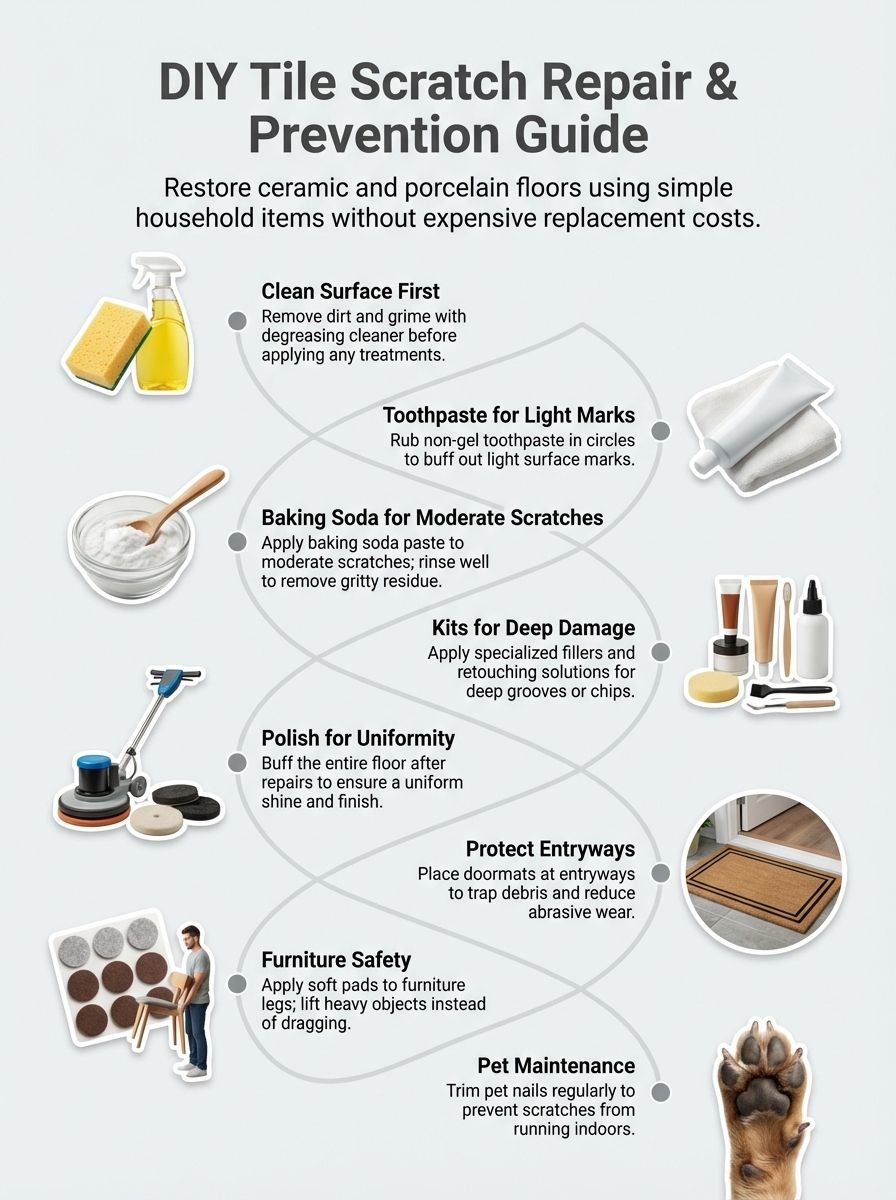
Common DIY Methods to Remove Scratches
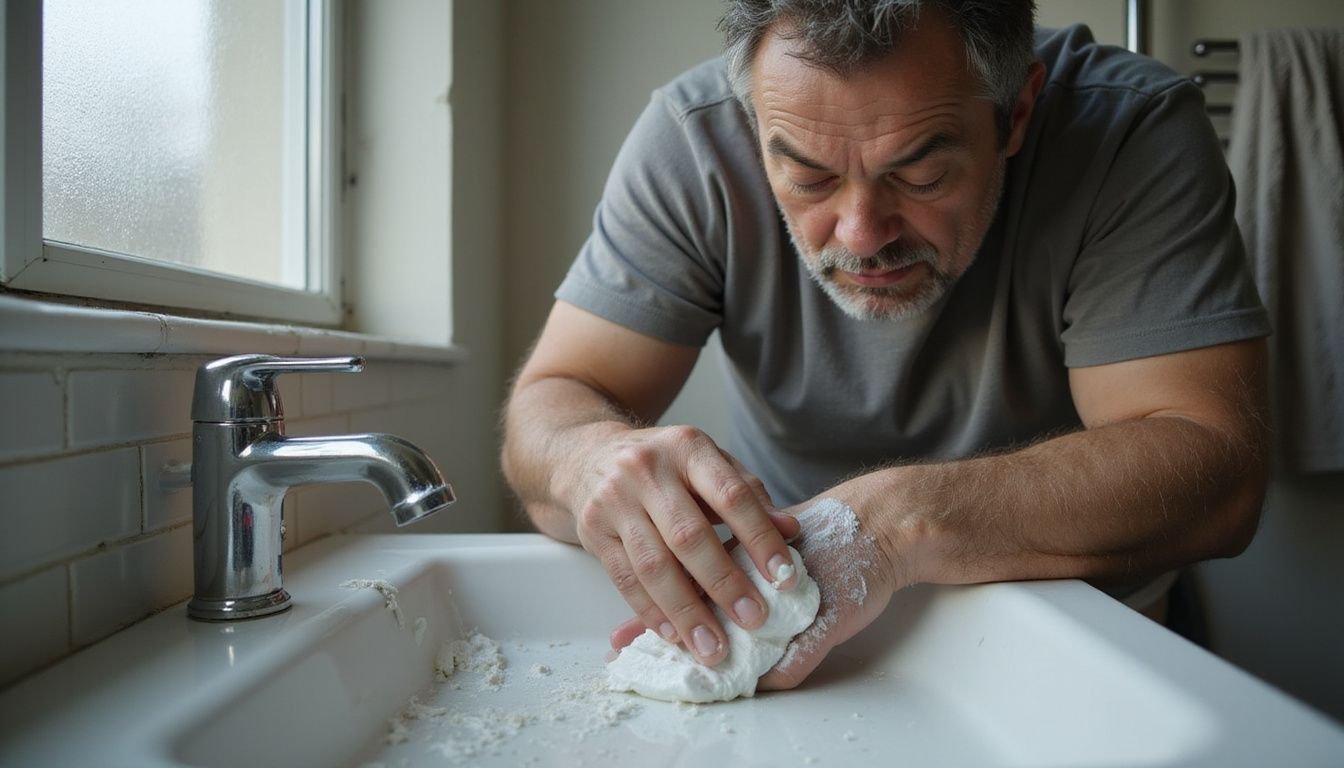
Many homeowners face scratches on their tiles. Simple DIY techniques can restore the shine and smoothness of those surfaces.
Using toothpaste, you can treat light scratches effectively. For deeper marks, a paste made from baking soda works wonders.
Toothpaste for Light Scratches
Non-gel toothpaste works well as a scratch removal technique for light marks on ceramic tiles and porcelain tiles. House owners or parents can squeeze a small amount onto a soft microfiber cloth.
Gently rub the toothpaste in circular motions over the scratched area to buff out surface flaws and restore some shine.
A quick rinse with water and another clean microfiber towel will help remove any remaining residue from the tile glazes after treatment. This method offers an easy form of tile maintenance without harsh chemicals, making it safe for homes with kids and pets.
Surface restoration with everyday bathroom products also helps extend tile lifespan by reducing visible wear caused by shoes, toys, or daily use.
Baking Soda Paste for Moderate Scratches
Mix baking soda with water to create a thick paste for moderate scratches on ceramic or porcelain tiles. Spread the baking soda paste directly onto the scratch using a soft cloth. Rub gently in circular motions; this acts as an effective tile maintenance method and helps restore surface appearance without harsh chemicals.
Wipe away any residue with a damp microfiber cloth, ensuring no gritty particles remain that could cause further abrasions.
Surface restoration gets a boost because baking soda’s mild abrasive quality targets only the damaged area rather than harming nearby sections of your floor tiles. Many households find this DIY scratch removal technique both safe and affordable compared to specialized commercial kits from brands like Rust-Oleum or Rejuvenate.
For deeper grooves, consider moving on to commercial tile scratch repair kits suitable for more severe marks or chips.
Commercial Tile Scratch Repair Kits
For scratches that baking soda paste cannot fix, commercial tile scratch repair kits offer a practical solution. These kits work well on ceramic tiles and porcelain tiles where deeper marks or surface damage need more than simple homemade methods.
Most kits include special fillers, retouching solutions, touch-up markers, and even small buffing pads.
House owners can follow clear instructions to apply the filler directly into the scratch. Many brands also provide a finishing coat for better surface restoration and shine. Using these products as part of regular tile maintenance helps improve tile appearance without needing full replacement.
Kits are widely available in hardware stores and online marketplaces under various brand names, making them accessible for most families aiming to use effective scratch removal techniques at home.
Polishing and Restoring Tile Appearance
Polishing and restoring tiles enhances their look, making them shine again. House owners can apply several techniques to achieve a fresh appearance.
- Clean the tiles before polishing. Use a degreasing cleaner and warm water. This step removes dirt and grime, ensuring better results.
- Apply a baking soda paste to moderate scratches. Mix equal parts of baking soda with water. This paste works wonders on ceramic and porcelain tiles.
- Utilize non-gel toothpaste for light scratches. Gently rub it into the scratch with a soft cloth using circular motions. It can effectively diminish minor marks on the surface.
- Invest in commercial tile polishing solutions if needed. Many products specifically target scratched surfaces, restoring their original luster.
- Choose an appropriate buffing tool for polished porcelain tiles. A random orbit sander with a polishing pad helps buff out deeper scratches efficiently.
- Polish the entire floor after repairing scratches. This process ensures uniformity across all tiles, giving them an even finish.
Regular maintenance keeps tile surfaces looking pristine while preventing future damage from occurring again.https://www.youtube.com/watch?v=rf1caYXyq1Q
Preventing Future Scratches
House owners and parents can take steps to prevent future scratches on their floor tiles. Simple changes in habits can protect the tile surface.
- Use doormats at entryways. Placing mats will trap dirt and debris, reducing wear on tiles.
- Keep pet nails trimmed. Regular grooming prevents scratching from furry friends running indoors.
- Choose furniture pads wisely. Using soft pads under furniture legs helps avoid marks when moving items around.
- Clean with care. A degreasing cleaner can remove grime without harming tiles; never use harsh chemicals that can scratch.
- Regularly polish tiles to protect the surface. Polishing maintains a shiny finish and creates a barrier against future damage.
- Avoid dragging heavy objects across tiles. Lifting items prevents scratches from occurring during moves.
- Encourage family members to be cautious with toys and other objects on the floor; this reduces impact risks.
Taking these measures ensures a beautiful tile surface for years to come, setting the stage for effective polishing and restoring tile appearance in the next section.https://www.youtube.com/watch?v=Hr32k0xH8yo
Conclusion
Removing scratches from floor tiles can seem challenging, but it doesn’t have to be. Simple methods like using toothpaste or baking soda paste can work wonders on light to moderate scratches.
For deeper marks, a touch of nail polish might do the trick. Regular cleaning and polishing help maintain the tile’s shine and prevent future damage. Homeowners will discover that these techniques keep their floors looking great without needing replacements.
FAQs
1. What are the best scratch removal techniques for ceramic tiles?
Start by cleaning the surface with a degreasing cleaner and microfibre cloth. For light scratches, apply a baking soda paste and rub gently. Use tile polishing products to restore shine.
2. Can I fix scratches on porcelain tiles without replacing them?
Yes, you can use washing up liquid mixed with water to clean the area first. Apply a baking soda paste or specific tile maintenance solution for minor marks, then buff the spot using a soft microfibre cloth.
3. Is it possible to perform surface restoration at home for floor tiles?
Homeowners can handle most small scratches themselves using simple scratch removal techniques like gentle cleaning and careful polishing with store-bought products designed for tile maintenance.
4. Do professional methods work better than DIY solutions for removing tile scratches?
For deep damage, professionals may achieve better results due to advanced tools and expertise in surface restoration; however, many shallow marks respond well to at-home care such as baking soda pastes or regular tile polishing routines.