
Scratches on floor tiles can make any home look less tidy. Many house owners and parents notice marks or lines appear after moving furniture, dropping sharp objects, or from daily wear.
These scratches are a common issue for those with ceramic tiles, porcelain tiles, or even marble flooring.
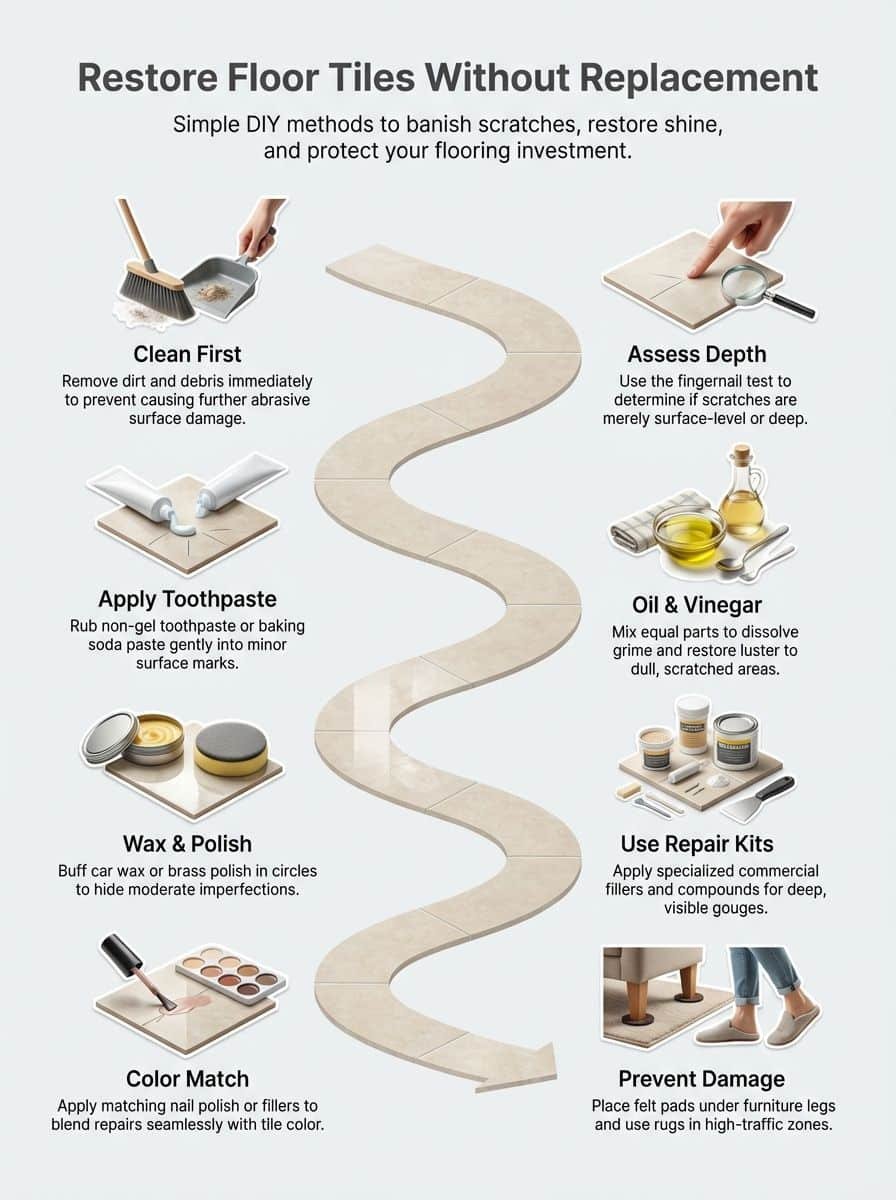
One important fact: Cleaning the area before starting scratch removal stops further damage to your floor tiles. Using rough cleaning products or abrasives by mistake can actually make the problem worse.
This guide on how to remove scratches from floor tiles without replacing them covers quick home methods as well as professional tile repair solutions. Readers will find step-by-step advice for tile maintenance using basic tools like toothpaste, baking soda paste, commercial repair kits, and diamond polishing pads.
Learn simple ways to polish and restore your floors before turning to costly replacements. Discover easy tips that protect your beautiful floors next!
Key Takeaways
- Homeowners can fix light scratches on floor tiles with simple DIY methods. Toothpaste or baking soda paste helps remove small marks from ceramic and porcelain tiles.
- For moderate or deeper scratches, use commercial repair kits or color-matched fillers. These products blend with your tile and restore its look without replacing it.
- Always clean the area before starting repairs to avoid more damage. Using rough cleaning tools by mistake can make scratches worse.
- Prevent new scratches by placing rugs in busy areas and putting felt pads under furniture legs. Clean floors only with non-abrasive cloths or pads.
- If home fixes do not work, call a tile professional for serious cracks or deep grooves. Skilled help ensures long-lasting results for your floor tiles.
Identify the Type and Severity of Scratches
Minor marks on ceramic tiles often appear as faint surface lines. These can result from moving furniture or dropping small objects. Light scratches usually do not penetrate the glaze and feel smooth to the touch.
Owners can often fix these with simple scratch removal techniques, such as using baking soda paste or toothpaste.
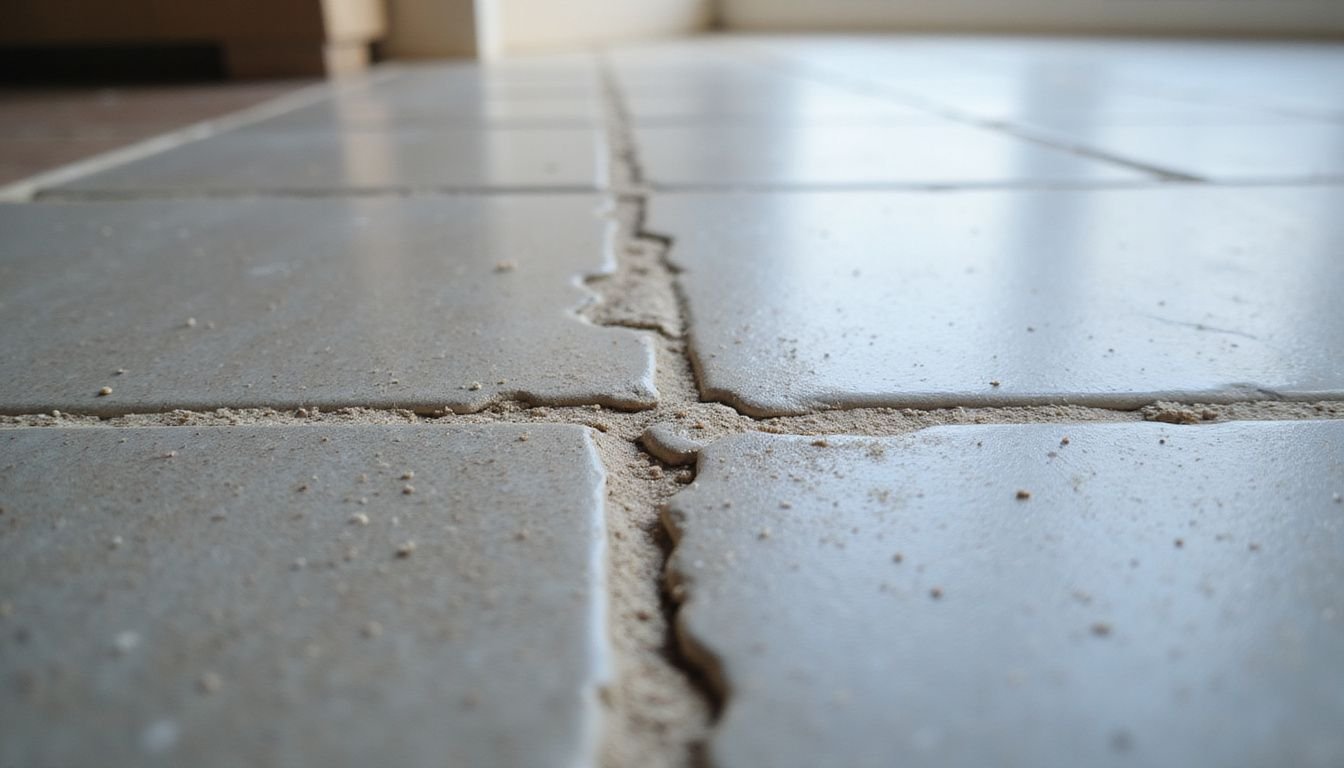
Deeper grooves look more visible and may catch a fingernail when touched. These harder-to-fix scratches affect both glazed and unglazed tiles, including stone or polished concrete tiles.
A careful inspection helps decide whether tile restoration needs basic retouching methods, color-matched fillers, polish solutions, or special repair kits. Using the right technique depends on how deep the damage goes into the floor’s surface hardness.
Proper identification saves time and leads to better tile maintenance results for all types of floors in busy homes with children and pets.
DIY Methods for Removing Light Scratches
DIY methods can effectively tackle light scratches on floor tiles. Homeowners often rely on simple items like toothpaste and baking soda to work wonders in restoring the shine of their ceramic surfaces.
Toothpaste Technique
Non-gel toothpaste works as a mild abrasive and can help remove scratches from ceramic tiles. After cleaning the area to prevent more damage, apply a small dab of toothpaste right onto the scratch.
Rub it in with a soft cloth using gentle, circular motions. Tile maintenance professionals suggest enhancing this method by mixing baking soda with toothpaste for stubborn light scratches.
Rinse the spot thoroughly once finished to clear away residue from polishing tiles. This scratch removal technique suits minor marks only and offers an easy way to restore floors without harsh chemicals or special tools found in many commercial tile repair kits.
Many house owners find this quick fix useful for tile restoration before turning to more intensive solutions discussed on sites like Stack Exchange.
Baking Soda Paste Application
After using the toothpaste technique for scratch removal, a baking soda paste can address any leftover light scratches on ceramic tiles. Mix baking soda and water in a 2:1 ratio to form a thick paste, then apply it over the scratched area with a soft cloth.
Use gentle circular motions for about one to two minutes. This method uses common household ingredients and offers an affordable option for tile maintenance.
Wipe away all residue after scrubbing, making sure no paste remains on the surface. Combining baking soda with non-gel toothpaste can boost cleaning power when tackling minor scratches or dull spots.
Regular use of these simple scratch removal techniques helps keep floor tiles looking polished without needing replacement or costly repairs.
Techniques for Moderate Scratches
Moderate scratches can be annoying, but they often have simple fixes. A homemade solution using vinegar and olive oil can work wonders. Applying wax or polish adds shine and covers up those imperfections nicely.
Vinegar and Olive Oil Solution
Vinegar and olive oil work well together to restore shine to floor tiles. Mix equal parts of white vinegar and olive oil in a spray bottle. Spray the solution onto the scratched area, then wipe it with a soft cloth.
This mixture helps remove dirt and buff out light scratches from ceramic tiles. The acidity of vinegar dissolves grime while the oil adds luster. Regular use can keep tile maintenance simple while enhancing tile restoration efforts at home.
Wax or Polish Application
Apply brass polish or non-abrasive car wax to moderate scratches on floor tiles. Use a lint-free cloth for the application. Rub the polish in circular motions over the scratched area.
Allow it to dry completely before buffing to enhance shine. This simple technique can revive ceramic tiles and improve their appearance.
For deeper scratches, consider using a specialized tile repair kit. These kits often include fillers or polishing compounds suited for effective treatment. Color-matched nail polish can also fill scratches when applied thinly, then smoothed after drying.
With these handy methods, homeowners can maintain their tile beauty without expensive replacements.
Fixing Deeper Scratches
Deeper scratches can mar the beauty of ceramic tiles. Homeowners should consider using commercial scratch repair kits to restore their floors effectively. Color-matched fillers can blend seamlessly with the tile’s surface, hiding imperfections and enhancing its look.
Commercial Tile Scratch Repair Kits
Commercial tile scratch repair kits offer effective solutions for homeowners dealing with deep scratches on ceramic or porcelain tiles. These specialized kits often include fillers, polishing compounds, and tools designed to restore tiles without requiring replacement.
Users find these kits versatile as they cater to various types of tiles and levels of damage.
Many people enjoy the seamless results that come from using these kits. With the right application, individuals can achieve professional-like finishes at home. Some may even enhance their repairs by using additional products like brass polish or color-matched nail polish for a perfect touch-up.
Color-Matched Fillers
Color-matched fillers offer an effective solution for fixing deeper scratches on floor tiles. Homeowners can use color-matched nail polish to blend repairs with the existing tile colors.
They should apply a thin layer of this filler and let it dry completely before smoothing the surface.
Specialized tile repair kits often include these fillers, making them easy for parents and house owners to restore ceramic or porcelain tiles. These kits simplify the process, allowing anyone to maintain their tiles without extensive effort.
Moving forward, learning how to prevent future scratches will help keep those floors looking great longer.
Preventing Future Scratches
To keep floor tiles scratch-free, use rugs and felt pads under furniture. Clean surfaces with non-abrasive tools to avoid damaging the tile finishes.
Use Rugs and Felt Pads
Place rugs in areas where people walk often. These soft coverings help shield ceramic tiles from scratches. They act as a barrier during daily activities that could cause damage.
Add felt pads under furniture legs to prevent scratching on tiles. This small addition makes a big difference in tile maintenance. By using rugs and felt pads, homeowners can reduce the need for costly repairs or replacements later on.
Keeping the floors protected will ensure they look good for years to come.
Clean with Non-Abrasive Tools
To protect ceramic tiles, clean them with non-abrasive tools. Use soft cloths or microfiber pads to avoid causing further damage. Regularly using these materials helps maintain tile integrity and keeps scratches at bay.
Avoid abrasive scrubbers that can worsen the appearance of your floors.
DIY scratch removal methods often benefit from non-abrasive substances, such as baking soda paste or non-gel toothpaste. These techniques can effectively polish tiles while preventing additional scratches.
Next, consider ways to tackle moderate scratches for a more thorough repair approach.
When to Seek Professional Help
Certain situations call for professional help to tackle tile issues. If DIY methods fail, homeowners should consider expert assistance. Deeper scratches or cracks may not respond well to at-home techniques.
In such cases, replacing the tiles might be necessary rather than trying to repair them.
Professional polishing pads can often deliver better results for deeper scratches compared to homemade solutions. Specialized tile repair kits may work for some problems, but intricate repairs usually require a skilled touch.
Seeking guidance from a professional ensures proper care and long-lasting results in tile maintenance and restoration efforts. Understanding when it is time to call an expert makes all the difference in keeping ceramic tiles looking pristine.
Tips on preventing future scratches follow next.
Conclusion
Removing scratches from floor tiles doesn’t have to mean replacing them. House owners can use simple DIY methods for light scratches, like toothpaste or baking soda paste. For deeper flaws, commercial repair kits and color-matched fillers provide excellent options.
Maintaining tiles also involves prevention; using rugs and felt pads helps keep surfaces safe from damage. With the right techniques, anyone can restore their tiles and enjoy a beautiful floor once again.
FAQs
1. How can I remove scratches from ceramic tiles without replacing them?
Use scratch removal techniques like polishing tiles with a soft cloth and a mild abrasive cleaner. For deeper marks, tile repair kits or glazes help restore the surface.
2. Are all floor tile scratches permanent or can they be fixed?
Most scratches on ceramic tiles are not permanent. Tile restoration methods often hide light damage, while deeper grooves might need professional-grade repair products.
3. What is the best way to maintain my tiles and prevent future scratches?
Regular tile maintenance helps prevent new damage. Sweep dirt away often, use soft pads under furniture, and avoid dragging heavy items across your floors.
4. Will using glazes during tile restoration affect how my floor looks?
Applying glazes as part of tile repair can blend repaired spots into the rest of your flooring; this keeps the finish even and protects against more wear in high-traffic areas.