
Many house owners notice small scratches and scuffs on their floor tiles after moving furniture, dropping toys, or just from daily foot traffic. These marks can make ceramic tiles or porcelain tiles look old and worn out even when the rest of the surface is clean.
No one wants to replace an entire tile for a few little imperfections.
A simple baking soda paste is often enough to remove light scratches from most floor tiles. This easy cleaning tip can save time and money while protecting your floors.
This guide explains how to assess tile scratches, which products work best, and step-by-step ways to fix both light surface marks and deeper damage without replacing any tile. Discover practical solutions for better tile maintenance in every room.
Find fast fixes that really work next!
Key Takeaways
- Baking soda paste and non-gel toothpaste can remove light scratches from ceramic or porcelain tiles.
- For deeper scratches, use fine-grit sandpaper or purchase a commercial tile repair kit for better results.
- Brass polish works well on dark lines caused by metal transfers without harming the tile finish.
- Always test products in a hidden spot first to protect your floor’s appearance before widespread use.
- You do not need to replace entire tiles; these DIY solutions help restore floors while saving money and time.
Assessing the Type and Severity of Tile Scratches
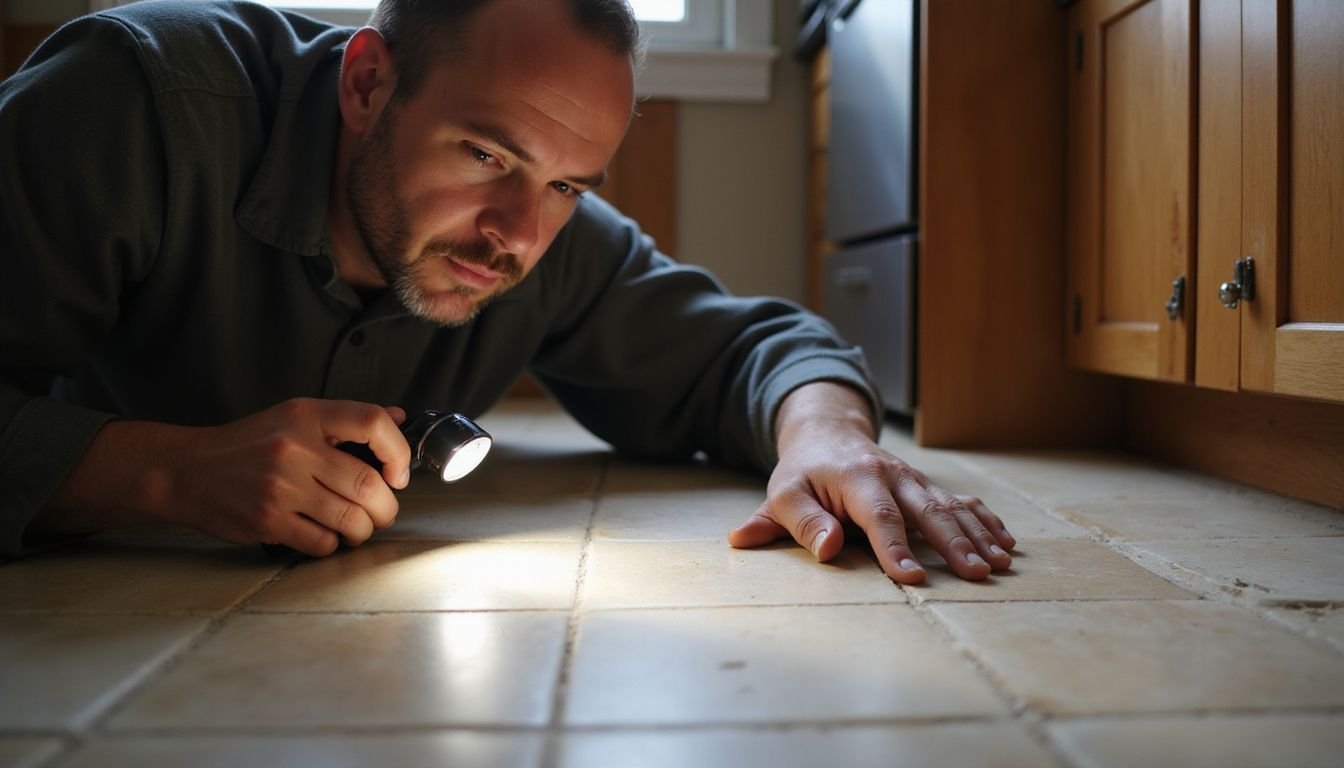
Small marks on ceramic tiles often look worse than they are. Light scratches or scuffs usually affect only the top layer of the tile surface. These often come from shoes, toys, or furniture feet dragging across the floor.
If a mark rubs away with a damp cloth and regular cleaning product, it is likely just a surface-level blemish.
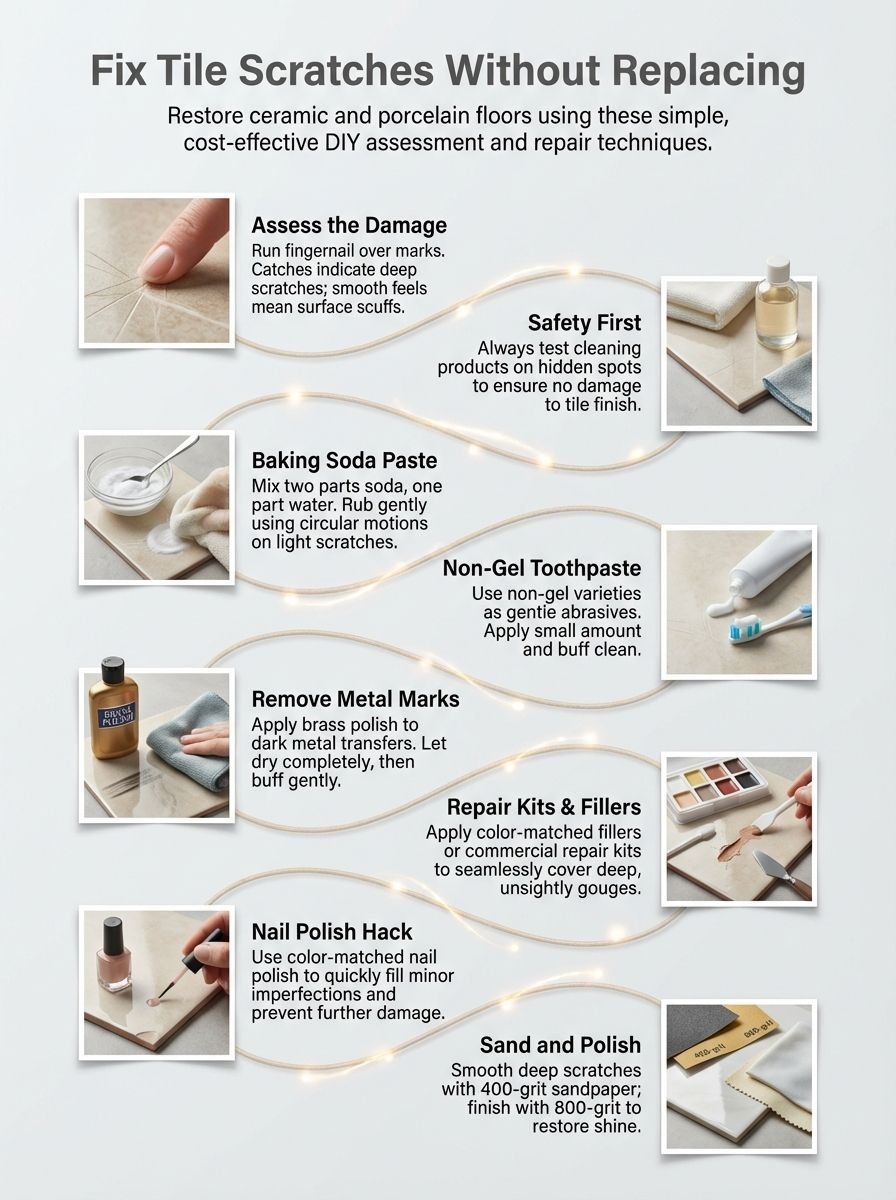
Deeper tile scratches will catch your fingernail when you run it over them. Serious gouges may need advanced repair techniques like using fine-grit sandpaper or tile repair kits. Dark lines sometimes signal metal transfers instead of true damage to the glaze; Brasso can lift these stains without hurting tile finish.
Always test any cleaning tip or product—like non-gel toothpaste, baking soda paste, or brass polish—on a hidden spot first to keep your tile maintenance safe and easy for every home owner and parent.
DIY Methods for Removing Light Scratches
Light scratches on ceramic tiles can make a floor look worn. Thankfully, several DIY methods can help restore their shine. The baking soda paste technique is simple and effective for minor blemishes.
Non-gel toothpaste or brass polish can also work wonders in buffing those scratches away.
Baking soda paste technique
Mix two parts baking soda and one part water to form a thick paste. This homemade solution works well on light scratches found in ceramic tiles. Use a soft cloth to apply the mixture, gently rubbing it into the scratch using small circular motions.
Test the paste first on an out-of-the-way spot to ensure it does not affect your tile’s finish.
After working the baking soda paste onto scratched areas, rinse with clean water. Wipe away any residue using a damp cloth for best results. Many house owners report this safe cleaning tip as their top choice among DIY methods for easy tile maintenance and minor tile cleaning tasks.
Starting with gentle techniques, like this simple baking soda remedy, can help restore floor tiles without harsh chemicals or damaging finishes.
Using non-gel toothpaste or brass polish
After using the baking soda paste technique for light tile scratches, some homeowners find even better results with common household items like non-gel toothpaste or brass polish. Non-gel toothpaste works as a gentle abrasive on ceramic tiles.
Apply a small amount of toothpaste to the scratched area and rub it in circular motions with a soft cloth. Wipe off any residue with water and inspect your floor tiles for improvement.
Brass polish offers another effective solution, especially for metal marks left behind by shoes or furniture on tile surfaces. Place a dab of brass polish on the affected spot; allow it to dry completely before buffing gently with a clean cloth.
Always test these cleaning tips on an out-of-sight part of your floor first, as different finishes respond uniquely to abrasives and polishes during tile maintenance efforts at home.
Fixing Deeper Scratches with Advanced Techniques
Deeper scratches can ruin the look of ceramic tiles. House owners can revive their floors using specialized tile repair kits and fillers.
Tile repair kits and fillers
Tile repair kits provide an easy solution for fixing scratches on ceramic and porcelain tiles. These kits usually contain fillers that blend well with tile colors, ensuring a smooth finish.
House owners can quickly apply these products to cover up unsightly marks.
Color-matched nail polish offers another quick fix for minor imperfections. A simple application fills in the scratches effectively, preventing further damage. Using these methods helps maintain the beauty of floor tiles without the need for costly replacements or extensive repairs.
Polishing with fine-grit sandpaper
Transitioning from tile repair kits and fillers, fine-grit sandpaper serves as an effective solution for polishing scratches on floor tiles. Start with 400-grit sandpaper to smooth out deeper scratches.
Gently rub the scratched area in a circular motion, applying minimal pressure. This action gradually levels the scratch.
After sanding, switch to finer grades like 800-grit for polishing. This step refines the surface further and restores shine to ceramic tiles. Always test any method on a hidden section first; this precaution prevents damage to the tile finish.
Polishing helps maintain the overall appearance of flooring while saving from costly replacements.
Conclusion
Removing scratches from floor tiles can be simple and effective. House owners should try various methods, such as baking soda paste or non-gel toothpaste, to tackle light marks. For deeper scratches, polishing with fine-grit sandpaper may do the trick.
Commercial tile repair kits offer more options for fixing ceramic tiles without replacing them entirely. With a bit of effort and the right tools, anyone can restore their floors to their former glory.
FAQs
1. What causes scratches on ceramic and porcelain floor tiles?
Heavy furniture movement, sharp debris, or pet claws can leave marks on tile surfaces. Dragging objects across the floor often leads to visible scratches.
2. Can I remove surface-level scratches from my tiles without replacing them?
Yes, you can treat light marks using a paste made of baking soda and water. Gently rub it onto the scratch with a soft cloth in a circular motion, then wipe clean.
3. Will commercial products help fix deeper tile damage?
Some store-bought repair kits work well for moderate damage on glazed or unglazed tiles. These kits usually include fillers and sealants that blend with your tile’s color.
4. Are there steps to prevent new scratches after cleaning old ones?
Place felt pads under chair legs and use rugs in high-traffic areas to protect your floors from future harm. Sweep regularly so grit does not build up and cause more abrasions over time.