
Streaky windows can make even the cleanest homes look messy. Many homeowners and parents struggle to get glass surfaces spotless, no matter how hard they try. Wiping endlessly with paper towels or using store-bought sprays often leaves smudges behind.
One key fact is that dusting window frames before cleaning the glass helps prevent streaks and dirt marks. This step stops loose debris from spreading across your windows while you clean.
This guide on “How To Cleaning Windows” offers clear steps for anyone who wants bright, streak-free results at home. Readers will learn about smart cleaning techniques, which tools work best, and simple tricks for a sparkling finish.
Discover easy tips ahead that will change your window care routine forever!
Key Takeaways
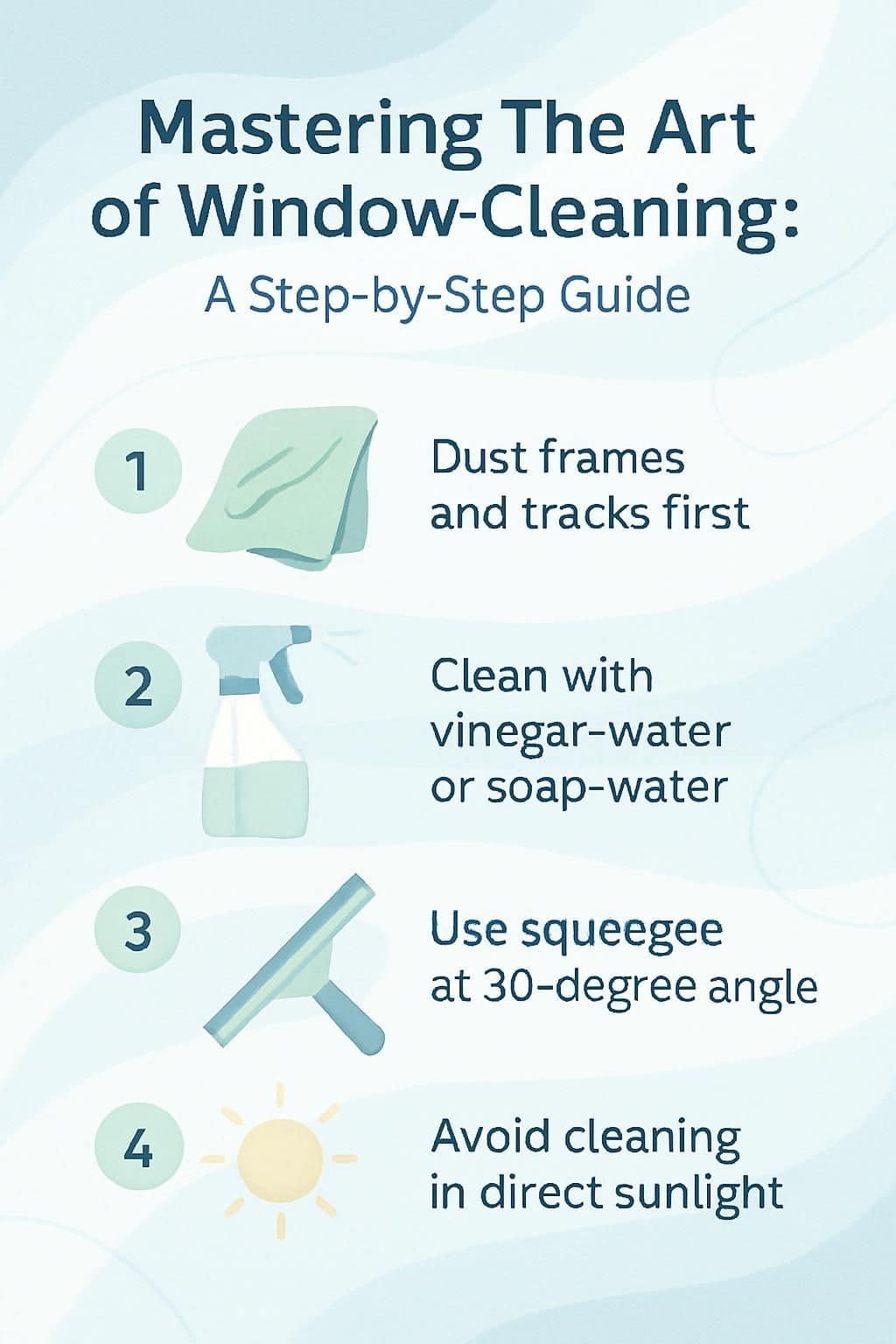
- Start by dusting frames and tracks before cleaning the glass. This prevents dirt from spreading and scratching your windows.
- Use a homemade solution of equal parts vinegar and water or mild dish soap with water for effective, streak-free results.
- Always use a squeegee at a 30-degree angle, making overlapping strokes. Wipe the blade after each pass to avoid smudges.
- Dry window edges and corners with a clean microfiber cloth right after washing to get rid of extra moisture and any lingering streaks.
- Do not wash windows in direct sunlight. Fast drying can cause spots or streaks on the glass.
Preparing for Window Cleaning
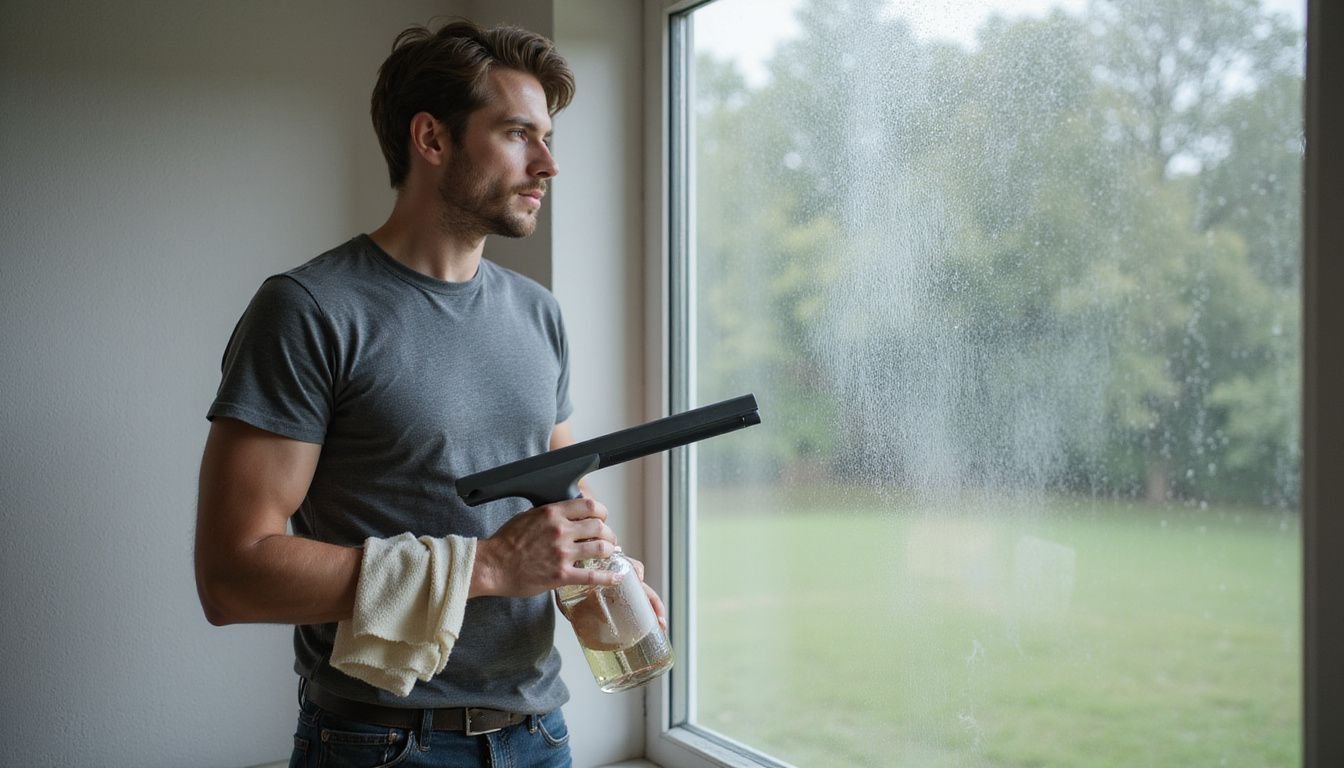
To prepare for window cleaning, gather your supplies. You will need a squeegee, microfiber cloths, and an effective cleaning solution like dish soap or vinegar mix.
Gather necessary supplies
Preparing for window cleaning starts with securing the right tools and materials. Homeowners and parents should confirm they have everything on hand before they begin.
- Soft brush or vacuum attachment: Employ this tool to gently clear loose dirt and debris from the window frames and tracks.
- Cleaning solution: Combine warm water with a mild dish soap or create a vinegar-water solution for a powerful, natural cleaning agent.
- Sponge or microfiber cloth: These items will assist in applying the cleaning solution to the glass without leaving lint residues.
- Squeegee: An essential tool for attaining streak-free windows, it expels water and cleaner from the glass.
- Clean, dry microfiber or lint-free cloth: Following the squeegee, utilize these cloths for drying edges and polishing out any persisting streaks.
Each component contributes significantly to ensuring that windows are cleaned proficiently and effectively, resulting in a luminous finish absent of any streaks. Homeowners appreciate these tools for tasks beyond window cleaning and into other home maintenance activities that need a careful and precise approach.
Clear the area around the window
Cleaning windows is more than just wiping the glass. A safe, effective clean starts with preparation.
- House owners should move furniture or any objects that block access to the window. This makes cleaning easier and prevents accidents.
- They need to take down curtains or blinds. This protects the fabric and allows complete access to the window.
- Parents often place a towel on the floor inside to catch any water drips. It keeps floors dry and safe.
- Using a vacuum or a brush with soft bristles, they remove loose dirt from the window frame and tracks. This step prevents scratching the glass during cleaning.
- Outdoor plants near windows require covering or moving. It protects them from cleaning solutions and disturbance.
Each of these steps ensures that the area around the window is ready for a thorough, streak-free cleaning session without risking safety or damaging property around it.
Remove loose dirt and debris from frames and tracks
Preparing your windows for a deep clean starts with the basics. Removing dirt and debris from frames and tracks is essential.
- Begin by using a soft brush to sweep away dust and loose dirt from the window frame. A soft-bristled paintbrush works well for this task.
- Switch to a vacuum with a soft brush attachment to get rid of more stubborn particles in the tracks and corners. This method ensures you pull up any grit that could scratch the glass later.
- Next, target the tracks with a simple mixture of warm water and a few drops of dish soap. This solution loosens grime without damaging the frames.
- Use an old toothbrush dipped in the soapy water to scrub inside the tracks. The bristles are perfect for reaching into narrow spaces.
- Wipe down the wet areas with a microfiber cloth to absorb any leftover water and soap mix. These cloths don’t leave lint behind.
- For any remaining tough spots, apply a small amount of vinegar directly onto them; let it sit for a minute, then scrub again with the toothbrush.
- Finish by drying everything thoroughly with another dry microfiber cloth, ensuring no moisture is left behind to cause mildew or streaks on your windows.
Taking these steps helps ensure that when you start cleaning your glass, you’re not dragging dirt around and making more work for yourself. House owners and parents will find that this approach saves time in the long run and leads to clearer, brighter windows without unwanted streaks or scratches.
Cleaning the Glass
Cleaning the glass requires an effective solution. A mix of dish soap and vinegar works well. Scrub the surface thoroughly, paying attention to corners and any stubborn spots. Rinse off exterior windows as needed for a sparkling finish.
Use an effective cleaning solution (dish soap or vinegar mix)
Mix equal parts of white vinegar and water or use a mild dish soap solution to clean windows. This effective cleaning solution helps dissolve dirt and grime on the glass surface. A sponge or microfiber cloth works well for scrubbing the glass, especially in corners and tough spots.
Ensure the solution is blended properly for optimal results.
Avoid harsh chemicals that can damage window surfaces. Stick with gentle options like vinegar or dish soap for safe and efficient cleaning. Proper application of this mixture sets up a streak-free finish after squeegeeing.
Scrub the glass, focusing on corners and stubborn spots
Scrubbing the glass requires a sponge or microfiber cloth. House owners should use an effective cleaning solution, such as mild dish soap mixed with water or equal parts vinegar and water.
This combination breaks down grime effectively. While scrubbing, pay special attention to corners and stubborn spots where dirt often hides.
A thorough scrub ensures a streak-free finish on the windows. The right angle while applying pressure also helps remove tough stains more efficiently. After scrubbing, rinse the exterior if necessary for an extra clean look.
Rinse exterior windows if needed
Rinse exterior windows with a hose before washing. This step removes loose dirt and prepares the glass for effective cleaning. Homeowners should assess how dirty the windows are to decide if rinsing is necessary.
A thorough rinse helps prevent scratches during the actual cleaning process.
Use a gentle spray to protect window seals and frames from damage. Environmental factors like pollen or dust can increase dirt buildup, making rinsing even more important. Taking these precautions ensures a smoother cleaning experience and brighter results.
Using a Squeegee for Streak-Free Results
To achieve a streak-free finish, hold the squeegee at the right angle while cleaning. Use overlapping strokes across the glass to ensure every inch gets attention. It is essential to wipe the blade clean after each pass for best results.
This method makes window care quick and effective. For additional tips on perfecting your technique, keep reading!
Hold the squeegee at a proper angle
Hold the squeegee at a 30-degree angle for the best results. This position allows for effective cleaning without leaving streaks on the glass surface. Use straight, overlapping strokes as you pull the squeegee across the window.
You can work in horizontal or vertical directions based on your preference.
After each pass, wipe off the blade to maintain cleanliness and avoid smudging. Adjusting your angle appropriately improves your squeegee technique and ensures a streak-free finish every time.
Proper adjustments make a significant difference in detailing and the appearance of windows after cleaning.
Use overlapping strokes to clean the glass
Use overlapping strokes for cleaning the glass. Pull the squeegee across the window in straight lines, allowing some overlap with each stroke. This method can effectively remove streaks and ensure a clean finish.
Overlapping strokes work well both horizontally and vertically.
For optimal results, continue applying this technique until all areas are spotless. After each pass, wipe the blade of the squeegee to prevent dirt buildup. This straightforward approach helps maintain shine on glass surfaces while improving window maintenance efforts.
Wipe the blade after each pass
Wipe the rubber blade of the squeegee with a clean cloth after each pass. This simple action prevents streaks from forming on the glass. A clean blade ensures that all residue is removed effectively, improving shine and clarity.
Maintaining this practice is necessary for achieving those streak-free results every homeowner desires.
Streaky windows can detract from a home’s appearance. By keeping the squeegee’s blade clean throughout the cleaning process, anyone can achieve crystal-clear views. Regular maintenance of this tool contributes to window cleanliness and enhances the aesthetic appeal of any room.
Drying and Finishing Touches
To achieve a streak-free finish, wipe the edges and corners with a dry microfiber cloth. After that, buff out any lingering streaks until the glass shines brightly. Avoid cleaning during peak sunlight hours to prevent rapid drying, which can lead to spots and smudges.
Wipe edges and corners with a dry microfiber cloth
Use a clean, dry microfiber cloth to wipe the edges and corners of the windows after using a squeegee. This technique ensures that hard-to-reach areas receive proper attention. A dry microfiber cloth prevents streaks on the glass, creating a polished finish.
Buffing with this type of cloth helps eliminate any visible marks left behind from cleaning solutions.
Cleaning windows in direct sunlight can lead to quick drying and potential streak formation. Using the right cloth enhances the final look of cleaned windows, making them shine beautifully.
Focus on those tricky spots for a truly impressive result in window cleaning.
Buff out any remaining streaks
Wipe the edges and corners with a clean, dry microfiber or lint-free cloth. This step ensures no residue remains on the glass. If any streaks are still visible after using a squeegee, buff them out using that same microfiber cloth.
Gently rub the affected areas in circular motions to achieve a polished finish. Avoid cleaning windows when direct sunlight hits them; this can cause quick drying and unwanted streaks.
To prevent further streaks, always wipe the squeegee blade after each pass. Using proper technique is essential during window cleaning. A well-done job leaves behind clear glass without marks or smudges, creating an inviting atmosphere for any home.
Avoid cleaning in direct sunlight
Cleaning windows in direct sunlight leads to problems. The sun’s heat makes the cleaning solution dry too fast. This quick drying causes streaks on the glass. To achieve crystal-clear results, choose a cloudy day or work in shaded areas.
After ensuring perfect glass, focus on using a squeegee for those streak-free results. Keep that momentum going!
Conclusion
Mastering the art of window cleaning transforms how homes look. With the right tools, like a squeegee and microfiber cloth, anyone can achieve a streak-free shine. Following each step ensures cleanliness and safety while working.
After all the effort, freshly cleaned windows allow for clearer views and brighter spaces. Enjoying these results makes every bit of preparation worthwhile.
FAQs
1. What is the main goal of mastering window cleaning?
The main goal of mastering window cleaning is to achieve spotless, streak-free windows that enhance your home’s appearance and let in more light.
2. What tools do I need for effective window cleaning?
You will need a squeegee, a bucket, a scrubber or sponge, and a suitable cleaning solution. These tools help you clean windows efficiently and safely.
3. How can I avoid common mistakes while cleaning windows?
To avoid common mistakes, start from the top and work downwards. Use horizontal strokes on one side and vertical strokes on the other to easily spot streaks.
4. Are there specific techniques for different types of windows?
Yes, different types of windows may require unique techniques. For example, screens should be cleaned separately using mild soap and water; double-hung windows might need special care when tilting them for access.