
Bathtubs can get grimy fast, no matter how clean the rest of the bathroom is. Many homeowners see soap scum build up, mold forming near caulk lines, and stains sticking around after a quick rinse.
Trying to keep a porcelain bathtub or acrylic tub spotless may feel like an endless chore.
One simple cleaning tip can make a huge difference. Mix equal parts white vinegar and dish soap to break down scum before you start scrubbing. This easy solution gets right into trouble spots, even where faucets meet the tub.
This guide explains how to clean your bathtub step by step with tools like baking soda, microfiber cloths, and gentle cleaners. You will learn tricks for tough stains and tips to keep bathtubs fresh longer.
Discover what really works next!
Key Takeaways
- Mix equal parts white vinegar and dish soap to break down soap scum before scrubbing the tub. This works on both porcelain and acrylic bathtubs.
- For tough stains or mold, spread a paste of two parts baking soda and one part hydrogen peroxide. Let it sit for at least 10 minutes before scrubbing.
- Use non-abrasive sponges or microfiber cloths to avoid scratching bathtub surfaces. Electric scrub brushes can help remove stubborn grime faster.
- Rinse your bathtub with hot water after cleaning solutions are used. Make sure to clean behind faucets and along caulk lines where dirt often hides.
- Prevent buildup by rinsing the tub after every use, using a squeegee to remove water, and keeping your bathroom well ventilated to stop mold growth.
Essential Tools and Cleaning Supplies
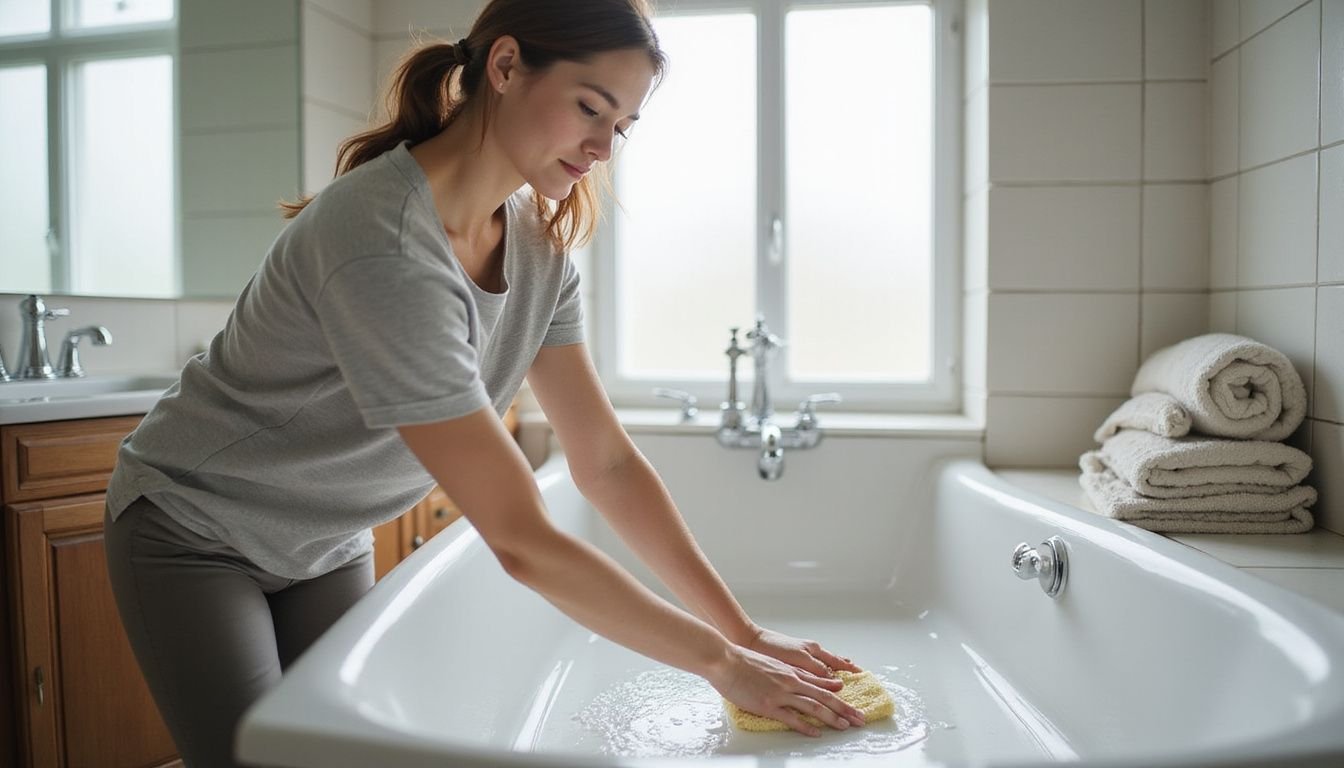
Ensuring a gleaming bathtub requires suitable tools and cleaning essentials. Homeowners and parents necessitate these elements for a comprehensive cleanse.
- A concoction of uniform parts of white vinegar and dish soap acts as an efficient DIY cleaner to eliminate soap scum.
- For more resilient stains, a paste originating from double the quantity of baking soda along with a single part of hydrogen peroxide eradicates grime without scratching porcelain or acrylic surfaces.
- Non-abrasive sponges and soft clothes are delicate on all bathtub varieties but tough on dirt.
- Baking soda by itself has moderate abrasive properties, rendering it ideal for cleaning porcelain bathtubs without inflicting any damage.
- An electric scrub brush or mop can simplify the cleaning process by supplementing extra power to eradicate stubborn stains.
- A drain cover provides effective clog clearing after the use of baking soda and vinegar, securing an open and fully operational drain.
- Chlorine-based bleach has the capacity to disinfect and whiten, but it’s vital to use it cautiously to avoid damaging the bathtub’s surface.
- Oxygen bleach presents a gentler option for eliminating mold and mildew without the intense odors associated with chlorine bleach.
- In conclusion, a detachable showerhead proves to be beneficial in efficiently rinsing off all cleaning products from the bathtub’s entirety.
These essentials simplify the cleaning process and also safeguard your bathtub’s finish for a prolonged shine.https://www.youtube.com/watch?v=qq9LlwTajPw
Step-by-Step Bathtub Cleaning Process
Cleaning a bathtub requires a clear method to achieve a fresh finish. Start by preparing the area and gathering cleaning supplies before applying any solutions.
Pre-cleaning preparation
Clear away shampoo bottles, soap bars, and kids’ toys from the bathtub area. Remove hair and debris from the drain with gloved hands or a paper towel. Make sure to check for any sharp or breakable items left on ledges near your porcelain bathtub or acrylic bathtub.
Open a window or switch on a bathroom fan for good airflow.
Gather all essential cleaning supplies before starting the process. Place rubber gloves, scrub brushes, sponges, baking soda, an old toothbrush for corners, and your chosen cleaning solution nearby.
Pull out the shower head if using it to rinse later in your cleaning routine. Move to applying cleaning solutions once everything is ready and within reach.
Applying cleaning solutions
After clearing out loose debris and prepping the bathtub, it’s time to apply cleaning solutions. Spray a mix of equal parts white vinegar and blue Dawn dish soap across the surface for most bathtub cleaning jobs.
Allow this to sit for 10 to 15 minutes so it can break down soap scum on porcelain or acrylic tubs.
For persistent stains, mix two parts baking soda with one part hydrogen peroxide until a thick paste forms. Spread this directly over tough spots such as stubborn mold, then let it work for at least half an hour.
People with hard water buildup can sprinkle baking soda onto the wet tub surface first, then pour white vinegar along problem areas for bubbling action that loosens grime fast. Always use a non-abrasive sponge or electric scrub brush after these steps to protect delicate finishes while keeping your routine safe and effective.
Scrubbing and rinsing techniques
Use a non-abrasive sponge to scrub the bathtub. This technique helps prevent scratches on surfaces like porcelain and acrylic. Apply cleaning solutions and let them sit for about 10 to 15 minutes.
This waiting time allows the mixture to break down soap scum effectively.
For stubborn stains, create a paste using two parts baking soda and one part hydrogen peroxide. Scrub this paste into tough spots for better results. Pay special attention to hidden areas behind faucets and along caulk lines while scrubbing thoroughly.
After scrubbing, rinse the bathtub with hot water until all residue washes away completely. A spotless finish awaits as you explore tips for tackling stubborn stains and mold next.
Tips for Stubborn Stains and Mold
Stubborn stains and mold can ruin the appearance of a bathtub. An effective cleaning solution combines equal parts white vinegar and dish soap. This mixture helps break down soap scum and grime with ease.
For tough stains, create a paste using two parts baking soda and one part hydrogen peroxide. Apply this paste directly to the stain, letting it sit for about 10 minutes before scrubbing.
To combat mold growth, sprinkle baking soda in affected areas, then spray with vinegar. Scrub these spots thoroughly to remove all traces of mold and mildew. After any cleaning method, rinse the surface well with hot water; this step eliminates residue that could attract more dirt or grime.
Focus on hidden places like behind faucets or caulk lines for complete cleanliness while tackling stubborn problems effectively leads into preventative maintenance strategies for a spotless bathtub.
Preventative Maintenance for a Spotless Bathtub
Transitioning from tips for stubborn stains and mold, preventative maintenance plays a key role in keeping bathtubs spotless. Rinsing the bathtub after each use helps minimize soap scum and buildup.
Using a squeegee to remove excess water immediately after baths or showers prevents moisture accumulation that can lead to mold.
Homeowners should keep the bathroom well-ventilated. Proper airflow reduces humidity levels and discourages mildew growth. Regularly cleaning hidden areas, like behind faucets and overflow drains, ensures comprehensive maintenance.
For acrylic or fiberglass tubs, always opt for non-abrasive cleaners; they prevent damage while maintaining shine. Address stubborn drain clogs by combining baking soda with vinegar before flushing with boiling water to restore proper flow.
Conclusion
Cleaning a bathtub does not have to be a chore. With the right tools and methods, anyone can achieve a spotless finish. Mix vinegar with dish soap for effective results. Scrub tough stains with a baking soda paste.
Regular maintenance keeps mold at bay and ensures freshness after every soak. Enjoy your gleaming tub!
FAQs
1. How often should I clean my bathtub for a spotless, fresh finish every time?
Clean your tub at least once a week. Regular cleaning prevents soap scum and grime from building up, which keeps the surface shiny and safe.
2. What supplies work best to remove tough stains in bathtubs?
Use baking soda with white vinegar or hydrogen peroxide for most stains. These cleaners break down residue without damaging porcelain or acrylic surfaces.
3. Can I use regular dish soap to clean the bathtub?
Yes, dish detergent cuts through grease and light dirt effectively on many tub surfaces. For deeper cleaning or mold, pair it with scrubbing pads designed for bathroom fixtures.
4. Are there common myths about keeping bathtubs spotless that are not true?
Many believe bleach is always best for deep cleaning; however, it can harm some finishes over time. Gentle cleansers paired with consistent upkeep deliver lasting results without damage.