
Cleaning a bathtub can feel like an endless task, especially when soap scum and stains just will not budge. Many people reach for harsh chemical cleaners or even household bleach, which may damage surfaces such as an acrylic bathtub or fiberglass bathtub.
These strong cleaning products can also be dangerous to children and pets.
There is good news. Using natural cleaning solutions with baking soda and white vinegar cleans your tub without harming it. A simple scrub brush, dish soap, and a microfiber cloth work together to remove grime while keeping harmful microorganisms away.
This blog will show you how to clean your bathtub like a pro with easy steps using safe ingredients found in most homes.
Find out below how simple changes make bathroom maintenance easier every week!
Key Takeaways
- Use baking soda and white vinegar to clean your bathtub safely. This method avoids harsh chemicals that may harm acrylic or fiberglass tubs and is safe for kids and pets.
- A soft-bristled brush, dish soap, and a microfiber cloth help remove grime. These tools prevent scratches on delicate finishes while removing mold, mildew, and soap scum.
- For tough stains like rust or mold, apply a paste of baking soda and hydrogen peroxide. Let it sit 10–20 minutes before scrubbing gently.
- Always rinse the tub well with warm water after cleaning. Dry with a microfiber cloth to stop water spots and mold from forming.
- Cleaning weekly with natural solutions keeps your bathtub sparkling clean without using bleach or sodium hypochlorite.
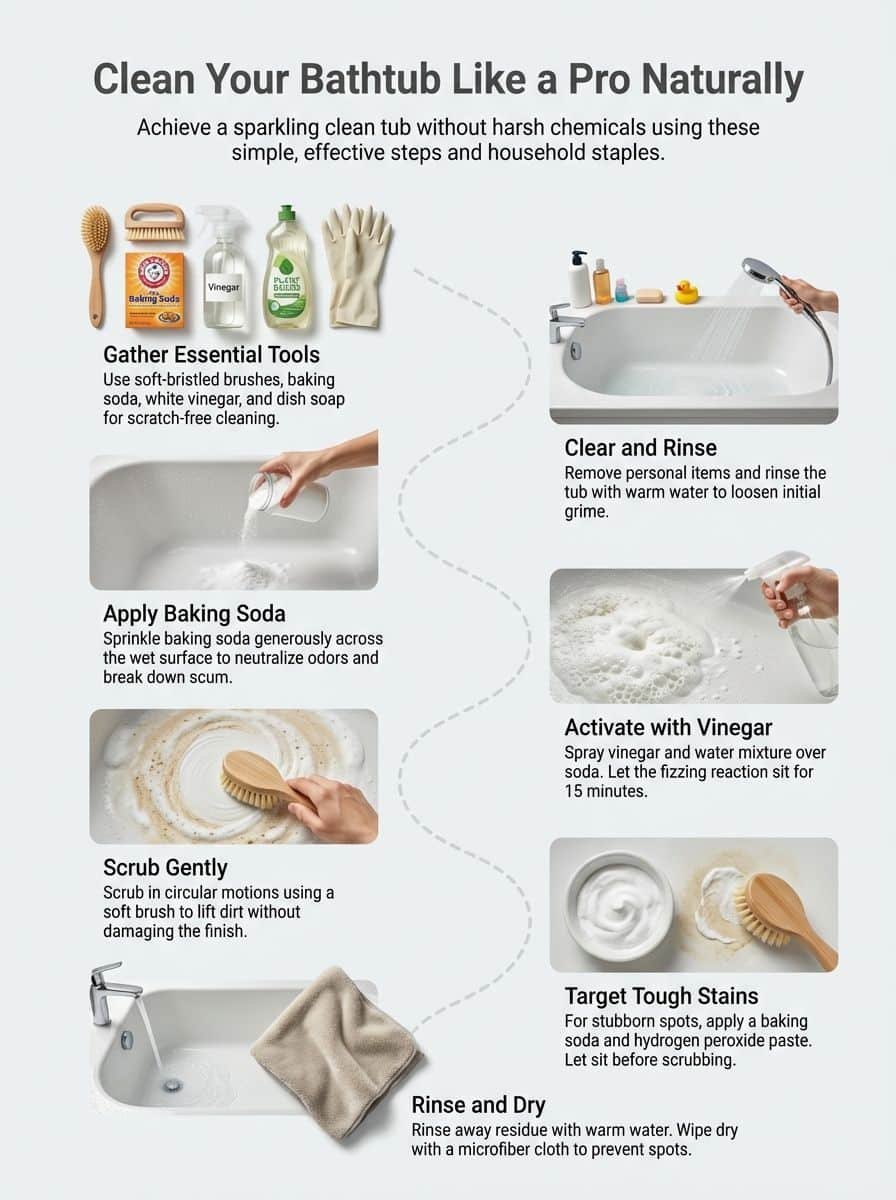
Essential Tools and Supplies for Cleaning
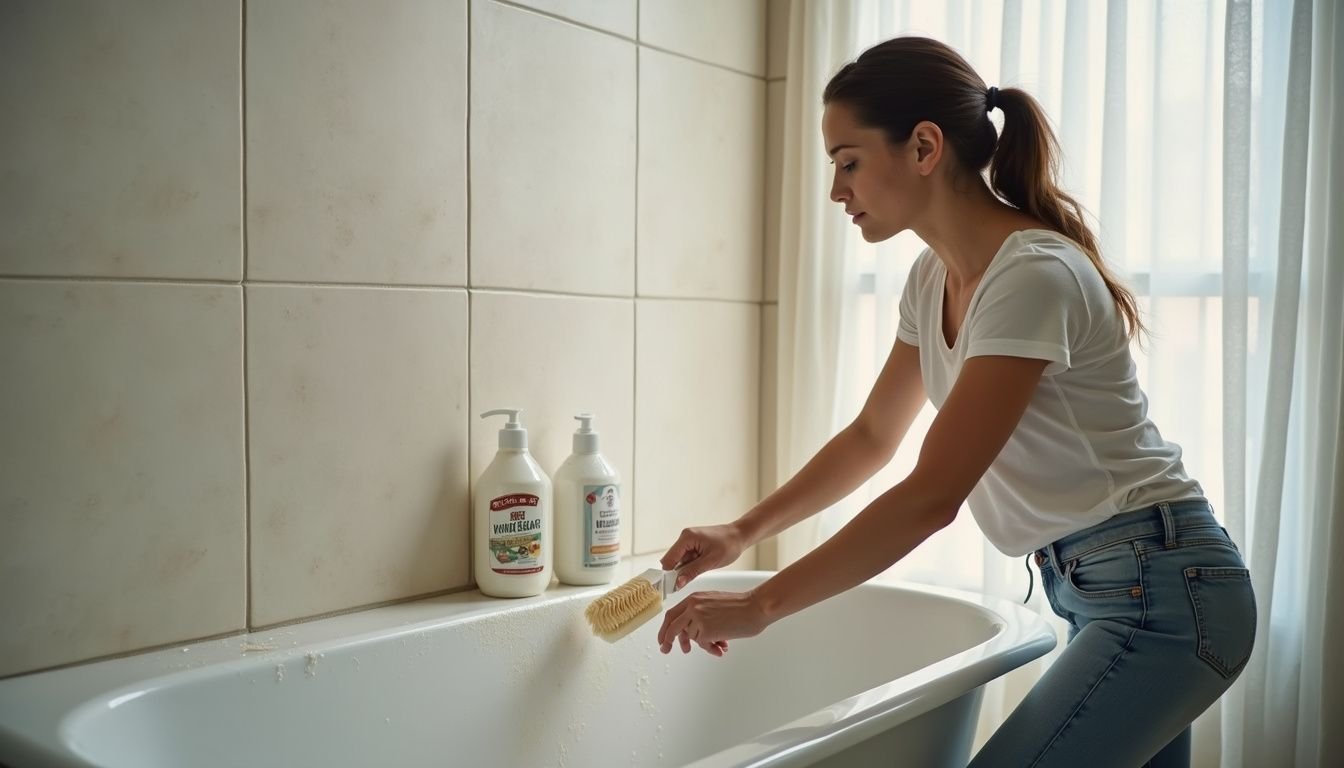
Cleaning a bathtub requires some key tools and supplies. A soft-bristled brush works wonders for scrubbing without scratching. Baking soda serves as a gentle abrasive, while white vinegar cuts through soap scum easily.
Dish soap helps break down grime effectively during the process.
Soft-bristled brush
A soft-bristled brush protects both acrylic bathtubs and porcelain tubs from scratches. Its gentle fibers reach deep into corners and crevices, making it easy to remove soap scum without wearing down delicate finishes.
Brands that use stiffer scrub brushes or metal pads risk causing tiny grooves, which trap bacteria like staphylococcus over time.
Pairing a soft-bristled brush with baking soda paste or dish soap gives families a safe way to tackle mold and mildew while keeping surfaces smooth and bright. This cleaning tool works well for regular bathtub cleaning, bathroom maintenance, and even whitening jobs in fiberglass bathtubs or whirlpool tubs.
Parents can avoid corrosive substances like sodium hypochlorite by sticking with this simple solution. Proper use stops unhygienic grit buildup while extending the life of bathroom fixtures.
Baking soda
Baking soda acts as a gentle abrasive that lifts stains and soap scum from any bathtub surface, including acrylic, fiberglass, and porcelain bathtubs. Many parents use it as a natural cleaning solution because sodium bicarbonate does not corrode fixtures or release fumes like chlorine bleach or sodium hypochlorite.
Create an effective paste by mixing baking soda with water; this makes general bathtub cleaning easy and safe for kids and pets.
Sprinkling baking soda on wet surfaces helps break down grime fast. For tough rust stains or persistent mold and mildew, combine baking soda with white vinegar for extra power against hard water minerals too.
Deep cleaning requires a paste made from baking soda mixed with hydrogen peroxide, which targets stubborn dirt without damaging tubs or shower heads. Always rinse thoroughly after scrubbing to remove any leftover residue before drying the area with a microfiber cloth for best results in bathroom maintenance routines.
White vinegar
White vinegar breaks down soap scum and stubborn mineral deposits in porcelain or acrylic bathtubs. Mixed with baking soda, it creates a powerful natural cleaning solution that removes stains without sodium hypochlorite or harsh chemicals.
Parents can use this mixture to target grime, odors, and even mold on fiberglass surfaces. Lab tests show white vinegar lifts dirt while protecting finishes from damage.
The acidity in vinegar combines with baking soda to lift stuck-on residue left behind by showers, toiletries, and bath products. Many professional cleaning tips recommend rinsing thoroughly after using vinegar-based solutions so no lingering smells stick around.
After learning about white vinegar’s role in bathtub cleaning, the next step covers how to prepare your tub before scrubbing begins.
Dish soap
Dish soap serves as a mild cleaner that works well for scrubbing bathtubs. Many homeowners find it effective in tackling light dirt and grime. When combined with a baking soda paste, dish soap enhances cleaning power to remove stubborn soap scum.
Regular use of this solution keeps tubs looking fresh without the need for harsh chemicals.
After using dish soap, rinsing the bathtub thoroughly is essential. This step ensures no residue remains behind, keeping surfaces clean and safe. For parents and house owners alike, incorporating dish soap into their cleaning routine can simplify bathroom maintenance while promoting a healthier home environment.
Preparing Your Bathtub for Cleaning
Start by clearing the tub of any personal items. Next, give it a good rinse with warm water to loosen any grime. This simple prep work sets the stage for a thorough clean. For more cleaning tips, keep reading!
Remove any items from the tub
Clear the bathtub of any items before starting the cleaning process. Take out all products, toys, and accessories. This step helps in reaching every corner and ensures a thorough clean.
A clutter-free space allows for better scrubbing and rinsing without obstacles. Once everything is removed, check for soap scum or stains on surfaces. Knowing the state of your tub will guide the next steps in cleaning effectively with natural solutions like baking soda and white vinegar.
Rinse the tub with warm water
Warm water loosens dirt and grime from the tub’s surface. It helps prepare the area for effective cleaning. By rinsing before applying any cleaning solution, homeowners ensure that products work better on soap scum or mildew.
This step also prevents residue buildup and water spots after cleaning.
Once rinsed, the tub is ready for a thorough scrubbing with natural solutions like baking soda and white vinegar. These ingredients will tackle tough stains effectively.
Step-by-Step Cleaning Process
To clean your bathtub effectively, sprinkle baking soda across the surface and spray a vinegar and water solution on top. This combination will create a fizzy reaction that helps lift grime.
Let the mixture sit for about 10 to 15 minutes before gently scrubbing with a soft brush or an old toothbrush. Using these simple steps, anyone can achieve a sparkling clean tub without harsh chemicals.
Curious about more cleaning tips?
Sprinkle baking soda across the tub’s surface
Sprinkle baking soda uniformly across the surface of the tub. This powder acts as a powerful natural cleaner. It helps break down soap scum and grime effectively. Baking soda also neutralizes odors, making your bathtub smell fresh.
Once you cover the entire surface, it will create an abrasive layer that will not scratch acrylic or porcelain bathtubs. This simple step sets up for deeper cleaning later in the process.
Using baking soda makes tough stains easier to tackle with just a scrub brush and some natural cleaning solutions like white vinegar.
Spray a vinegar and water solution over the baking soda
After sprinkling baking soda across the tub’s surface, spray a solution of vinegar and water over it. This mixture creates a chemical reaction that helps lift dirt and grime. The fizzing action works away at soap scum and stains, making cleaning more effective.
Allow this combination to sit for 10 to 15 minutes.
Once the time is up, grab a soft-bristled brush to scrub gently at the stains. Use circular motions while applying just enough pressure without damaging surfaces like acrylic or porcelain bathtubs.
Rinsing thoroughly with warm water afterward will wash away any residue from the baking soda and vinegar mixture.
Let the mixture sit for 10-15 minutes
After spraying the vinegar and water solution over the baking soda, allow this mixture to work its magic. Let it sit for 10-15 minutes. During this time, the fizzing reaction breaks down soap scum and grime in the bathtub.
This waiting period enhances cleaning effectiveness. It gives the natural cleaning solutions—baking soda and white vinegar—the chance to penetrate tough stains. Scrubbing right away can limit results, so patience pays off here.
Scrub gently with a soft-bristled brush
Use a soft-bristled brush to scrub the bathtub. This tool helps remove soap scum and stains without scratching surfaces. Scrubbing in gentle circles improves cleaning effectiveness.
Focus on areas with mold, mildew, or rust stains for better results.
A clean acrylic bathtub shines after proper scrubbing. Hold the brush at a comfortable angle, applying light pressure as you work across the tub’s surface. Rinsing off baking soda and vinegar afterward reveals a sparkling finish that every homeowner appreciates.
Removing Tough Stains Naturally
Tough stains can ruin the look of a beautiful bathtub. A simple paste made from baking soda and hydrogen peroxide works wonders to eliminate them. Apply this paste directly onto the stain and let it sit for a while before scrubbing with an old toothbrush or scrub brush.
The natural ingredients will lift away even the most stubborn marks without harsh chemicals.
Use a paste of baking soda and hydrogen peroxide
A paste made from baking soda and hydrogen peroxide works wonders on stubborn stains. Homeowners can easily create this cleaning mixture. Combine equal parts of both ingredients in a small bowl until it forms a thick paste.
Apply the paste directly to the stained areas of the bathtub.
Allow it to sit for about 10-15 minutes; this time lets the solution penetrate deep into grime and mildew. Afterward, scrub gently with a soft-bristled brush or an old toothbrush. This method effectively tackles rust stains, soap scum, and mold without harsh chemicals.
Rinse thoroughly afterward to remove all residue before drying with a clean microfiber cloth for best results.
Apply and let sit before scrubbing
Create a paste using baking soda and hydrogen peroxide. Once mixed, apply the paste to tough stains on the tub. Let it sit for 15-20 minutes to break down soap scum and rust stains effectively.
This waiting period enhances cleaning results. Afterward, scrub gently with a soft-bristled brush or an old toothbrush.
After scrubbing, rinse thoroughly with warm water to remove any residue from the cleaning solution. The combination of active ingredients works well on acrylic and porcelain bathtubs alike.
For best results, ensure proper bathroom ventilation during the process; this helps keep mold and mildew at bay while you work on maintaining your tub’s cleanliness.
Final Rinse and Drying
After scrubbing, homeowners should rinse the tub with warm water. This step removes all cleaning residue and leaves surfaces sparkling clean. Wiping the tub dry with a microfiber cloth prevents water spots and mold growth.
Regular care keeps bathtubs looking fresh for everyday use.
Rinse thoroughly with warm water
Rinse the bathtub thoroughly with warm water after cleaning. This step helps eliminate any leftover cleaner or grime. Warm water works well to loosen dirt and soap scum, making it easier to rinse away.
A proper rinse prevents residue build-up, which can lead to unsightly water spots.
Incorporate rinsing into your cleaning routine regularly. It ensures your acrylic, fiberglass, or porcelain bathtub stays spotless and maintains its shine. After rinsing, use a clean microfiber cloth to wipe the tub dry for a polished finish.
This simple task contributes significantly to effective bathroom maintenance.
Wipe the tub dry with a clean cloth
Wipe the tub dry with a clean microfiber cloth after rinsing. This simple step helps prevent water spots that can dull the surface over time. A dry acrylic or porcelain bathtub looks brighter and cleaner.
Clean tubs also resist mold, mildew, and rust stains. Maintaining cleanliness is essential for long-term tub care. Once finished, take pride in your sparkling clean space!
Conclusion
Cleaning a bathtub can be simple and effective. Using natural ingredients like baking soda and vinegar works wonders on soap scum and stains. Regular maintenance keeps the tub sparkling clean for everyone.
Parents and homeowners alike can feel confident tackling this task without harsh chemicals. With these tips, anyone can achieve a professional-level shine in their bathroom.
FAQs
1. What natural cleaning solutions work best for removing soap scum from a bathtub?
Mix baking soda with white vinegar to form a cleaning paste. Use this on acrylic or porcelain bathtubs to break down soap scum without harsh chemicals.
2. How do I clean mold and mildew in my fiberglass bathtub?
Scrub mold and mildew using an old toothbrush dipped in a mix of dish soap and white vinegar. Rinse the area well, then dry with a microfiber cloth for proper tub maintenance.
3. What tools should I use for effective bathtub cleaning?
A scrub brush works well on tough stains like rust stains, while an old toothbrush helps reach small spots around the drain or fixtures. Always finish with a microfiber cloth to remove residue.
4. Can these methods help maintain bathroom ventilation and prevent fungi growth?
Yes, regular use of natural cleaning solutions keeps surfaces clean, reducing fungi risk. Good bathroom ventilation also helps keep your tub free from excess moisture that causes mold.
5. Are all-purpose cleaners safe for every type of bathtub surface?
Not all are safe; some contain sodium hypochlorite which can damage acrylic or fiberglass tubs over time. Stick to gentle options like baking soda, dish soap, and white vinegar for regular bathroom maintenance instead of harsh franchise products.