
Cleaning the bathtub can feel like a big chore, especially if soap scum, grit, or hard water stains keep coming back. Many people struggle with keeping their bathroom clean and worry about harmful microorganisms spreading in an unhygienic tub.
Dirty tubs can make baths and showers unpleasant for everyone at home.
One quick fact: baking soda mixed with white vinegar is a powerful natural cleaner that fights grime without using harsh chemical cleaners. This method uses common household supplies like dish soap, scrub brushes, and microfiber cloths to protect your family while getting rid of stains and smells.
This guide on How To Clean Your Bathtub shows easy steps anyone can follow. Readers will find the right cleaning products for each tub type; learn which tools work best; try simple recipes with sodium bicarbonate; and get maintenance tips to boost bathroom hygiene every week.
Find out how to make deep cleaning fast and safe below!
Key Takeaways
- Use simple supplies like baking soda, white vinegar, dish soap, and a scrub brush to clean most tubs. Baking soda with vinegar creates a safe cleaner that fights grime without harsh chemicals.
- Always rinse the tub first to remove loose dirt before applying any cleaning solution. Let your cleaners sit for 10–30 minutes so they can work on tough stains.
- Different tub types need different care: acrylic needs mild soap; porcelain works well with baking soda or diluted vinegar; fiberglass cleans best with gentle cleaners and non-abrasive brushes.
- For stubborn stains or mold, use hydrogen peroxide mixed with baking soda. Wear gloves and keep the area ventilated while using it to avoid skin irritation or fumes.
- To keep tubs clean longer, rinse after each use and dry thoroughly with a microfiber cloth. Regular weekly maintenance prevents buildup of soap scum and water spots.

Essential Cleaning Supplies for Your Bathtub
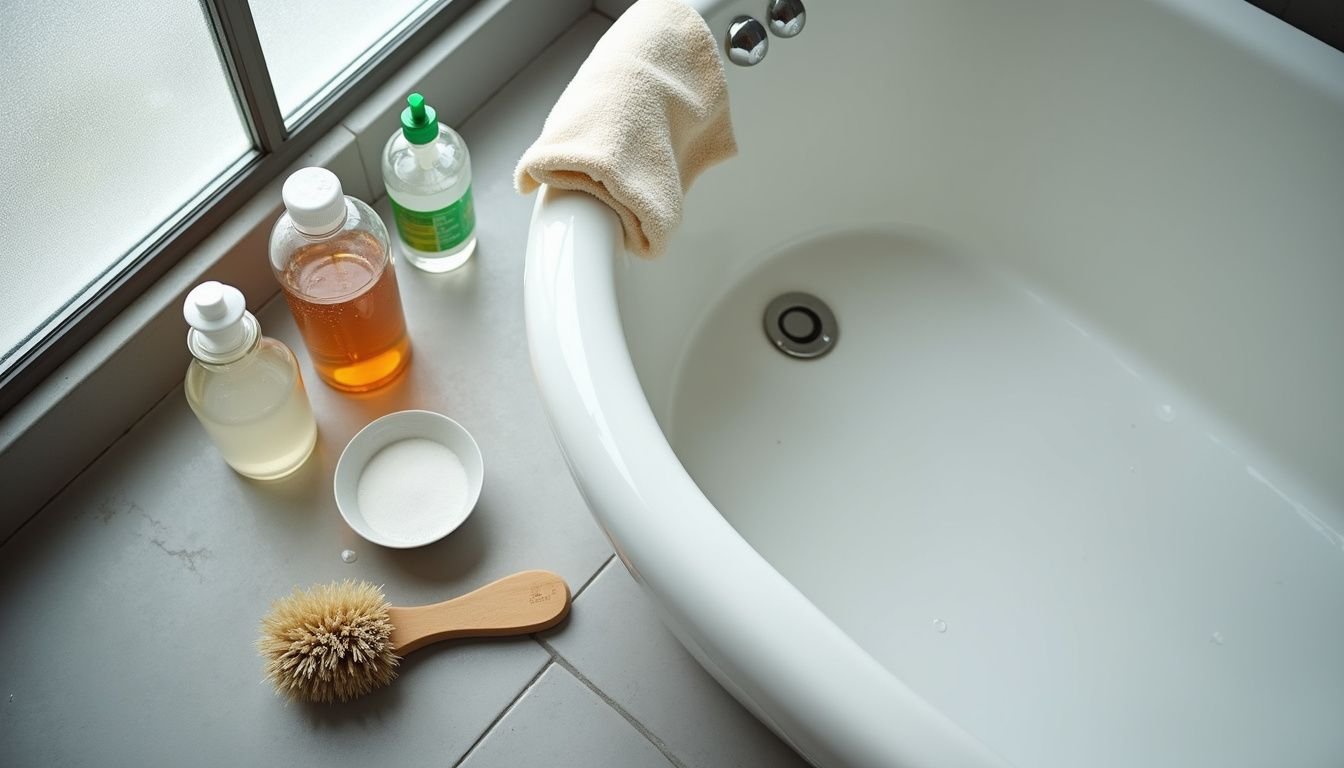
Cleaning your bathtub effectively requires the right supplies. These essentials will help remove soap scum, stains, and ensure bathroom hygiene.
- Scrub brush: A sturdy scrub brush is crucial for removing tough dirt and grime from the surface of your tub.
- Microfiber cloth: Use this for wiping down the tub after cleaning. It leaves surfaces without streaks and captures moisture well.
- White vinegar: This natural cleaner cuts through soap scum and mineral deposits found in hard water.
- Baking soda: When combined with vinegar, baking soda acts as a gentle abrasive that whitens and cleans without scratching surfaces.
- Hydrogen peroxide: For tougher stains, hydrogen peroxide can act as a bleaching agent that targets mold and mildew.
- Dish soap: A drop of dish soap can help break down oil and grease, making it easier to clean filmy residues.
- All-purpose cleaner: Keep an all-purpose cleaner on hand for regular maintenance and a quick wipe-down of your bathtub.
With these supplies ready, you’re prepared to engage profoundly in cleaning your bathtub next.https://www.youtube.com/watch?v=KVV1xDGdR5k
Step-by-Step Guide to Clean a Bathtub
Cleaning a bathtub can feel overwhelming, but following clear steps makes it easy. Start by removing any toiletries and rinsing the tub to eliminate loose dirt before applying your chosen cleaning solution.
Remove items and rinse the tub
Start by placing all toiletries, bath toys, and removable whirlpool heads outside the bathtub. This clears the way for deep cleaning and stops items like soap bars or shampoo bottles from building up grime around their bases.
House owners should not overlook hidden spots behind shower heads or corners where fungi might grow.
Next, use warm water from the shower head to rinse away loose debris and dust. A strong pre-rinse helps prevent scratches caused by rubbing particles into acrylic or fiberglass surfaces with a scrub brush later on.
White vinegar can break down light soap scum if you notice any after rinsing. Leave the tub surface damp since this helps cleaning solutions spread evenly in the next step of bathroom cleaning.
Apply the cleaning solution
After clearing away bath toys, shampoo bottles, and rinsing the tub with warm water, prepare a cleaning solution using common household items. Mix baking soda with enough water to make a thick paste for tackling built-up soap scum or whitening tough spots.
For an all-purpose approach, blend equal parts of white vinegar, dish soap, and water in a spray bottle. Spray or spread the mixture across the bathtub’s surface until every stained area gets coated.
Let this cleaner rest undisturbed for at least 10 minutes; set a timer if needed for up to 30 minutes on deep bathroom cleaning days or stubborn stains. This waiting period helps soften deposits so removal becomes much easier during scrubbing.
Applying these non-corrosive substances prevents damage that harsh chemicals can cause to acrylic and fiberglass tubs while helping maintain good bathroom hygiene. Avoid skipping this critical step before reaching for your scrub brush or microfiber cloth.
Scrub problem areas
Next, focus on scrubbing problem areas. Start by identifying spots with soap scum, mildew, and hard water stains. These areas often hide in corners and crevices where dirt accumulates.
After the cleaning solution has sat for a while, use a soft brush or sponge to scrub these trouble zones.
Apply extra cleaning solution to stubborn spots before you scrub them down. Make sure to pay attention as you clean; regular scrubbing can prevent buildup over time. This practice also helps maintain bathroom hygiene and keeps your bathtub looking fresh and clean.
Rinse and dry thoroughly
Rinse the bathtub well after scrubbing. This step removes all cleaning agents and dirt. Use warm water to ensure a thorough rinse. After rinsing, grab a microfiber cloth for drying.
Wipe down all surfaces to prevent water spots and mildew growth. Keeping your bathtub dry helps maintain bathroom hygiene and reduces the chance of soap scum buildup in the future.
Proper rinsing and drying contribute significantly to cleanliness in a home, ensuring that families enjoy a fresh environment every time they use the tub.
Natural Cleaning Solutions
Natural cleaning solutions can work wonders for your bathtub. Baking soda and white vinegar create a fizzing reaction that cuts through soap scum. This combination is safe and effective for most surfaces.
Another option, hydrogen peroxide, tackles tough stains with ease. Using these ingredients ensures a clean tub without harsh chemicals.
Baking soda and vinegar
Baking soda and vinegar work well together as a cleaning solution. Mix baking soda with water to form a paste. Apply this paste in areas with tough stains or soap scum on the bathtub’s surface.
For extra cleaning power, spray a solution of equal parts white vinegar, water, and dish soap over the tub after applying the paste.
The chemical reaction between baking soda and vinegar helps break down grime effectively. Always wear gloves during this process for protection. Ensure good ventilation to keep the air fresh while you clean your bathtub.
Regular use of diluted vinegar mixed with water can maintain cleanliness too.
Hydrogen peroxide for tough stains
Hydrogen peroxide effectively tackles tough stains in bathtubs. It works best when mixed with baking soda in a 2:1 ratio to create a paste. This mixture breaks down grime and discoloration easily.
House owners should apply this paste directly to stained areas and allow it to sit for about 30 minutes before scrubbing with a brush.
Proper ventilation is crucial while using hydrogen peroxide, as it can release strong fumes. Wearing gloves protects the skin from irritation during cleaning. Following these steps ensures a clean bathtub without harsh chemicals, leading into natural cleaning solutions like baking soda and vinegar that also assist in maintaining bathroom hygiene.
Cleaning Tips for Different Bathtub Materials
Different bathtub materials require unique care. Acrylic tubs need gentle cleaning solutions to avoid scratches. Porcelain-enameled tubs benefit from milder abrasives to prevent chipping.
Fiberglass tubs shine with non-abrasive cleaners that won’t dull their surface. Use a soft scrub brush for all types and rinse well after cleaning.
Acrylic tubs
Acrylic tubs require special care during cleaning. Use a mild dish soap mixed with water for regular maintenance. This solution effectively removes dirt and soap scum without harming the surface.
For stubborn stains, try baking soda and white vinegar. Sprinkle baking soda over the stain, then spray vinegar on top; this combination will help lift tough spots.
Scrubbing gently with a soft scrub brush works well to avoid scratches. After cleaning, rinse thoroughly with warm water. Drying it immediately using a microfiber cloth prevents water spots and keeps it shiny.
Regular attention helps maintain its beauty and prolongs its life significantly.
Porcelain-enameled tubs
Moving from acrylic tubs, porcelain-enameled tubs require special care. House owners must clean them gently to prevent damage. Using harsh or abrasive cleaners can scratch the surface and lead to costly repairs.
A baking soda paste works wonders for regular cleaning. Mixing vinegar with water also provides effective results without harming the finish. To deal with soap scum, fill the tub with hot water and add dish soap; let it sit before scrubbing.
Regular maintenance every week using diluted vinegar or dish soap mixed with water keeps these tubs looking pristine. Always wear gloves while cleaning and ensure good ventilation during this process for safety reasons.
Fiberglass tubs
Fiberglass tubs require specific care to maintain their shine and durability. To clean these surfaces, use a gentle dish soap mixed with warm water. A scrub brush works well for removing soap scum without scratching the surface.
For tougher stains, consider using a solution of baking soda and white vinegar. Apply it directly to the stained area; let it sit before scrubbing.
After cleaning, rinse the tub thoroughly with warm water. Make sure no residue remains, as this can lead to build-up over time. Drying the tub with a microfiber cloth helps prevent water spots and keeps it looking fresh.
Regular deep cleaning will ensure that fiberglass tubs stay in excellent condition for years to come.
Maintenance Tips to Keep Your Bathtub Clean
Maintaining a clean bathtub requires regular care and attention. House owners and parents can make cleaning easier by following these simple tips.
- Remove items from the bathtub before each cleaning session. This keeps the area clear and allows for thorough cleaning.
- Rinse the tub with warm water to eliminate loose debris. A quick rinse helps prepare the surfaces for deeper cleaning.
- Apply a natural cleaner, such as diluted vinegar or dish soap, weekly. This helps prevent soap scum buildup and maintains bathroom hygiene.
- Scrub problem areas with a scrub brush every few weeks. Focus on spots where dirt gathers, like corners and faucets.
- Allow any cleaning solution to sit for 10 to 30 minutes before scrubbing. This time lets the cleaner penetrate tough stains effectively.
- Use baking soda paste or a vinegar-dish soap mixture for deep cleaning occasionally. These solutions tackle stubborn stains without harsh chemicals.
- Dry the tub thoroughly after each use with a microfiber cloth. This prevents water spots and reduces mold growth in humid conditions.
- Avoid abrasive cleaners on delicate surfaces, like acrylic tubs, to prevent damage over time. Stick to gentle products that maintain your tub’s finish.
Following these easy maintenance tips can keep your bathtub looking fresh and new while promoting bathroom hygiene effectively. The next section will explore various cleaning methods suitable for different bathtub materials.
Conclusion
Cleaning a bathtub can feel rewarding. Effective DIY methods make the task easier and keep the tub looking fresh. People should gather their supplies, like baking soda, vinegar, and a scrub brush before starting.
With these tips and tricks in hand, anyone can ensure bathroom hygiene stays top-notch. Keeping it clean also prevents long-term damage to various surfaces. A clean bathroom creates a welcoming space for family members and guests alike.
FAQs
1. What supplies do I need for bathtub cleaning at home?
You will need baking soda, white vinegar, dish soap, a scrub brush, and a microfiber cloth. These items help you clean your bathtub without harsh chemicals.
2. How can I remove soap scum from my tub?
Mix baking soda with dish soap to form a paste. Use the scrub brush to apply it on the soap scum spots. Rinse well with water and wipe dry using a microfiber cloth.
3. Is white vinegar safe for deep cleaning my tub?
White vinegar is effective for deep cleaning most tubs because it breaks down grime and helps maintain bathroom hygiene. Avoid using vinegar on stone surfaces since it may corrode them.
4. Can franchises offer better results than DIY methods?
Many franchises use similar products like baking soda or dish soap but charge more for service convenience. DIY methods work well if you follow proper steps and use quality tools.
5. Why should I avoid strong chemicals when I clean bathtubs?
Strong cleaners can damage some surfaces or corrode fixtures over time; they also pose health risks during bathroom cleaning tasks. Using simple ingredients such as baking soda and white vinegar keeps your bathtub safe while supporting good hygiene practices at home.