
Does your fridge smell funny or look messy inside? Many homeowners find old food, sticky spills, and strange odors piling up in their refrigerator. This can cause food spoilage and make the whole kitchen feel less fresh.
One key fact is that unplugging the appliance before cleaning is important for both safety and efficiency. Understanding how to clean a refrigerator does not need to be hard or time-consuming.
With simple tools like warm water, baking soda, an old toothbrush, dish soap, and a microfiber cloth, anyone can get great results.
This blog post shares practical “Tips To Cleaning Inside Refrigerator For A Fresher Kitchen.” Readers will learn step-by-step methods on using safe cleaning products and proven techniques for odor removal.
The guide also covers easy ways to prevent rotten food buildup with regular refrigerator maintenance.
Clear tricks for easy refrigerator organization await below—keep reading for simple solutions!
Key Takeaways
- Unplug the refrigerator before cleaning to ensure safety and save energy.
- Remove all food, shelves, and drawers for a thorough clean. Let glass reach room temperature before washing it to prevent cracks.
- Clean inside surfaces with 2 tablespoons of baking soda mixed in 1 quart of warm water using a microfiber cloth or non-scratch sponge.
- Pay extra attention to corners, rubber seals, and stains by scrubbing them with an old toothbrush and vinegar if needed.
- Place an open box of baking soda in the fridge to absorb odors, change it every three months, and wipe up spills right away to maintain freshness.
Preparation Before Cleaning
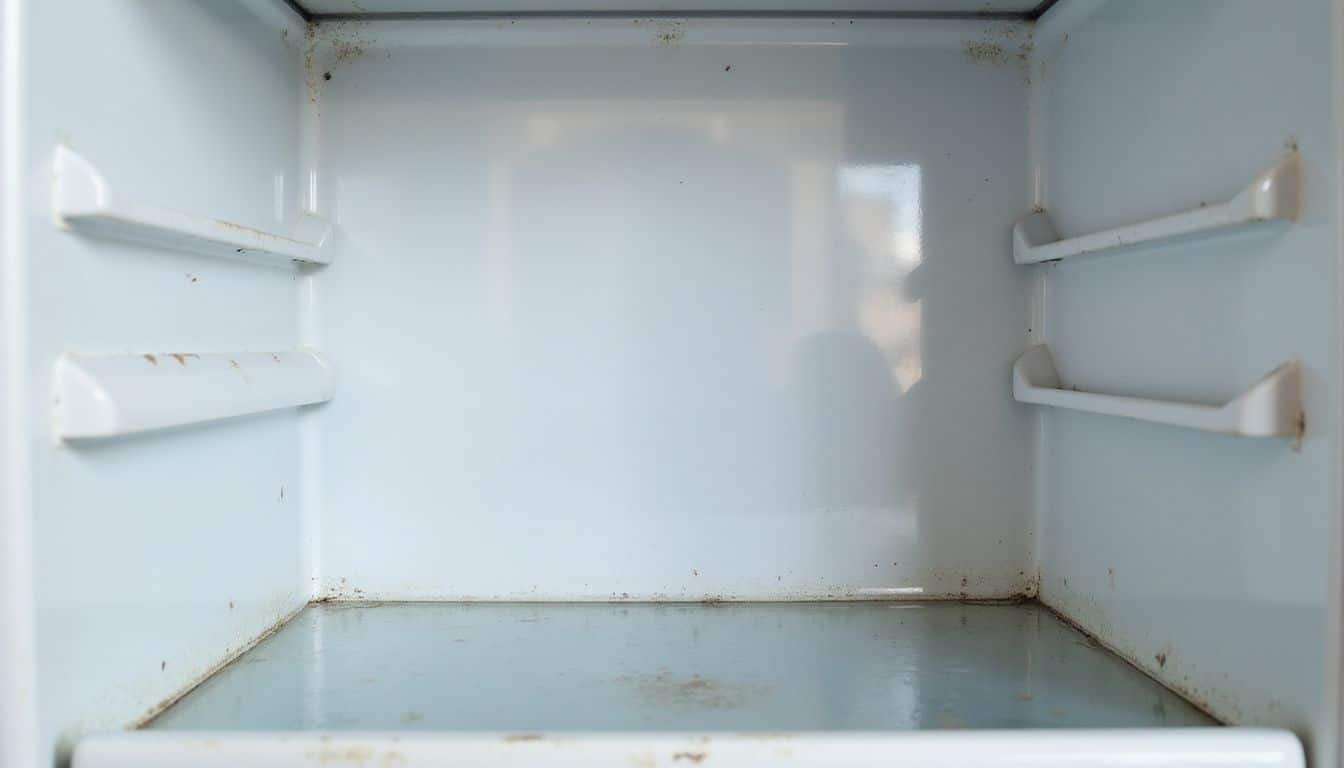
Before cleaning the refrigerator, homeowners should turn it off and empty all items. They need to remove shelves and bins for thorough cleaning.
Turn off the refrigerator and remove all items.
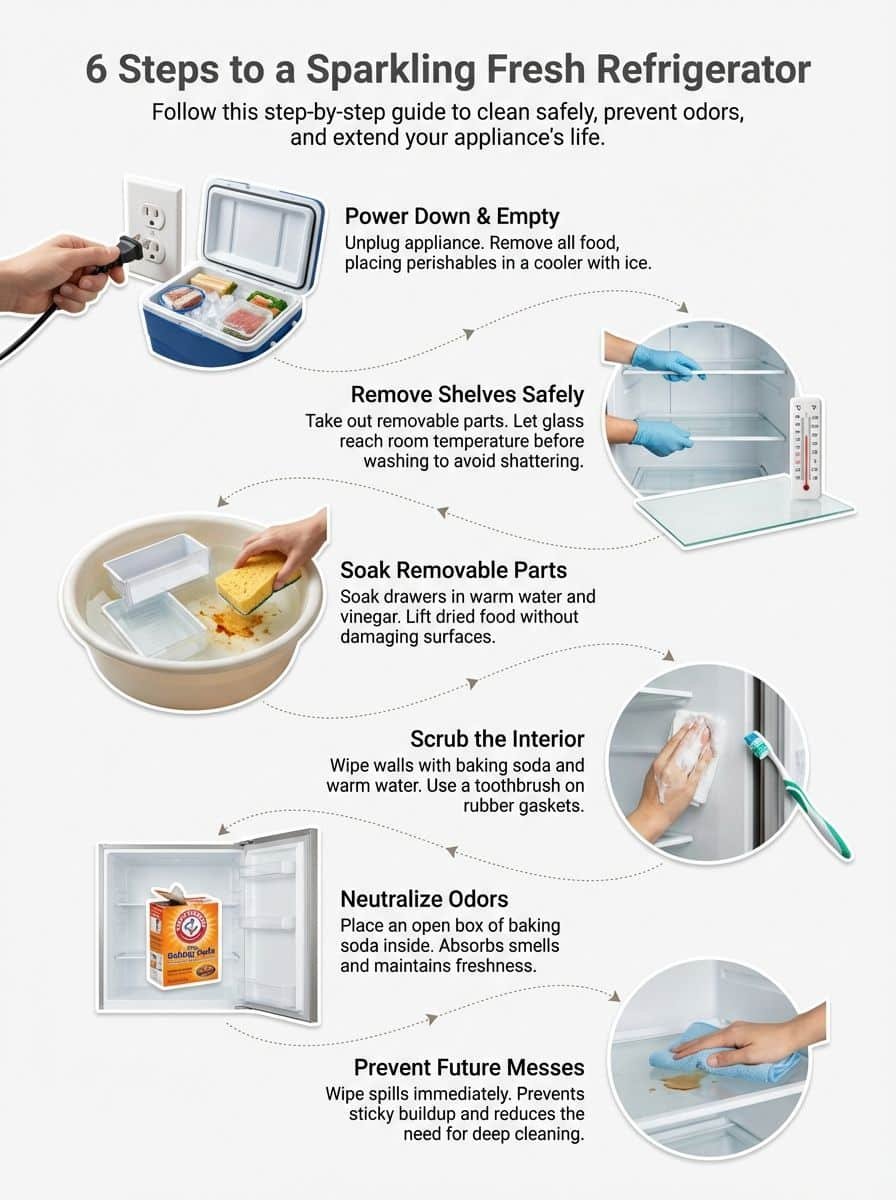
Unplug the refrigerator or turn the power off at the breaker before cleaning the interior. This stops energy use and keeps everyone safe during refrigerator cleaning. Take out everything inside, including food from both shelves and the deep freezer section.
Move items to a cooler with ice packs if they need to stay cold.
Take clear photos of shelf configurations for easy reassembly later. Handle glass shelves carefully and let them reach room temperature before washing to prevent shattering. Proper refrigeration maintenance starts here by preventing food spoilage and making space for thorough cleaning with a non-abrasive cleaner, baking soda, or warm water solution.
Take out shelves and drawers for separate cleaning.
Shelves and drawers need separate cleaning for best refrigerator maintenance. Remove them gently after snapping a picture of their layout to help with quick reassembly. Allow glass shelves to rest until they reach room temperature; this important step prevents cracks from sudden changes in temperature.
Soak all removable parts in warm water mixed with vinegar, which helps lift dried food and stains without damaging surfaces.
Use a non-scratch sponge or microfiber cloth for scrubbing to avoid scratching plastic or glass. This approach supports food spoilage prevention by reaching hidden areas where bacteria can grow.
Dry every shelf and drawer thoroughly before placing them back into the fridge—this keeps mold from forming during refrigerator organization. These actions serve as simple but effective refrigerator cleaning tips that make odor removal easier while extending the life of your appliance.
Cleaning the Interior
Cleaning the interior of a refrigerator requires attention and care. A blend of baking soda and warm water works wonders on surfaces, leaving them spotless. Use a microfiber cloth to wipe away dirt and grime.
For those tough spots, grab an old toothbrush to scrub corners and rubber seals effectively. Keeping a focus on these areas ensures no leftover stains linger after cleaning.
Use a mixture of baking soda and warm water to wipe surfaces.
Mix 2 tablespoons of baking soda with 1 quart of warm water to make an effective cleaning solution. This simple blend works well for refrigerator cleaning and helps eliminate odors naturally.
Use a non-scratch sponge or microfiber cloth to wipe interior surfaces, including shelves, drawers, walls, and rubber gaskets. Baking soda acts as a gentle scrub that will not damage plastic or glass materials.
Homeowners should pay extra attention to corners, tight spaces, and the rubber seal on the door. An old toothbrush can help remove hidden mold and debris from grooves without harming delicate parts.
Using this method reduces food spoilage risk by removing spills before they turn into stains. Professional cleaners and appliance technicians also recommend baking soda solutions for regular refrigerator maintenance due to their effectiveness at odor removal and safe residue-free results.
Pay special attention to corners, rubber gaskets, and stains.
Focus on corners, rubber gaskets, and stains during refrigerator cleaning. Rubber gaskets on doors trap moisture, which can lead to mold growth. Cleaning these areas prevents food debris from accumulating.
Use a non-scratch sponge to scrub them without causing damage.
Corners of shelves often hide dirt and stains. A mixture of vinegar and warm water works well for soaking removable parts before washing. This step effectively removes tough marks hidden away in those tight spots.
Regular attention to these details keeps the refrigerator looking fresh and organized while preventing unwanted odors from forming.
Keeping it Fresh
To keep the refrigerator fresh, place an open box of baking soda inside. This simple step helps absorb unwanted odors and keeps food tasting great. Wipe up any spills right away to prevent messes from building up over time.
Regular maintenance ensures that the fridge stays clean and organized, reducing food spoilage too.
Place a box of baking soda inside to absorb odors.
Placing a box of baking soda inside the refrigerator offers an effective way to absorb unpleasant smells. This simple method works well to prevent odor buildup from various foods. The baking soda neutralizes odors, keeping the fridge smelling fresh.
Using a box of baking soda enhances cleaning solutions for deeper hygiene. It acts as a natural deodorizer that eliminates food spoilage scents. Regularly replace the box every three months for best results in refrigerator maintenance and organization.
Wipe spills immediately to prevent buildup.
Wiping spills immediately helps keep the refrigerator clean. This simple action prevents sticky messes that can form over time. Regular cleanup maintains a fresher environment, reducing unpleasant odors.
Clean surfaces also make it easier to organize stored food and find items quickly.
Consistent maintenance is key for optimal refrigerator efficiency. By addressing spills right away, homeowners avoid bigger cleaning tasks later on. Keeping a microfiber cloth handy encourages quick responses to any accidents.
Using warm water mixed with baking soda enhances the cleaning process without damaging surfaces.
Conclusion
Cleaning the inside of a refrigerator refreshes any kitchen. Start by unplugging the unit and removing all items. Use warm water mixed with baking soda to clean shelves, drawers, and surfaces thoroughly.
After cleaning, dry everything well to prevent mold growth. Adding a box of baking soda helps absorb odors and keeps food fresh longer. Regular maintenance can make a big difference in the refrigerator’s cleanliness and efficiency.
FAQs
1. How often should you clean the inside of your refrigerator for proper maintenance?
Experts recommend cleaning the refrigerator every three to four months. Regular refrigerator cleaning helps prevent food spoilage and keeps odors away.
2. What is the best way to remove tough stains or sticky spills from shelves?
Use warm water mixed with a little baking soda as a non-abrasive cleaner. Scrub gently using a microfiber cloth or an old toothbrush for stubborn spots during refrigerator cleaning.
3. Which items are essential for effective odor removal inside the fridge?
Baking soda works well for odor removal in refrigerators, especially when placed in an open container on a shelf after cleaning.
4. How can better organization help prevent food spoilage in your fridge?
Proper refrigerator organization lets you see all stored foods easily, so nothing gets lost or forgotten at the back; this reduces waste and supports good maintenance habits.
5. Are there special steps needed when cleaning around ice makers or other built-in features?
Carefully wipe down parts like ice makers with warm water and a soft cloth; avoid harsh cleaners that might damage these components while maintaining overall cleanliness and function.