
Keeping a home clean feels like an endless task, especially for busy families. Many homeowners struggle to find time for deep cleaning, often feeling overwhelmed by constant mess and clutter.
Most people need quick solutions that actually work.
One useful fact is that decluttering before you start any big cleaning job helps make surfaces easier to wipe down and tidying up faster. Creating clear spaces sets the stage for effective and simple housekeeping.
This blog shares practical tips using items like baking soda, vinegar, and dish soap to speed up your routine. Readers will discover One Time Cleaning Tips along with smart tricks for efficient house maintenance.
Quick ideas await to help achieve rapid results in one go—keep reading to learn more!
Key Takeaways
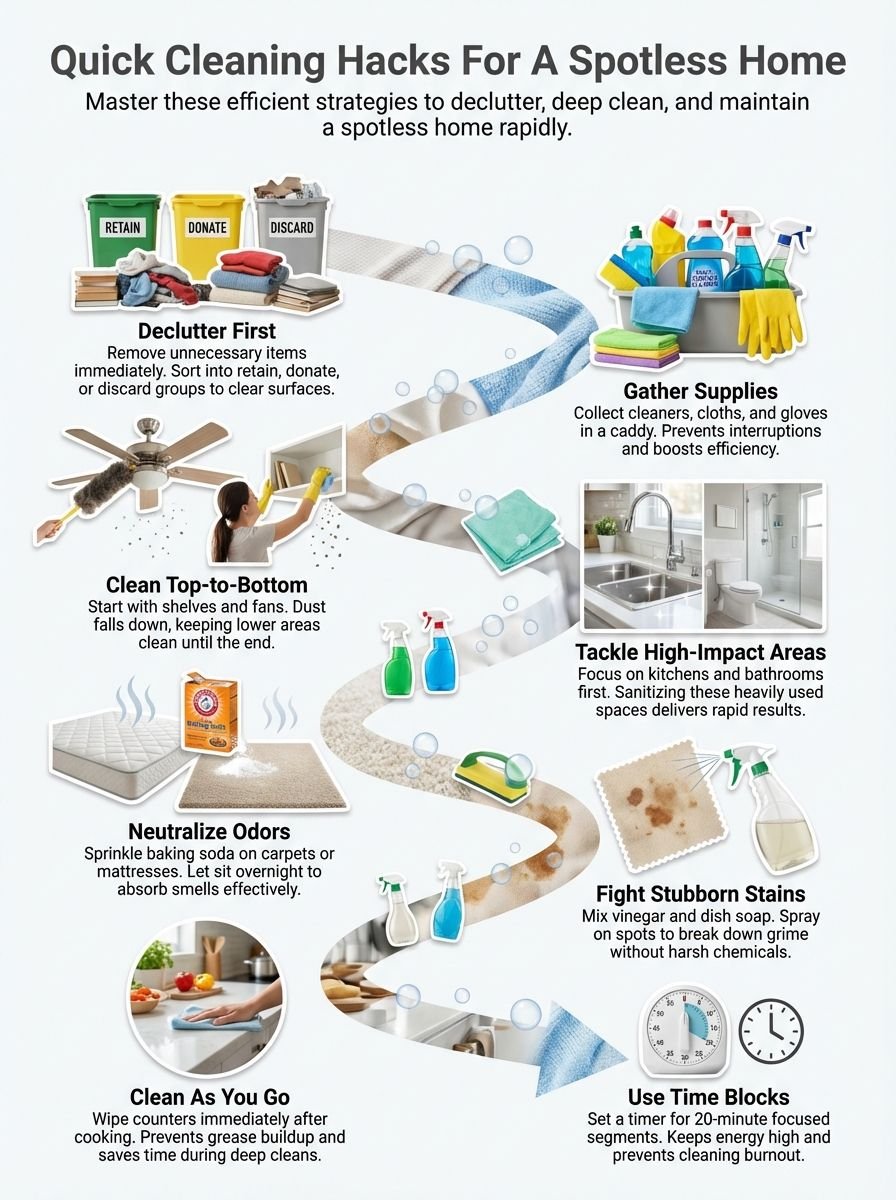
- Declutter each room before cleaning to make surfaces easier to wipe. Use the “retain, donate, or discard” method and involve all family members for faster results.
- Follow a top-to-bottom approach: clean shelves and fans first, then furniture, and save floors for last. This prevents dust from falling onto already-cleaned areas.
- Use baking soda to remove odors from carpets and mattresses. For stubborn stains on surfaces, mix equal parts vinegar and dish soap in a spray bottle.
- Focus on high-impact areas like kitchens and bathrooms first since these spaces collect dirt fastest. Wipe counters after cooking and do quick daily bathroom touch-ups.
- Work in blocks using timers—like 20 minutes or an hour—to keep energy up while tackling specific tasks one by one without feeling overwhelmed.
Prepare for Efficient Cleaning

To clean efficiently, homeowners must first declutter each room. They should gather all necessary cleaning supplies before starting the process.
Declutter Each Room
Removing unnecessary items from each room is the first step towards a clean, organized home. It paves the way for clear surfaces and spaces, which simplifies thorough cleaning.
- Begin with one room at a time to prevent unmanageable feelings. This strategy keeps the process under control and productive.
- Establish three sorting groups: retain, donate, or discard. This plan simplifies choices and accelerates the process.
- Use containers or bags to gather items for donation right away. Keeping these items out of view reduces disorder and creates extra space.
- Apply the two-minute rule for minor tasks like sorting mail or storing away laundry. If it takes fewer than two minutes, do it immediately.
- Spend on storage methods that match your living area and lifestyle. Shelves, boxes, and separators can transform disordered areas into structured ones.
- Mark storage boxes accurately. This step facilitates maintaining organization for all household members.
- Turn cleaning out into a routine chore rather than a one-off event. Daily maintenance stops mess from accumulating again.
- Motivate all house members to contribute to the cleanup efforts. Shared duties foster a cleaner setting and distribute the workload equally.
- Lastly, acknowledge progress after each cleaning session with a modest reward or break. This positive feedback promotes continuous effort for cleanliness and order.
These measures turn disordered rooms into neat spaces ready for deep cleaning, making the comprehensive chore of maintaining an immaculate home much more feasible.
Gather All Necessary Supplies
After decluttering each room, the next step ensures a smooth cleaning process. Homeowners and parents must gather all necessary supplies before starting. This preparation minimizes distractions and interruptions, making cleaning more efficient.
- Collect cleaning solutions such as an all-purpose cleaner that works on various surfaces.
- Get microfiber cloths because they trap dust better and do not scratch surfaces.
- Include gloves in your supplies to protect your hands from harsh chemicals.
- Enlist the help of family or friends to tackle different tasks simultaneously.
- Choose simple tools like baking soda for removing odors effectively.
- Keep the dishwasher ready to clean small items, saving time and effort.
- Organize supplies in a caddy or bucket for easy transport from one room to another.
This methodical approach takes advantage of teamwork and smart cleaning hacks, ensuring a spotless home with minimal effort.
The Top-to-Bottom Cleaning Method
Start cleaning from high surfaces like shelves and light fixtures. This method prevents dust and debris from falling onto areas you have already cleaned, making the process smoother.
After addressing upper spots, move down to furniture and finish with floors. Employ microfiber cloths and extendable dusters to reach those tricky spots easily.
Start with High Surfaces
Ceiling fans, shelves, and the tops of cabinets often collect hidden dust. Cleaning these high surfaces first prevents dirt from falling onto already cleaned tables or floors below.
The top-to-bottom cleaning method uses a systematic approach that saves time and boosts efficiency. Dusting upper surfaces before moving to lower areas keeps the process organized and avoids extra work.
A soft microfiber cloth or an extendable duster works well for reaching tall spots without dragging out a ladder each time. Professional housekeepers follow this order because it stops repeated cleaning of the same area.
This method means less effort yet better cleanliness throughout every room in the home.
Work Down to Floors
Start by cleaning the highest surfaces and progress down to the floors. This method ensures that dust and debris settle in lower areas as cleaning occurs. Wipe down ceiling fans, light fixtures, and shelves first; this keeps mess from landing on already cleaned areas.
Once high surfaces are clear, direct attention to walls and furniture next. Use a microfiber cloth for dusting to capture particles effectively. Conclude with floor care—sweep or vacuum before mopping.
This order respects the cleaning hierarchy, making maintenance easier while promoting sanitation in homes.
Focus on High-Impact Areas
High-impact areas, like kitchens and bathrooms, require the most attention during cleaning. These spaces often collect dirt and grime quickly, so tackling them first can lead to rapid results.
Prioritize Kitchen and Bathrooms
Cleaning the kitchen and bathrooms should be a top priority. These areas typically require more attention due to their regular use. The kitchen is a workspace where food preparation takes place, making hygiene essential.
Bathrooms also need frequent disinfection to maintain sanitation.
Homeowners can start by decluttering surfaces in these rooms for easier cleaning. They can use appliances like dishwashers to clean small items, such as range hood grates. Concentrating on these high-impact areas ensures a more effective and efficient cleaning process.
Clean Frequently Used Spaces First
Follow the focus on kitchens and bathrooms by tackling frequently used spaces next. The kitchen deserves special attention, as it often gathers clutter quickly. Wipe down counters after meal prep to maintain cleanliness.
Regularly scrub sinks to prevent buildup of grime.
Bathrooms also require prompt cleaning due to daily use. Keep surfaces clear by storing items in cabinets or baskets. A quick daily wipe-down of counters and mirrors keeps these areas fresh.
Prioritizing these spots greatly improves home hygiene and sanitation, ensuring a comfortable environment for family members and guests alike.
Smart Cleaning Hacks
Smart cleaning hacks can save time and effort. Baking soda works wonders for eliminating unpleasant odors. A mix of vinegar and dish soap effectively tackles tough stains. Cleaning while you cook or play reduces messes before they build up.
Use Baking Soda for Odor Removal
Sodium bicarbonate works wonders for removing odors. Homeowners and parents can sprinkle it on carpets or mattresses to freshen up spaces. Allow the baking soda to sit for several hours, or even overnight, before vacuuming.
This method enables it to absorb unpleasant smells effectively.
Many Reddit users have praised baking soda as a powerful deodorizer and odor neutralizer. Including this household remedy in regular cleaning routines boosts sanitation efforts. Using baking soda helps with everyday freshness and also improves deep cleaning sessions in their homes.
Next, explore how vinegar and dish soap create a mix that tackles stubborn stains better than most cleaners do.
Try a Vinegar and Dish Soap Mix for Stubborn Stains
Clean stains quickly with a vinegar and dish soap mix. This solution works wonders for tough spots on various surfaces. Combine equal parts of white vinegar and dish soap in a spray bottle.
Shake the mixture well to blend them smoothly.
Spray it directly onto the stain, allowing it to sit for about 10-15 minutes. Then, scrub gently with a microfiber cloth or sponge. The acidity in the vinegar breaks down stubborn grime, while dish soap helps lift dirt away.
Enjoy cleaner surfaces without harsh chemicals by using this natural cleaner effectively.
Clean as You Go to Reduce Build-Up
Cleaning as you go keeps messes from piling up. Wipe the stove immediately after cooking instead of waiting. This simple habit prevents grease and food particles from hardening into tough stains.
Using the Two-Minute Rule helps too; complete tasks that take under two minutes right away to keep things tidy.
The practice of decluttering first allows for clearer surfaces. Clear counters and tables make cleaning much easier later on. Getting family or friends involved can speed up cleanup time significantly, enhancing efficiency and collaboration in maintaining a tidy home.
Work in Manageable Time Blocks
Cleaning doesn’t have to feel overwhelming. Break tasks into 20-minute segments for a more focused approach. Set a timer, and tackle one area at a time. This strategy keeps energy levels high and distractions low.
With each completed segment, the home slowly transforms into a spotless haven.
Use the 20-Minute Rule
Using the 20-Minute Rule helps maintain focus during cleaning tasks. Set a timer for twenty minutes to work efficiently. This short burst of concentrated effort allows house owners and parents to tackle specific areas without feeling overwhelmed.
After the timer goes off, take a ten-minute break. Use this time to relax or recharge before jumping back into cleaning. For those who prefer longer sessions, dedicate one hour each day to focused cleaning activities.
Breaking tasks into manageable blocks enhances productivity and prevents burnout while keeping homes spotless.
Set a Timer for One-Hour Focused Cleaning
After using the 20-minute rule, house owners and parents should consider setting a timer for one hour dedicated to focused cleaning. This approach encourages productivity while tackling chores efficiently.
With a clear time limit, cleaning feels less intimidating and more manageable.
Focusing on this hour allows individuals to prioritize tasks without distractions. They can address clutter first to clear surfaces before starting deep cleaning. A structured session promotes better organization, leading to a cleaner home in less time.
Conclusion
Quick cleaning hacks simplify home maintenance. Decluttering first opens up space and makes cleaning easier. Focusing on high-impact areas, like the kitchen and bathrooms, speeds up the process significantly.
Applying smart techniques, such as using baking soda for odors or a vinegar-dish soap mix for stubborn stains, achieves rapid results. With efficient time blocks and teamwork from family or friends, anyone can enjoy a spotless home in no time.
FAQs
1. What are quick cleaning hacks for a spotless home?
Quick cleaning hacks involve simple and effective methods to clean your home efficiently. These tips help you tackle messes quickly, ensuring every room looks great in one go.
2. How can I make my cleaning routine faster?
To speed up your cleaning routine, gather all supplies beforehand. Use multi-purpose cleaners and focus on high-traffic areas first. This approach saves time while achieving a neat space.
3. Are there any myths about cleaning that I should know?
Yes, many people believe that more cleaner means better results; this is not true. Using the right amount of product is key to effective cleaning without wasting time or resources.
4. What tools do I need for quick home cleaning?
For efficient home cleaning, use basic tools like microfiber cloths, a vacuum with attachments, and a mop with an easy-to-use bucket system. These items streamline your process and enhance cleanliness throughout your space.